The Implementation of the New EU Project – ERIC-GE Has Begun at GTU
“The goal of the Georgian Technical University is to create mechanisms that will continue to function after the project is completed and strengthen the research and innovation potential of the Georgian higher education system. I am confident that ERIC-GE will become a significant step forward in the development of the country’s scientific and innovative ecosystem. This project represents an investment in the future – in terms of deepening technological knowledge, as well as in human capital and education based on European values. I would like to express my sincere gratitude to the project authors and team, international partners, experts, and all those individuals whose work was crucial to this success. I also thank the European Union and the Erasmus+ program for their trust and support in the Georgian Technical University,” said Professor Zurab Gudavadze, President of the Supervisory Board of the Georgian Technical University.
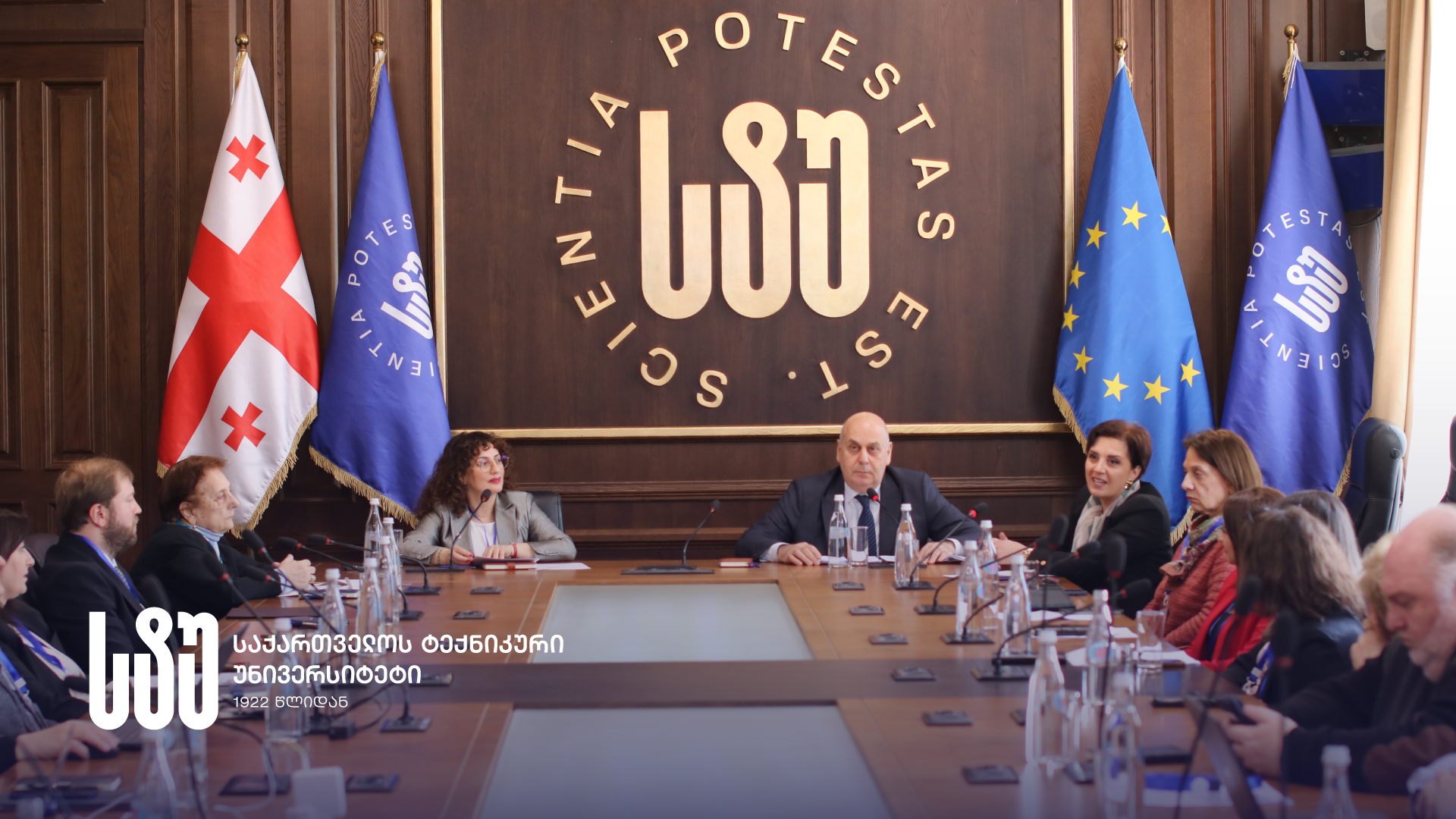
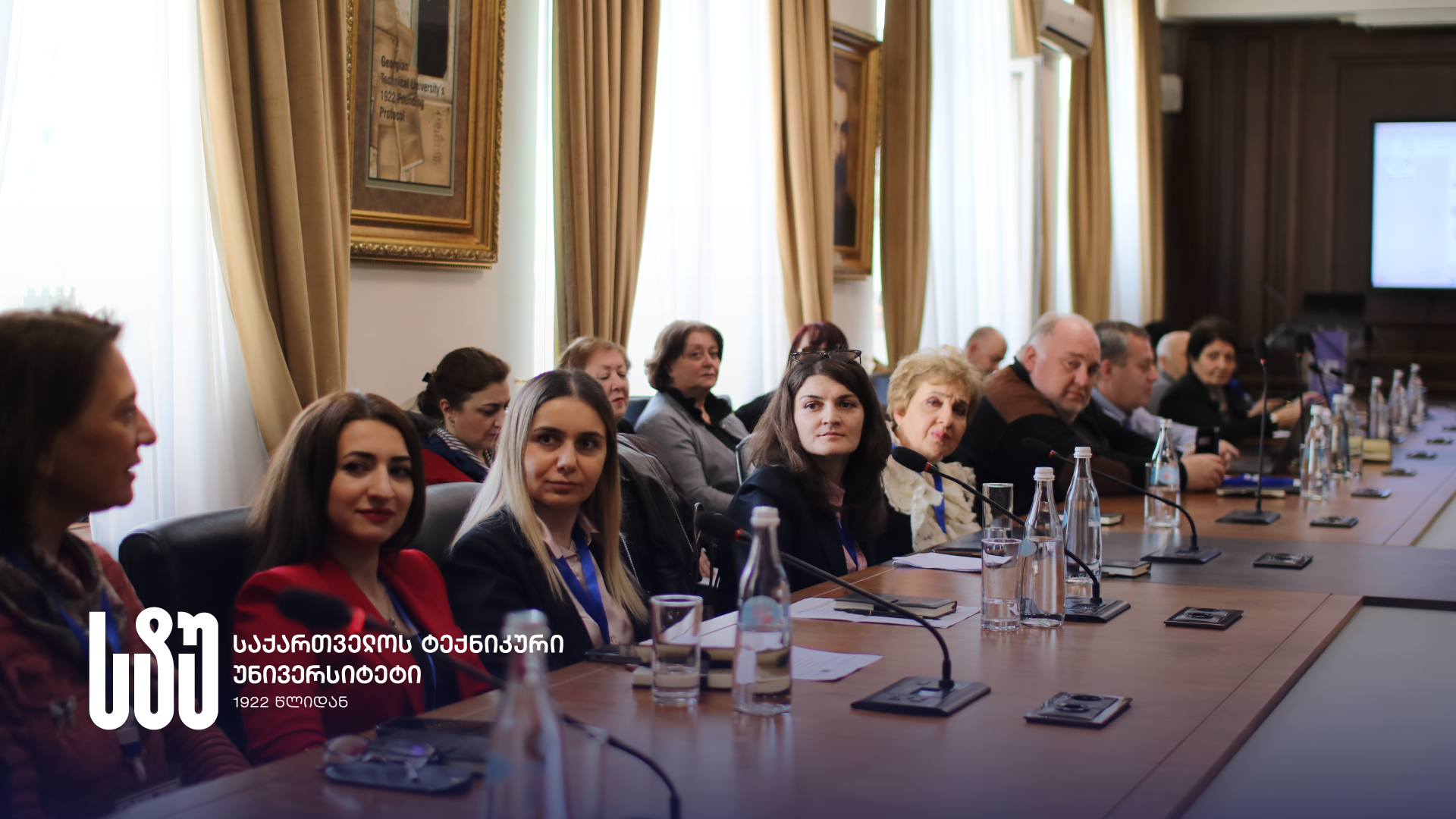
At the opening ceremony of the winning project in the European Union’s 2025 ERASMUS+ CBHE (Capacity Building in Higher Education) competition. The first meeting of the consortium was attended by: the delegation of the University of Central Lancashire (UCLAN CYPRUS LIMITED (UCLan Cyprus) consisting of Professors – Cosmina Theodolou, Neve Agapiou and Marios Raspopoulos; the delegation of the University of Palermo (UNIVERSITA DEGLI STUDI DI PALERMO – UNIPA) consisting of Professor Giovanni Falcone and PhD students – Gianmarco La Rosa and Lidia Castronovo; the delegation of the new higher education institution – Newuni: Rector Tamar Gardapkhadze, Professors Nana Tsikhistavi, Natia Gogolauri, Sofio Moralishvili, Medea Samsian; the delegation of the Central European University – Rector Gocha Tutberidze, Professors Giorgi Datuashvili, Gocha Ugulava; the delegation of the Caucasus International University consisting of Rector Kakhaber Kordzaia, representatives of the administration Svetlana Kirakosyan and Shorena Kurdadze; Samtskhe-Javakheti State University – Rector Vakhtang Taktakidze, Guranda Modebadze, Nino Milashvili; Alterbridge University – Rector Natia Gotsadze, Professors Mako Jaoshvili, Ana Tsiklauri, Tamta Hager.
As the President of the GTU Supervisory Board stated at the opening of the first meeting of the consortium, the Institute of the Georgian Technical University “Techinform” won the 2025 ERASMUS+ CBHE (Capacity Building in Higher Education) competition of the European Union and will be the coordinator of the project – “Strengthening Research and Innovation Capacities in Georgian Higher Education Institutions” (ERIC-GE) for the next two (2026-2027) years.
According to Professor Zurab Gudavadze, the university’s victory in the competition is a significant achievement for the Georgian scientific community, as the project will contribute to the expansion of international cooperation and academic opportunities, the development of innovative educational programs, the introduction of modern scientific methods of evaluation, and their integration into the educational process.
“I am particularly proud to note that the winner of the 2025 competition – ERASMUS-EDU-2025-CBHE-STRAND-1 (Capacity Building in Higher Education), the Institute of the Georgian Technical University “Techinform”, will be the project coordinator for the next two years. The Georgian Technical University and its Institute “Techinform” play a key role in the implementation of the project as coordinators, ensuring the quality of all planned activities and full compliance with European standards. The ERIC-GE project aims to systematically strengthen the research and innovation capabilities of Georgian higher education institutions. In the global educational and scientific space of the 21st century, a modern university has transformed into the main platform for the systematic generation of intellectual capital, new knowledge, and its application in social and economic practice. Today, the university is already a space where fundamental and applied research is integrated, critical thinking is developed, and new scientific paradigms are formed. The university brings together science, education, and industry in this process, promotes interdisciplinary collaboration, and creates the foundations for the development of an innovative ecosystem. Research, innovation, and implementation are the cornerstones of the university’s strategic development. It is the model based on research and practical transformation of knowledge that ensures the real involvement of the university in the process of social progress, technological advancement, and full integration into the global educational space. The ERIC-GE project responds to these challenges – it will contribute to the modernization of research management, strengthening innovative ecosystems, deepening cooperation between universities and industry, and developing support mechanisms for young researchers. It is especially important that the project is implemented in the format of an international partnership. Cooperation with European colleagues allows us to share best practices, introduce modern standards of quality assurance, and strengthen the culture of institutional management. This is not only sharing experience, but also cooperation based on equal partnership, which creates long-term value. The role of the coordinator of the Institute “Techinform” of the Georgian Technical University in the project imposes a special responsibility on us. Coordination means not only administrative management, but also vision formation, consistent implementation of strategic goals, and ensuring effective synergy between partners. I am confident that our team will lead this process with professionalism and great responsibility. I wish success to the university, the institute team, and the consortium members”, Zurab Gudavadze noted in his speech.
The project aims to introduce scientometrics into Georgian higher education institutions to enhance the research skills of master’s and doctoral students and to deepen the expertise of academic staff. Through this initiative, participants will gain practical knowledge essential for conducting comprehensive scientometric analyses and will become acquainted with advanced research methodologies and approaches, enabling them to apply these skills in both teaching and research contexts.
Furthermore, the project seeks to boost the competitiveness of Georgian universities by aligning institutional research policies with the standards of the European Research Area (ERA). Key objectives and initiatives include the development and implementation of a new online course on scientometrics for students and early-career researchers. This course will address topics such as citation analysis, bibliometric indicators, patentability, impact assessment, research trend mapping, and the integration of artificial intelligence in evaluation methods.
Related
Scientific
Announced an Open Competition for Scientific Positions
The Ir. Zhordania Center for the Study of Georgian Industrial Forces and Natural Resources of the Georgian Technical University announces...
Scientific
GTU Scientist, Academician, Major General Elguja Medzmariashvili, Presented a Report at the National Academy of Sciences
General Designer of the Institute of Structures, Special Systems and Engineering Support of the Georgian Technical University, academician of the...
Scientific
GTU Rector Gets Familiar With the Working Process in the Straw Laboratory
The Rector of the Georgian Technical University, Academician David Gurgenidze, was introduced to the working process in the Straw Laboratory,...