About Tbilisi
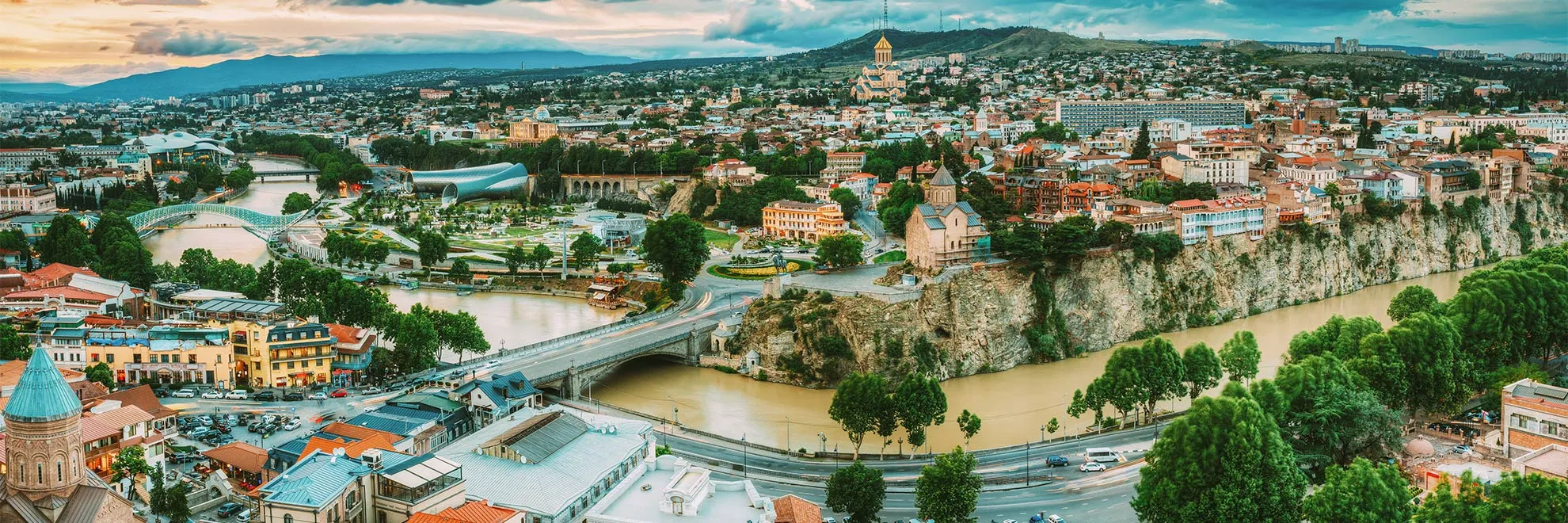
The capital of Georgia, Tbilisi, located on the banks of the Mtkvari River with about 1.5 million inhabitants, was founded in the 5th century by the monarch of the ancient Iberian Kingdom.
The architecture of Tbilisi, which is a blend of Soviet, classical, and mediaeval structures, reflects the city’s diverse history.
Tbilisi has always been home to a diverse population of racial, cultural, and religious backgrounds.
Well-known tourist destinations include the National Museum of Georgia, the Neo-Moorish Opera and Ballet Theatre, the mediaeval Narikala Castle, the historic Freedom Square and Rustaveli Avenue, and cathedrals like Sameba and Sioni.
Tbilisi experiences a moderately humid subtropical climate. In Tbilisi, the yearly average temperature is 12.7 degrees. At 0.9 degrees Celsius on average, January is the coldest month. With an average temperature of 24.4 degrees, July is the hottest month. 15–25 days a year on average, there is snowfall.
With so many remarkable attractions, Tbilisi is also a popular destination for tourists. Tbilisi is home to the Georgian Supreme Court building, the State Chancellery, the Georgian Parliament, and other government facilities. Additionally, the city is home to numerous state museums, the National Bank of Georgia, the National Public Library of the Parliament of Georgia, the National Museum of Georgia, the Tbilisi State Conservatory, the Tbilisi Opera and Ballet Theatre, Rustaveli National Theatre, Marjanishvili Theater, Trinity Cathedral, and Vorontsov Palace (now known as the Children’s Palace).
Tbilisi was routinely ranked among the top four cities in the Soviet Union in terms of museum number during the Soviet era. Among the city’s historical landmarks are Narikala Castle (IV-XVII centuries), Anchiskhati Church (VI century, repaired in the XVI century), Sioni Temple (VIII century, subsequently restored), Metekhi Church (XIII century), and others.