About Tbilisi
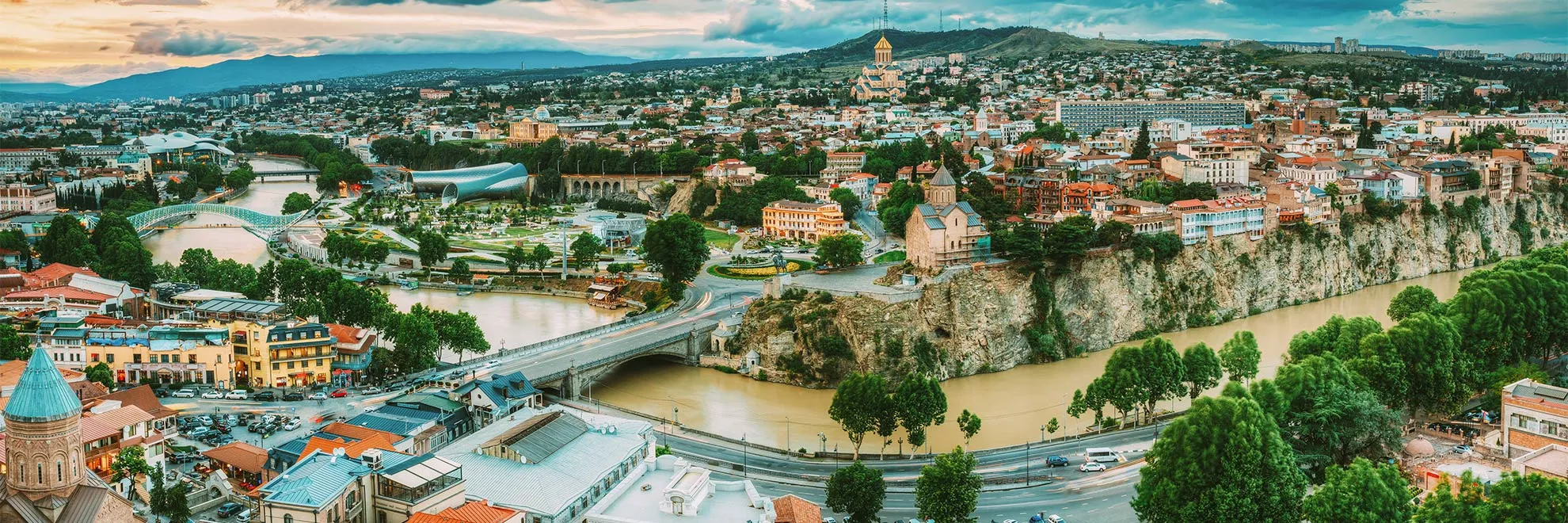
History
Tbilisi, the capital of Georgia, is one of the oldest capitals in Europe. It was founded in the 5th century, specifically in the 450s, by King Vakhtang Gorgasali.
The territory of present-day Tbilisi was inhabited as early as the 4th millennium BC. In the city’s historic district, Abanotubani, the remains of an ancient settlement and a Roman-style bathhouse dating from the 1st to the 3rd millennium AD have been discovered, indicating the presence of a highly developed culture.
Located at the crossroads of Eastern Europe and Western Asia, Tbilisi has long been home to people of diverse cultures and religions. It remains a multi-ethnic and multi-religious city.
The city’s rich history is reflected in its architecture and cultural heritage. Modern Tbilisi is a blend of Georgian, Persian, Russian, and European architectural styles, creating a unique and vibrant urban landscape.
Geography
Tbilisi is located in eastern Georgia, on both banks of the Mtkvari River, at elevations ranging from 380 to 600 meters above sea level. Mtatsminda Mountain, the most famous of the hills surrounding the city, rises to 719 meters above sea level.
The highest residential area is the Nutsubidze Plateau, situated at approximately 700 meters above sea level.
The Mtkvari River, the city’s main waterway, flows through Tbilisi from northwest to southeast.
Climate
The average annual temperature in Tbilisi is relatively mild, reaching 12.2°C. The coldest month is January, with an average temperature of 0.9°C, while the hottest month is July, with an average temperature of 24.4°C. Snow falls on approximately 15 days per year.
Tbilisi receives relatively little precipitation, and the air is generally dry. Due to its geographical location, cloud cover is limited, resulting in many long, sunny days throughout the year.
Strategic Importance
Tbilisi is an important industrial, social, and cultural center of the Caucasus region. The capital of Georgia serves as one of the key transport hubs for major international energy and trade projects, including the Baku–Tbilisi–Ceyhan oil pipeline and the Baku–Tbilisi–Erzurum gas pipeline.
The city lies along one of the historic routes of the Great Silk Road and serves as an important trade and transit hub connecting Russia, the North Caucasus, Turkey, Azerbaijan, and Armenia.
Tbilisi Attractions
When visiting this ancient city, travelers can stroll through the cobbled streets of its historic districts, where cultural heritage monuments can be found at every turn; explore museums showcasing Georgia’s rich history; relax in modern parks and gardens; and enjoy Georgian wine and traditional cuisine in cozy cafés.
We recommend beginning your exploration of Tbilisi with these attractions:
The oldest district of Tbilisi, famous for its distinctive atmosphere and the colorful domed sulfur baths dating back to the 18th century, where naturally warm mineral waters flow.
Holy Trinity Cathedral (Sameba) One of the largest Orthodox churches in the world, located on Elia Hill in the Avlabari district. The cathedral was designed by Archil Mindiashvili (1951–2020), an honored Georgian architect and academician, and a graduate of the Faculty of Architecture at the Georgian Polytechnic Institute (1973).
The Bridge of Peace A remarkable example of modern architecture in the old city, spanning the Mtkvari River. This pedestrian bridge connects Erekle II Street and the surrounding embankment with Rike Park.
Rustaveli Avenue The city’s main avenue, home to the Opera and Ballet Theater, the Parliament building, the National Gallery, the Rustaveli Theater, the Museum of Modern Art, the National Library, and Kashueti Church, as well as numerous shops, cafés, and green spaces.
Metekhi Church and the Monument to the founder of Tbilisi, King Vakhtang GorgasaliOne of the most important historical sites in Tbilisi. From here, visitors can enjoy panoramic views of Abanotubani.
Green Spaces in Tbilisi
Tbilisi’s varied landscape and moderately humid subtropical climate support a wide range of green spaces throughout the city. These parks provide excellent opportunities for relaxation, walking, and exercise throughout the year.
Rike Park A modern recreational area in the city center, located on the banks of the Mtkvari River. From here, visitors can take a cable car directly to Narikala Fortress.
Mtatsminda Park One of the highest points in the city, 719 meters above sea level, this park offers panoramic views of Tbilisi.
Vake Park and Turtle Lake A favorite leisure destination, especially among students. From Vake Park, visitors can take a cable car or follow a hiking trail to Turtle Lake, a popular summer destination for swimming and sunbathing. Continuing along the trail leads to the Ethnographic Museum, an open-air museum presenting a miniature representation of Georgia’s diverse regional architecture and culture.
Lisi Lake Located in the upper part of the city near the Nutsubidze Plateau, 700 m above sea level. Lisi Lake is one of the most popular spots in Tbilisi for cycling, walking, and spending time with friends.
Botanical Garden Situated at the foot of Narikala Fortress, the National Botanical Garden of Georgia is a peaceful green oasis, ideal for visitors who enjoy exotic plants, waterfalls, and tranquility.
Tbilisi Sea and Dendrological Park Located in the northern part of the city, this large reservoir and adjacent park area offer opportunities for recreation, including visits to the yacht club and relaxing walks in a well-maintained natural environment.