CERN/IPPOG International Masterclass Cycle Organized by GTU
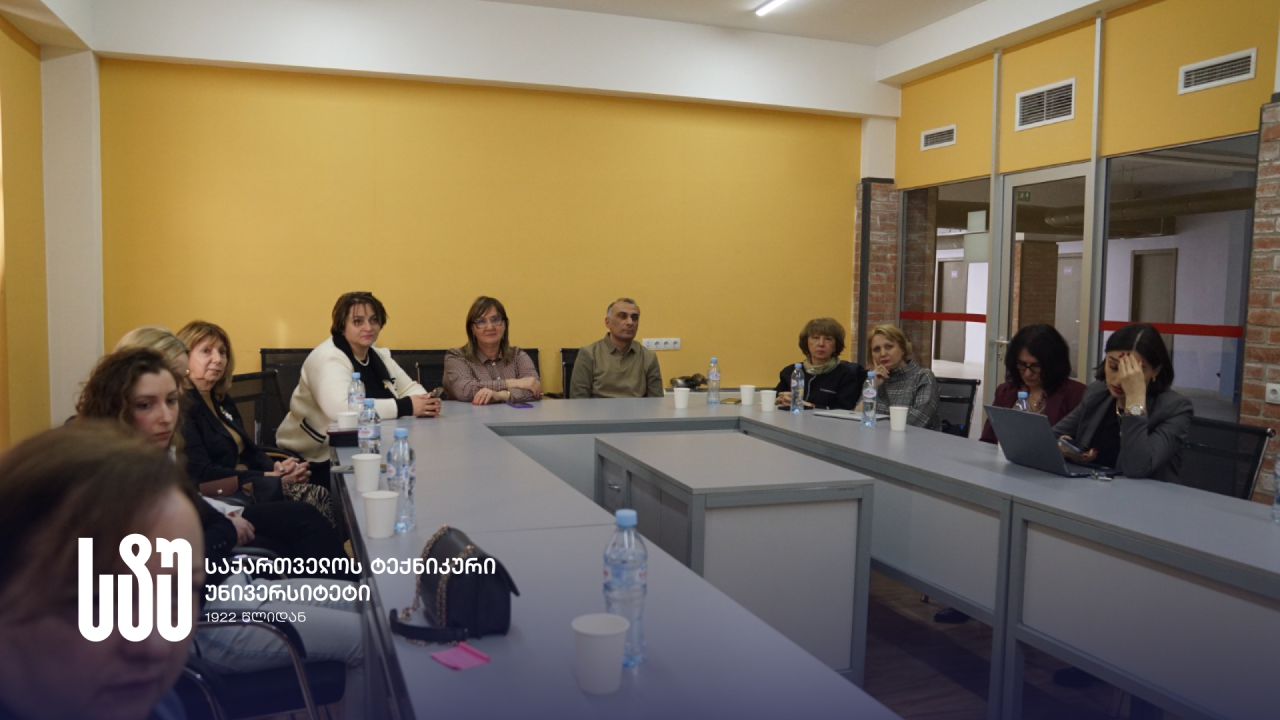
Organized by the Nuclear Engineering Center of the Georgian Technical University and with the financial support of the Ministry of Education, Science, and Youth of Georgia, the CERN/IPPOG International Masterclass Cycle has begun across Georgia.
The masterclass aims to popularize science, innovations, and modern technologies among the youth, as well as to introduce schoolchildren to ongoing international scientific experiments in the field of particle physics and nuclear research.
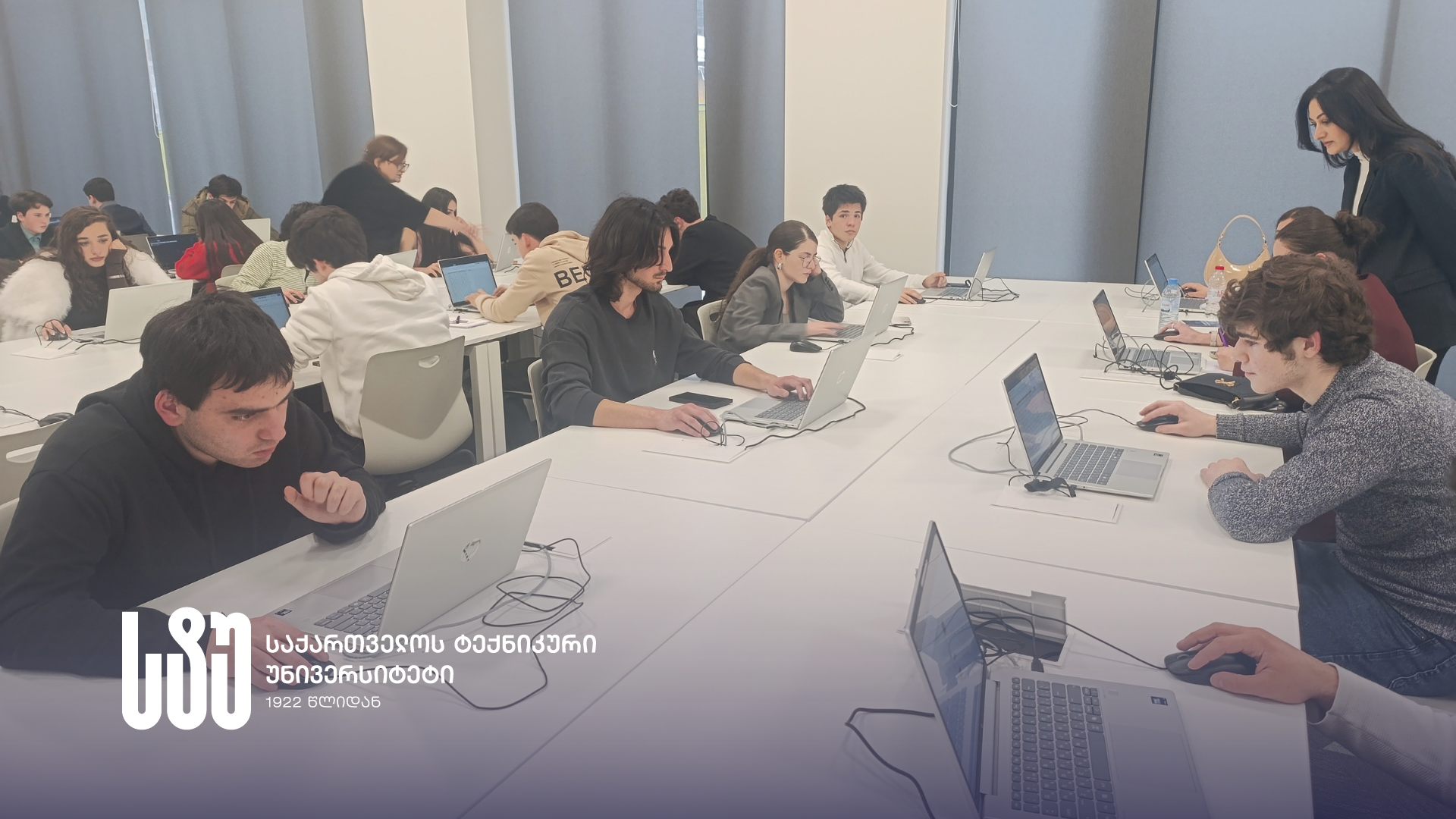
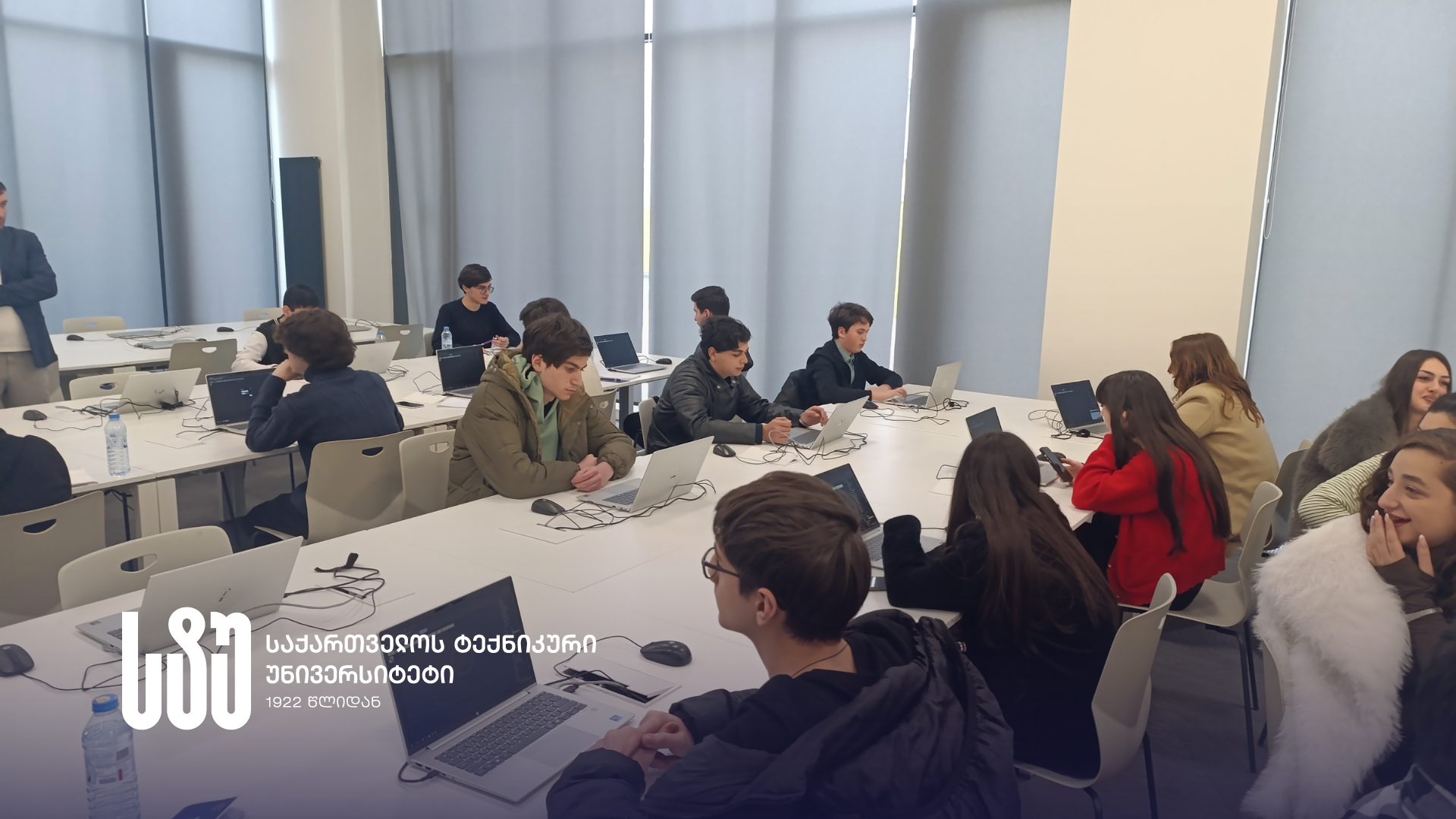
According to the head of the Nuclear Engineering Center at the GTU, the first event within the framework of the CERN/IPPOG International Masterclass Cycle was held at Kutaisi International University (KIU), where 34 students from seven public schools participated. According to Professor Besik Kekelia, the teenagers listened to thematic lectures on particle physics, detector technologies, and high-energy physics experiments, and also engaged in practical activities and data analysis work.
“CERN/IPPOG International Master Classes are one of the most effective educational formats for popularizing modern science. The primary value of the program is that schoolchildren have the opportunity to experience the scientific process firsthand, which forms the basis of global research in fundamental physics. Within the framework of the master classes, young people get acquainted with the basics of elementary particle physics, learn the principles of detector operation, and, most importantly, work with real data obtained from the largest international scientific experiments, such as research ongoing at the Large Hadron Collider (LHC). CERN’s international educational program allows interested students to find themselves in the “role of a scientist” for a day and conduct data analysis themselves, which helps them develop research thinking”, says Besik Kekelia.
According to GTU Rector, academician David Gurgenidze, the program is especially significant for countries seeking to engage the younger generation in STEM fields. As he notes, international master classes connect tens of thousands of students from dozens of countries each year, with participation from hundreds of universities and research centers worldwide. This format allows young people to become familiar with modern scientific methodologies at an early age, understand the culture of research, and witness international scientific collaboration in practice.
“The involvement of Georgian Technical University in this process is especially important. Participation by the Nuclear Engineering Center in CERN/IPPOG educational initiatives enables us to introduce our pupils and students to the world of modern fundamental research, giving them access to the knowledge and experience being generated in the world’s leading scientific laboratories. Master classes broaden intellectual horizons—young people develop critical thinking, data analysis skills, and teamwork. It is precisely experience that is the basis for a formation of a new generation of scientists, engineers, and technology leaders in the future, who will be able to make a significant contribution to the country’s scientific development and innovations. The key point for us is that Georgia is actively involved in international scientific and educational initiatives. The organization of CERN/IPPOG master classes serves precisely these goals: making science accessible to young people, internationalizing knowledge, and integrating the Georgian scientific community into the global research space,” says David Gurgenidze.
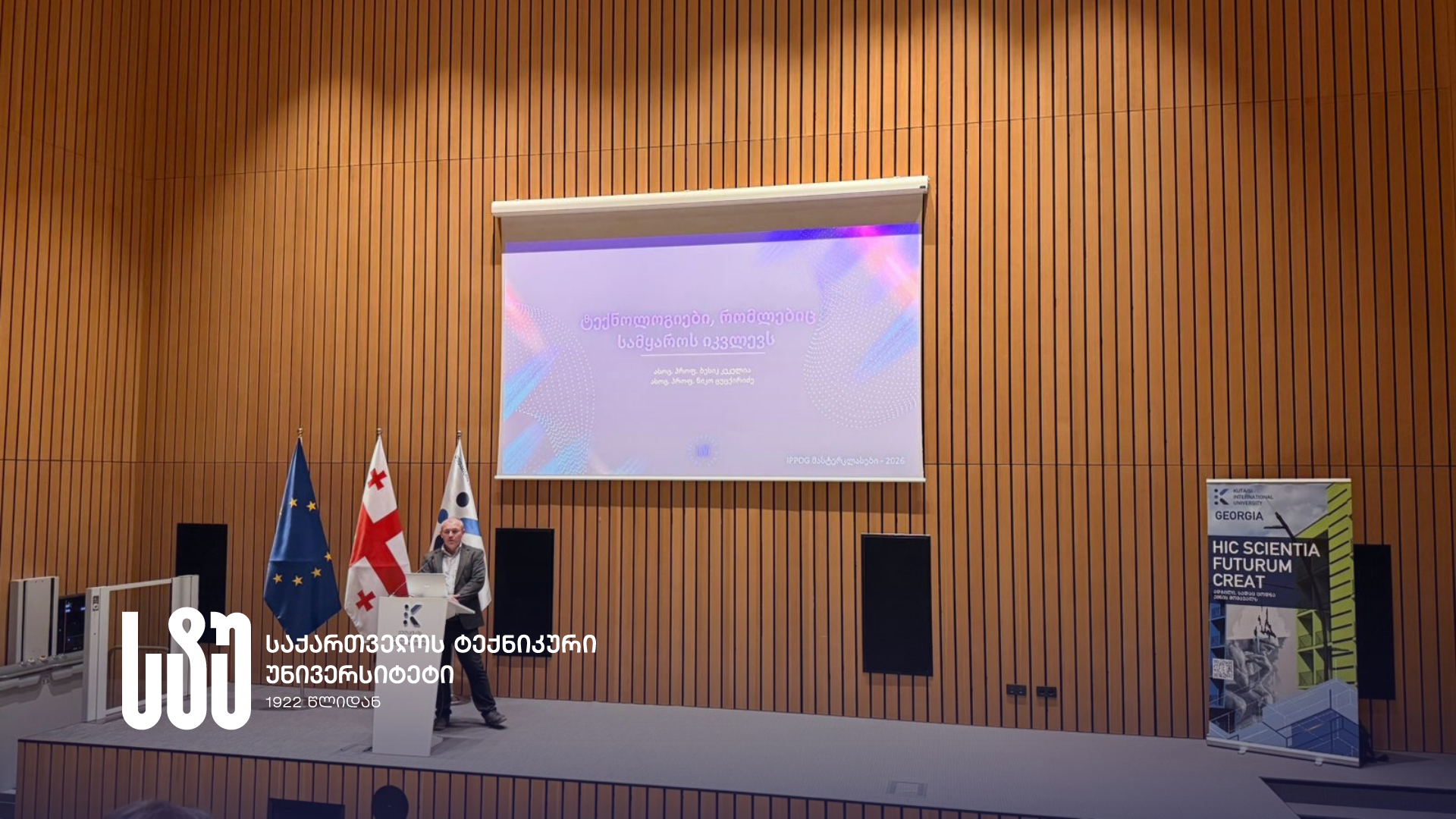
As part of the master class, Yuri Baghaturia, a scientist from the Institute of Quantum Physics and Engineering Technologies at the Georgian Technical University, delivered a lecture on the origin of the universe via online connection from CERN. Theoretical lectures were also given to the students by Besik Kekelia and Niko Tsutskiridze, employees of the Nuclear Engineering Center of the GTU. After the lectures, a practical session was held, during which participants analyzed real data from the CMS detector. During the practical work, the students were tutored by employees of the Nuclear Engineering Center – Giorgi Bokhochadze and Ela Abramov.
For information: In parallel with KIU, an international educational masterclass was held simultaneously at Yildiz Technical University (Istanbul, Turkey) and Bejaia University (Algeria), as well as at the Rujer Bošković Institute (Zagreb, Croatia).
Related
News
“IAAC 2026” – International Competition for Students Interested in Astronomy and Astrophysics Begins
The IAAC 2026 Astronomy Education Program is starting preparations for the 2026 edition and is announcing an international competition for...
News
Academic Schedule for the Second (Spring) Semester of the 2025–2026 Academic Year
According to the order of the Rector of the LEPL Georgian Technical University dated February 26th, 2026, the second (spring)...
News
Institute of Quantum Physics and Engineering Technologies Announces a Competition for a Scientific Position
The Scientific Council of the Institute of Quantum Physics and Engineering Technologies of the Georgian Technical University announces an open...
News
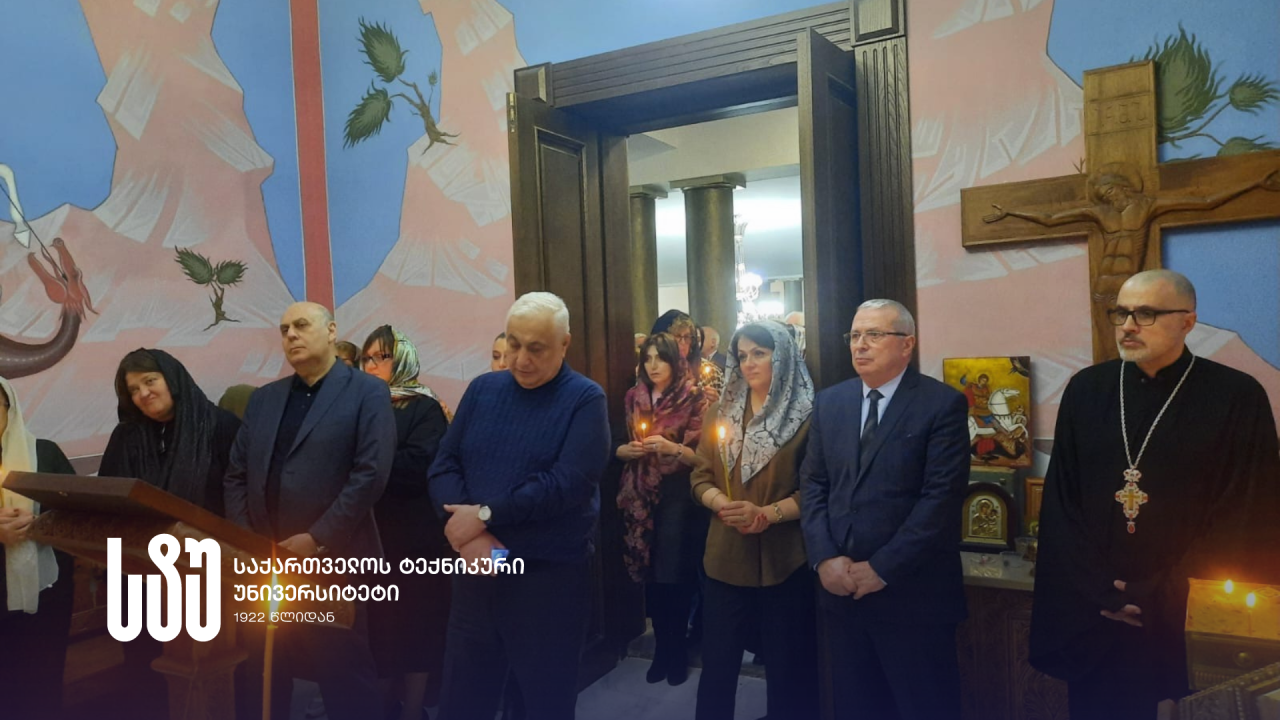
Service Held at GTU on the Occasion of the Autocephaly Restoration, and a Funeral in the Patriarch’s Memory
The historical role of the recently deceased Catholicos-Patriarch of All Georgia, Archbishop of Mtskheta-Tbilisi, Metropolitan of Bichvinta and Tskhum-Abkhazia, His...
News
Registration for Free Lithuanian Language Courses for GTU Students Is to Begin
The Professor Vydas Kavaliauskas Lithuanian Language, Culture and Education Center at the Georgian Technical University invites students of any course...
News
Within the Framework of the “Study and Get a Job” Program, Short-Term Professional Courses at GTU Are Offered With Full Funding
Within the framework of the “Study and Get a Job” program of the Tbilisi City Hall Municipality, you can take...