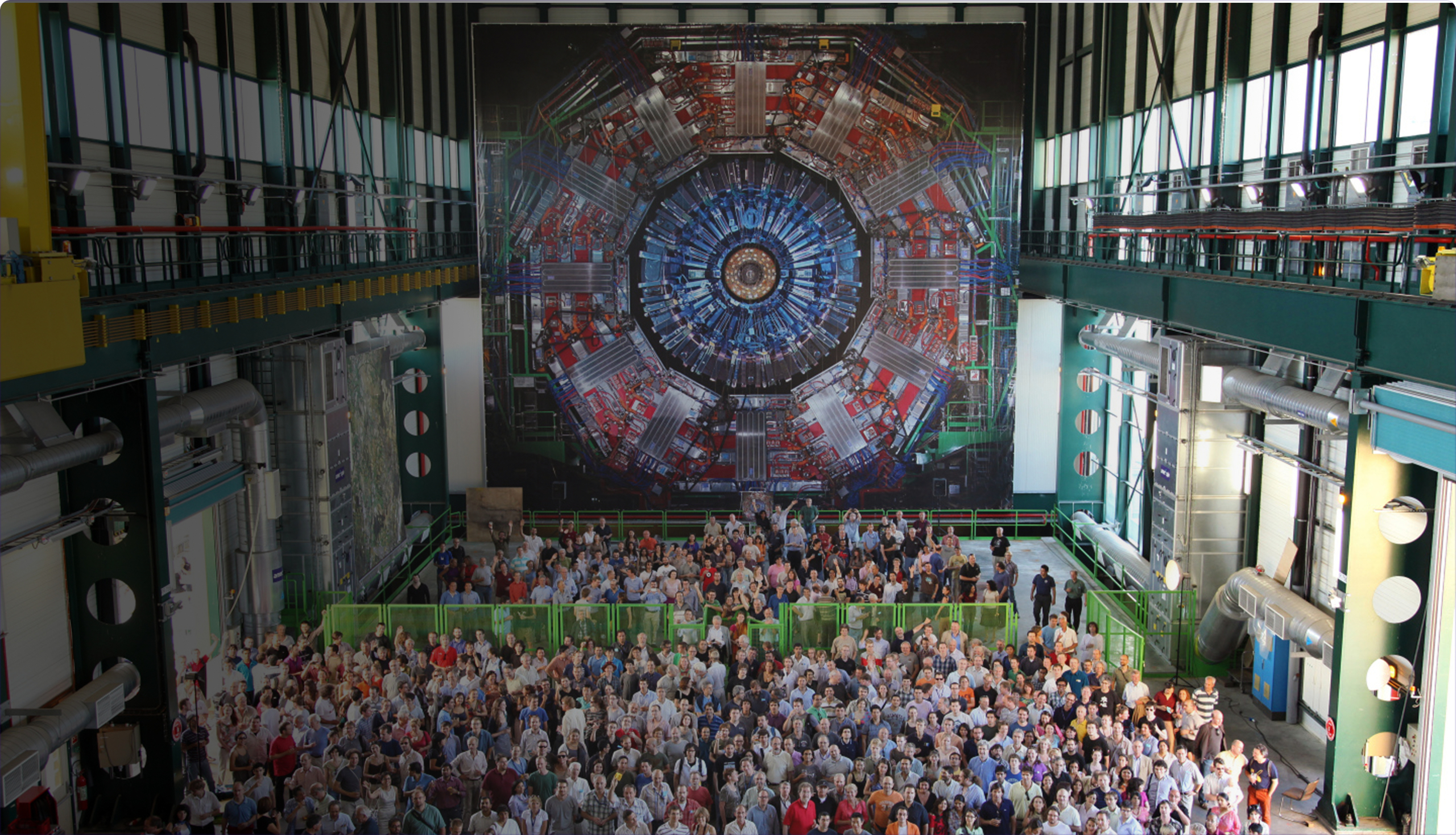
CERN / ATLAS Collaboration, IPPOG Collaboration
CERN / ATLAS Collaboration, IPPOG Collaboration
Research title
Geometry Simplification Methods for Virtual Reality Applications. Carried out within the Outreach & Education programme of CERN’s ATLAS experiment.
Research location
The highly complex “as-built” 3D geometry of the ATLAS detector is so heavy that it cannot be used directly in a VR environment on ordinary, low-power devices.
Scope of the study
Simplifying the geometry so as to reduce the load on the GPU while preserving sufficient image quality and smooth motion — the entire chain from the CAD model to VR rendering is addressed (CATIA, KeyShot, Blender, WebGL/three.js).
Research objective
Making VR accessible on mid-range smartphones and inexpensive VR devices as well — a seven-step geometry simplification method has been developed to achieve an optimal balance between visual quality and performance.
Contribution of GTU researchers to the experiment
The principal contributors to the project are researchers of GTU’s Institute of Quantum Physics and Engineering Technologies: Alexander Sharmazanashvili, Kote Tsutskiridze, Ella Abramov, Avtandil Khelashvili, Giorgi Mirziashvili (Centre of Nuclear Engineering / xrLab) and Akaki Alikhanov. Roger Jones (Lancaster University) is a co-author.
The main contribution of the GTU group is the development of methods for processing and simplifying the 3D geometry of the ATLAS detector so that it can be used in VR applications.
Contribution of GTU researchers to the experiment
Kote Tsutskiridze
Ella Abramov
Avtandil Khelashvili
Giorgi Mirziashvili (Centre of Nuclear Engineering / xrLab)
Akaki Alikhanov
Application potential
- Education and popularisation of science
- Accessible VR
- Browser-based 3D/VR
- Transfer to other scientific facilities
Other research
CERN / CMS Collaboration
Scientific Results of the CMS Experiment and the Study of the Higgs Boson Properties