DUNE Collaboration (a joint project of Fermilab and CERN)
DUNE Collaboration (a joint project of Fermilab and CERN)
Research title
The second phase of the Deep Underground Neutrino Experiment (DUNE) and the testing of prototypes (ProtoDUNE) at the CERN Neutrino Platform.
Research location
Studying neutrino oscillations, matter–antimatter asymmetry and the neutrino mass hierarchy requires an enormous, extremely precise underground detector and the advance testing of its technologies.
Scope of the study
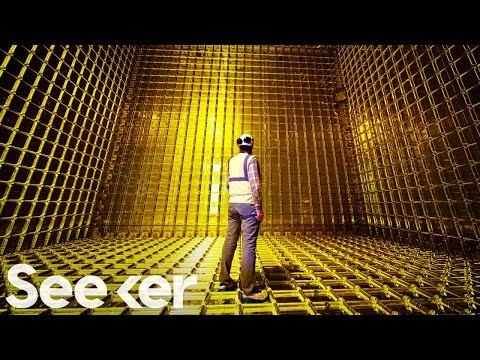
Building and testing liquid-argon time projection chamber (LArTPC) technologies (single-phase, dual-phase and vertical-drift configurations) with the reliability needed to construct the full-scale far detector.
Research objective
The search for proton decay and supernova neutrino bursts, and the study of physics beyond the Standard Model.
Contribution of GTU researchers to the experiment
The GTU group joined the DUNE collaboration in 2019, and in March 2022 an official i-CRADA (International Cooperative Research and Development Agreement) was signed between Fermilab and GTU. The group is led by Professor Zviad Tsamalaidze. Georgian researchers work on liquid-argon time projection chamber (LArTPC) technologies at the CERN Neutrino Platform, where components of the future underground detector are being tested — including the calibration and high-voltage testing of the ProtoDUNE Vertical Drift prototype.
Contribution of GTU researchers to the experiment
Zviad Tsamalaidze
Application potential
- Liquid-argon cryogenic technologies, applicable to the long-term and safe storage of industrial gases
- Potential use of neutrino detection principles in the monitoring of nuclear reactors and in non-proliferation control
- Engineering experience with high-voltage and large-volume detector systems, transferable to other high-energy physics projects
Other research
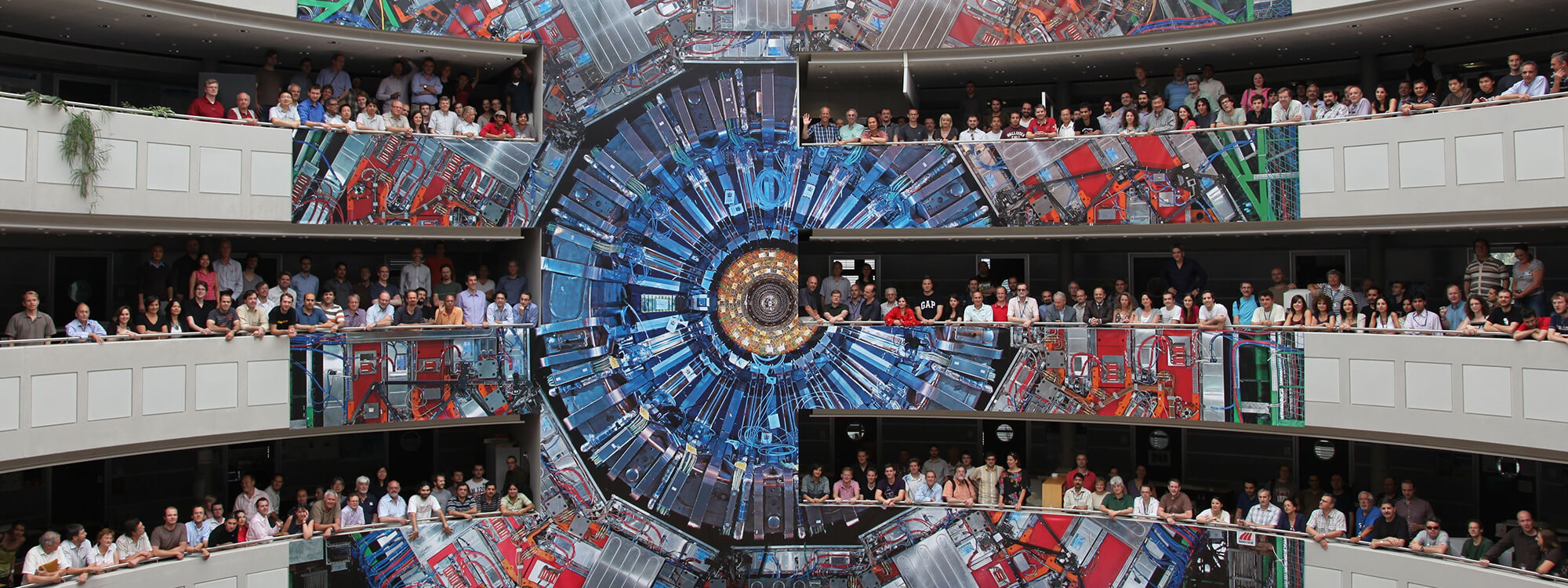
CERN / CMS Collaboration
Scientific Results of the CMS Experiment and the Study of the Higgs Boson Properties