Nino Tsilosani Visits the Faculty of Mining Geology and Sustainable Mountain Development
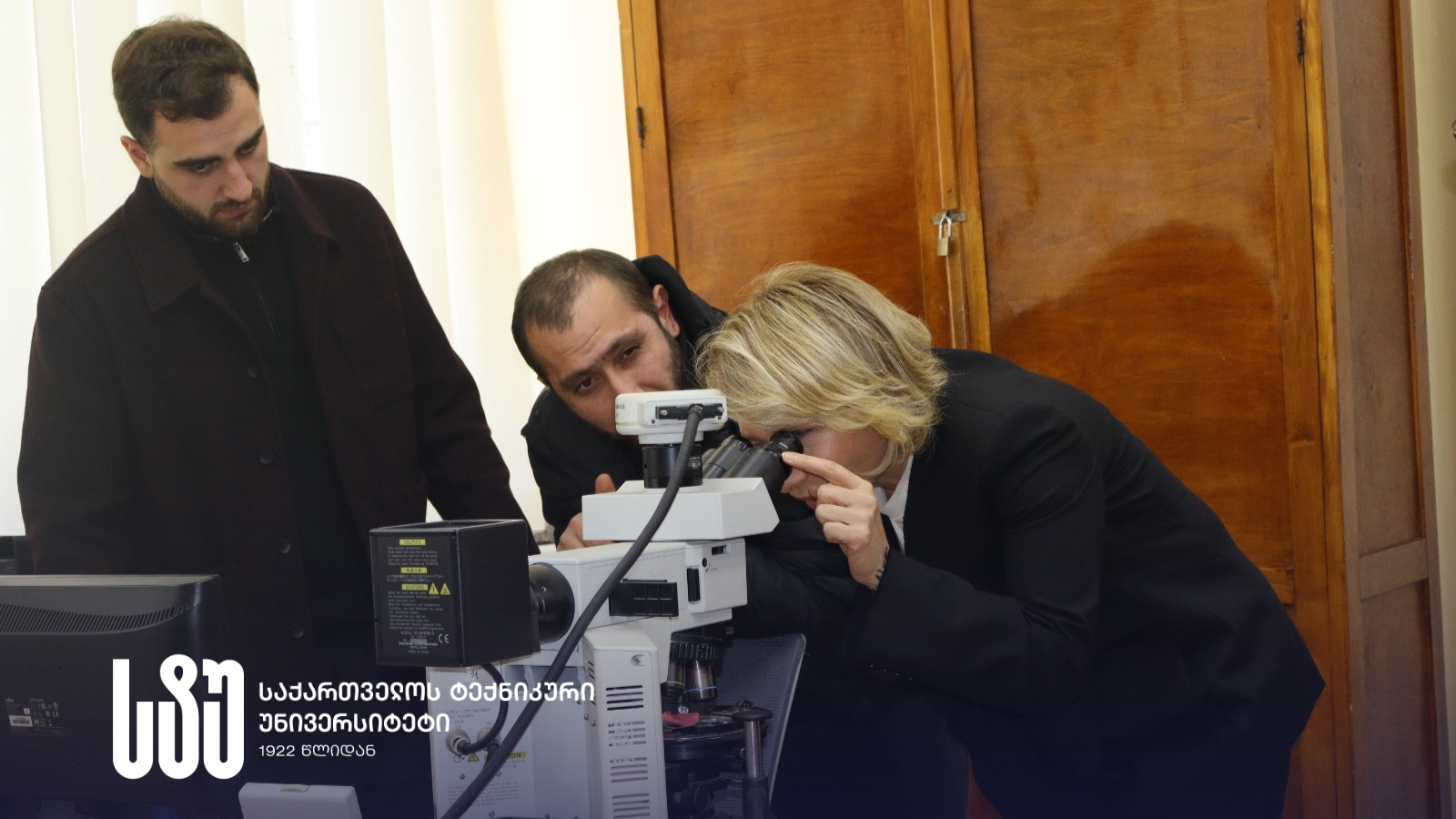
Nino Tsilosani, Deputy Speaker of the Parliament of Georgia and Member of Parliament, visited the Georgian Technical University to learn about its scientific and educational potential and the country’s geological heritage. During her visit, she toured the University’s Faculty of Mining Geology and Sustainable Mountain Development, where she examined the faculty’s academic and research infrastructure and its unique collections of minerals, rocks, and mineral resources housed in the museums.
Nino Tsilosani became acquainted with various samples of minerals, ores, and rocks extracted from deposits in Georgia and other countries, as well as the origin of the exhibits, their geological features, scientific value, and potential uses in education or industry. Special attention was paid to the museum’s role in presenting Georgia’s natural resources, geological diversity, and mineral potential.
According to Nodar Poporadze – a professor at the Georgian Technical University, Head of the Department of Applied Geology, and member of the Academic Council – the Museum of Mineral Resources’ collection comprises over 5,000 specimens. The exhibits include samples from nearly every deposit and ore occurrence in Georgia, as well as rocks, ores, and minerals characteristic of various geological processes. A significant portion of the collection serves educational and scientific purposes.
“The museum comprises two exhibition halls. One hall displays geological specimens from Georgia and other countries, while the second focuses primarily on Georgia’s mineral deposits and ore occurrences. Models of the Madneuli open-pit mine and the Zopkhito antimony deposit are prominent in the exhibition.
The museum’s particular value also lies in its practical purpose. The collections offer students at the undergraduate, master’s, and doctoral levels – the opportunity to engage directly with geological specimens as part of their academic and research activities, to study their characteristics, and to bridge theoretical knowledge with practical experience. Furthermore, the museum serves as an important educational space dedicated to Georgia’s mineral resources and geological heritage.”
– Professor Nodar Poporadze
During the visit, Nino Tsilosani met with the Rector of the Georgian Technical University. Faculty representatives also participated in the meeting. The parties discussed the university and the faculty’s activities, existing opportunities, and the significance of the mining and geological sector.
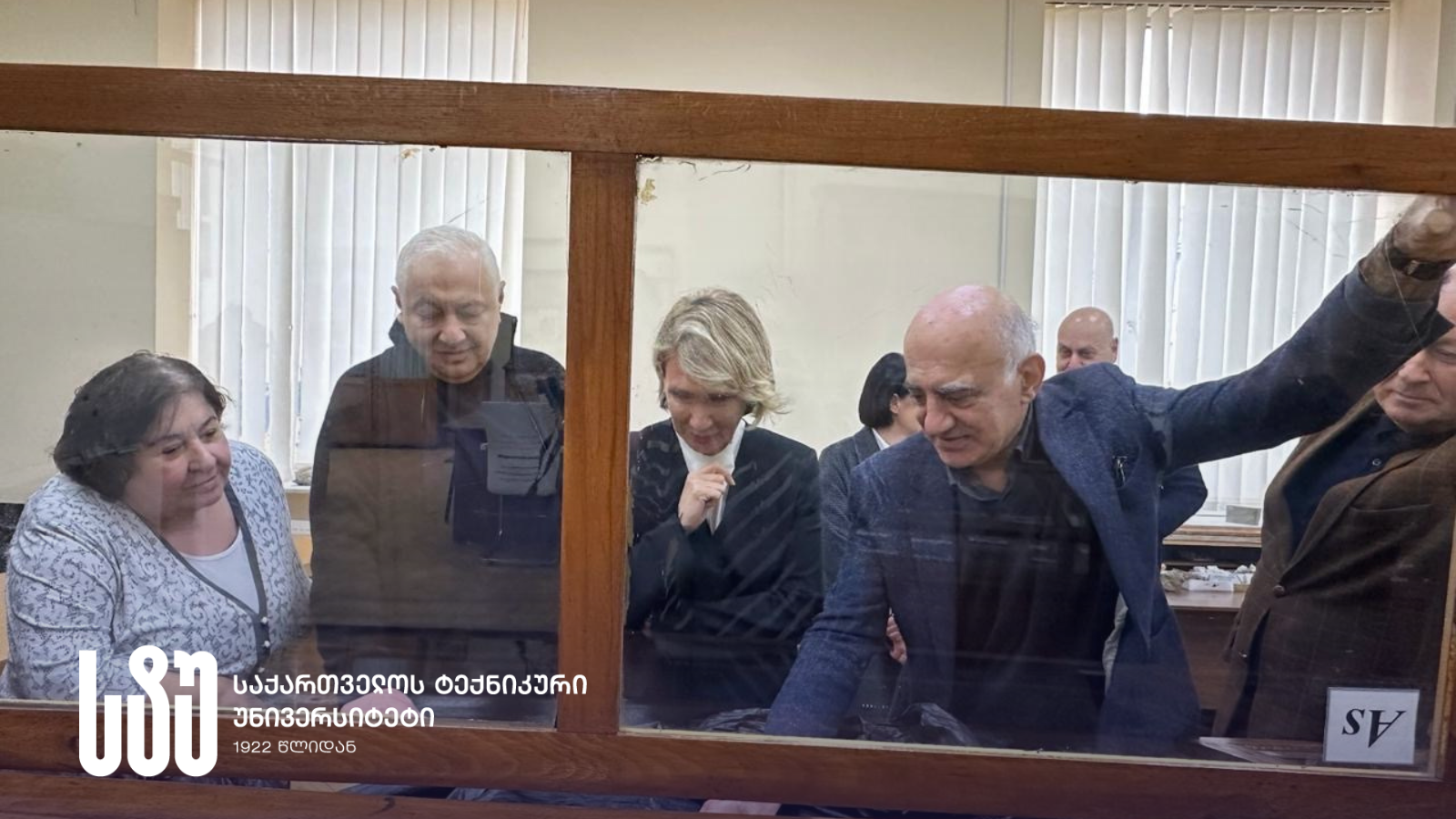
According to the Rector of the Georgian Technical University, the Faculty of Mining Geology and Sustainable Mountain Development represents one of the university’s key educational and scientific divisions. Academician David Gurgenidze notes that the faculty’s activities include training qualified specialists and conducting scientific research in fields such as geology, mining, the study and rational utilization of mineral resources, and sustainable mountain development.
“We are pleased that the Deputy Speaker of the Parliament of Georgia, Mrs. Nino Tsilosani, had the opportunity to gain firsthand insight into the university’s scientific potential, faculty activities, and the significant resources within our academic environment. We believe that dialogue and cooperation between state institutions and higher education establishments are vital for the country’s scientific, technological, and economic development. The advancement of the geology and mining sectors is particularly noteworthy, as these fields are directly linked to the rational use of natural resources, environmental responsibility, and the sustainable development of mountainous regions.
During the meeting, we paid special attention to the growth of the mining and processing potential of paving stones, clays, and zeolites in Georgia, as well as the possibilities of exploiting new deposits and expanding production in these areas. We believe that the effective use of the country’s mineral and food resources requires consistent state policy, a unified vision for the sector’s development, and the establishment of appropriate institutional mechanisms.”
– Academician David Gurgenidze

Related
News
GTU Rector: The Commemoration Day of the Holy Great Martyr George Is a Symbol of Faith, Spiritual Fortitude, Self-Sacrifice, and the Eternal Victory of Goodness
Academician David Gurgenidze, Rector of the Georgian Technical University, extends his congratulations on the feast day of St. George (Giorgoba)...
News
Rector of GTU: “We express our deepest sorrow over the horrific tragedy that has claimed the lives of six people”
Academician David Gurgenidze, Rector of the Georgian Technical University and Chairman of the Standing Conference of Rectors of Georgian Higher...
News
A presentation on the activities of the organization “Society Iveria” was held at the GTU; the university and the organization are to sign a memorandum
The Georgian Technical University views its mission as a vital institution – one that not only facilitates higher education and...
News
Irakli Gugushvili, a student from the Faculty of Transport Systems and Mechanical Engineering, was elected as the acting president of the Student Self-Government.
“A modern university serves as an environment for learning, personal development, critical thinking, civic responsibility, and the cultivation of leadership...

News
Rector of the Georgian Technical University Expresses Condolences on the Passing of Alexander (Sasha) Gvelesiani
On behalf of the university community, the Rector of the Georgian Technical University, Academician David Gurgenidze, expresses deep sorrow and...
News
Rector of GTU Congratulates Students on International Students’ Day
Academician David Gurgenidze, Rector of the Georgian Technical University and Chairman of the Standing Conference of Rectors of Georgian Higher...