GTU Hosted an International Masterclass on the CERN/IPPOG Collaboration
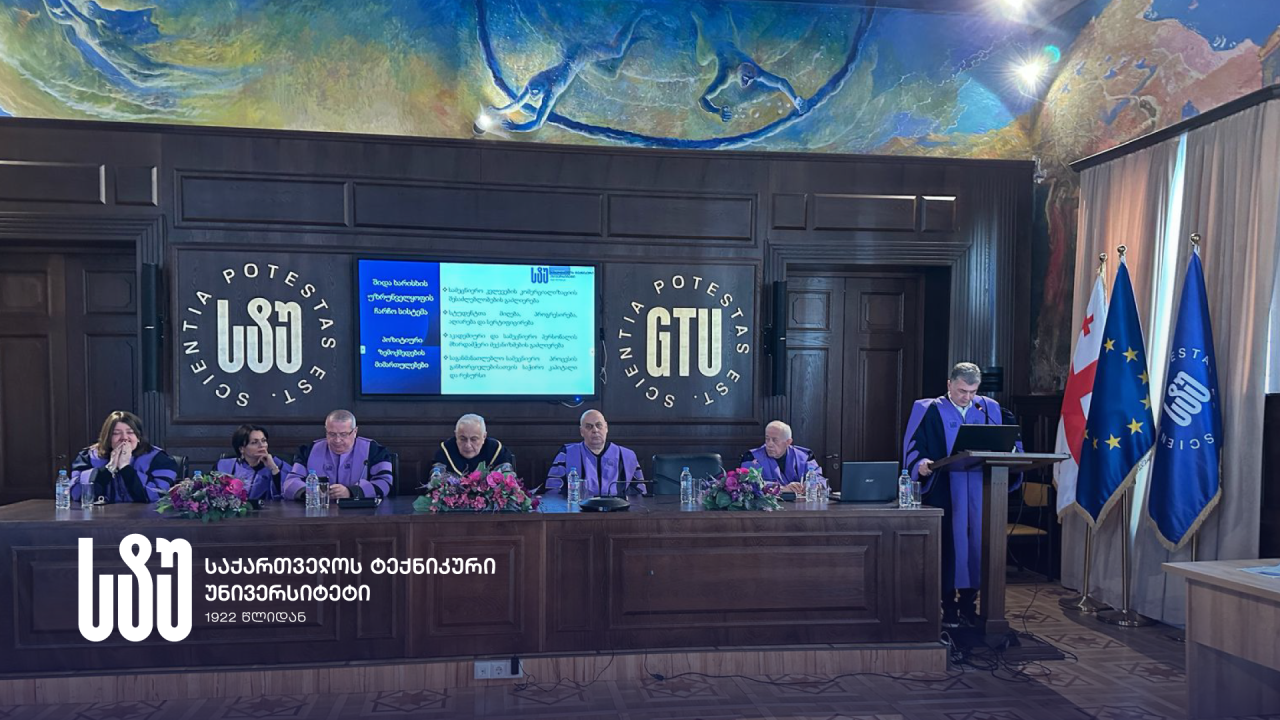
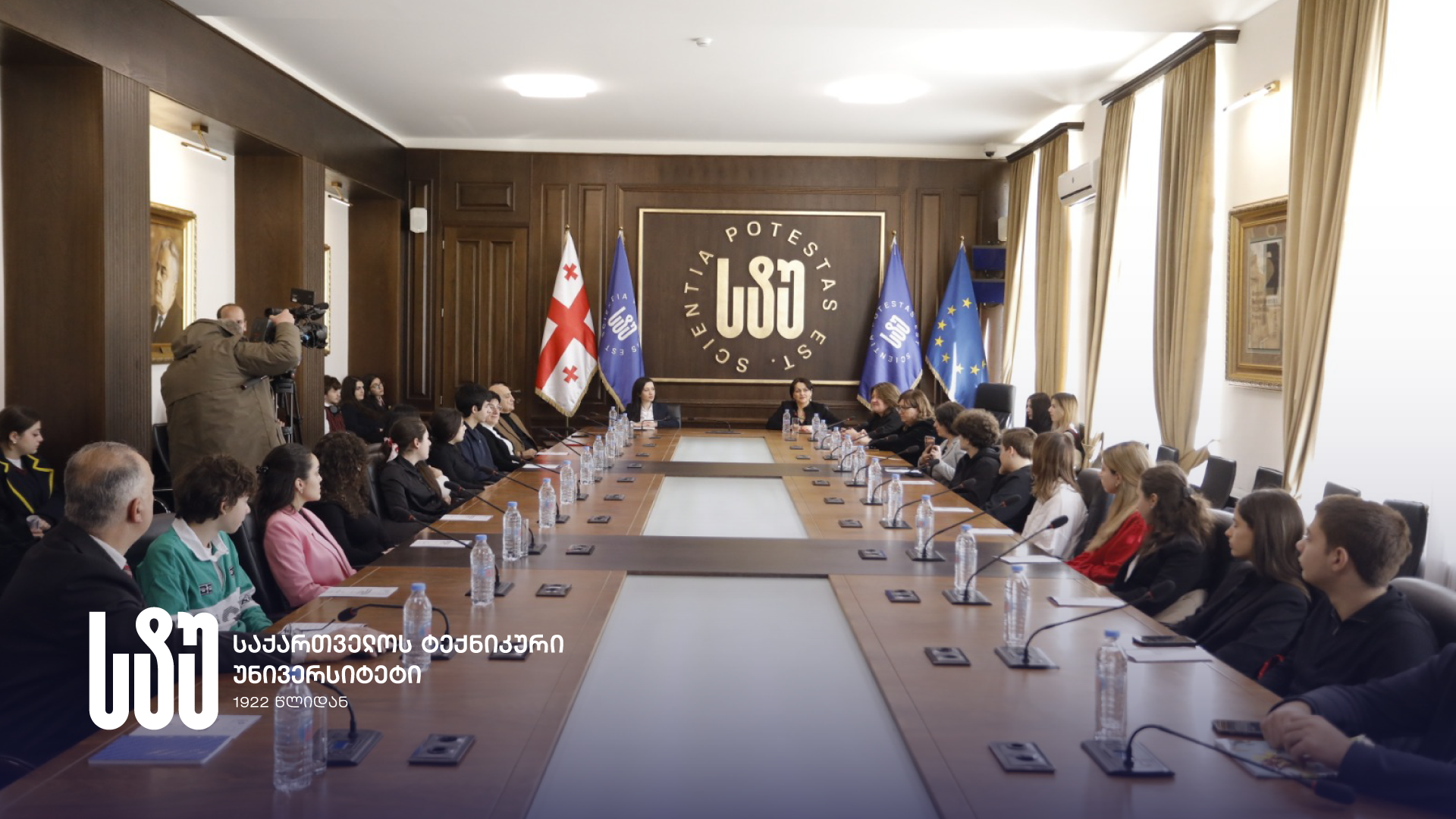
The Georgian Technical University hosted an international cognitive masterclass of the European Organization for Nuclear Research (CERN, Switzerland), in which about 40 students from various schools in Tbilisi focused on STEM and technological sciences participated.
The masterclass in Georgia was held in partnership with the CERN/IPPOG (International Particle Physics Outreach Group) collaboration and with the support of the Ministry of Education, Science, and Youth of Georgia, jointly organized by the Faculty of Informatics and Control Systems, a member of the CERN/IPPOG collaboration, and the GTU Nuclear Engineering Center.
The international event, which aims to popularize science, innovation, and technology, attract young generations, and interest them in fundamental research, is a unique opportunity for young people to get acquainted with CERN’s scientific experiments, as well as to showcase and evaluate their own skills.
The CERN International Educational Masterclass, attended by GTU Vice-Rector Tamar Tsereteli, Dean of the Faculty of Informatics and Control Systems, Professor Taliko Zhvania, Professor of the Faculty Tinatin Kaishauri, Head of the GTU Nuclear Engineering Center, Professor Aleksandre Sharmazanashvili, Researcher of the same center, Dr. Besik Kekelia and other invited researchers, was opened by the Vice-Rector of the Georgian Technical University, Professor Tamar Lominadze, and the Deputy Minister of Education, Science and Youth of Georgia, Ana Mghebrishvili.
The Vice-Rector spoke to the young participants of the master class about the scientific research underway at CERN, the IPPOG collaboration, and the importance of the international cognitive master class, noting that in addition to the Georgian Technical University, CERN cognitive master classes are held in parallel at four European universities – the University of Split (Croatia), the Institute for Nuclear Research and Nuclear Energy (BAS, Sofia, Bulgaria), Yildiz Technical University (Istanbul, Turkey), and the University of Cyprus (Nicosia).
As Tamar Lominadze noted, to popularize science, with the support of the Ministry of Education, Science and Youth of Georgia, this year, the scope of the CERN/IPPOG International Cognitive Masterclass in Georgia has expanded. In addition to Tbilisi, it is hosted by universities in four cities – Gori, Telavi, Kutaisi, and Batumi.
“The CERN International Learning Project is a unique opportunity for young people to get acquainted with the ongoing research at one of the world’s largest scientific centers, to see firsthand the opportunities, resources, and potential that they will have if they become interested in STEM and technology and connect their future activities with science. Today, the youth of our country, with the support of the Government of Georgia, and the Ministry of Education, Science, and Youth, have a unique opportunity to expand their horizons and use the knowledge they have gained to develop Georgia because the full development of society is impossible without science. That is why the Georgian Technical University, which is a member of the CERN/IPPOG collaboration, tries to interest and convince as many young people as possible that the foundation of the modern world is science, technology, engineering, art, and mathematics.
The CERN Masterclasses are held at the Georgian Technical University for the fifth time, and it is gratifying that the educational event has expanded. Along with Tbilisi, it is held in four cities. The masterclasses in Georgia are led by the Head of the University Center for Nuclear Engineering, Professor Aleksandre Sharmazanashvili, also Georgia’s representative in the IPPOG collaboration. It should be noted that the interest in the cognitive masterclasses is very high. Talented young people distinguished by academic achievements and a desire for innovation and technology have registered. We are confident that the international masterclass will be one of the important facilitating factors that will pave the way for young people to science,” noted the GTU Vice-Rector.
Deputy Minister of Education, Science, and Youth of Georgia, Ana Mghebrishvili, addressed the students participating in the master class and the audience with a welcoming speech and noted that the educational master class is a unique opportunity for young people interested in STEM and technological sciences to get acquainted with CERN’s scientific experiments.
According to the Deputy Minister, to promote the popularization of particle physics research, the Ministry will continue to support the master classes in the future, so that more young people across the country can be given a unique opportunity to share new knowledge and participate in CERN’s scientific research experiments.
The CERN International Masterclass sessions were led by Professor Aleksandre Sharmazanashvili of the Georgian Technical University, who provided the youth with information about the European Organization for Nuclear Research and the IPPOG collaboration and also gave a lecture on “Detector Technologies”; Professor Juansher Jejelava spoke about the HEP and LHC experiments, and Dr. Niko Tsutskiridze, a researcher at the GTU Nuclear Engineering Center, discussed the technical features and specifications of the iSpy applications.
The practical masterclass sessions with the youth were conducted by researchers from the GTU Nuclear Engineering Center – Shota Chlaidze, Giorgi Mirziashvili, Aleksandre Alikhanov, and Vladimir Dolinsky.
After the masterclass, the organizers from the universities of all five countries, with CERN scientist Dr. Tadej Nowak, summarized the event results at an online conference.
Georgia has been a full member of the IPPOG collaboration since 2019. CERN masterclasses are held annually at the Georgian Technical University. The international educational event, implemented by the CERN/IPPOG collaboration in cooperation with universities from member countries, aims to popularize science, innovation, and technology, and attract and interest the younger generation in fundamental research.
Related
News
GTU Responds to Articles Published in the Newspaper “Asaval-Dasavali”
The Georgian Technical University addresses a series of articles published in issue 86/87 of the newspaper “Asaval-Dasavali” (dated November 9,...
News
Rector of the GTU Expresses Condolences on the Passing of Professor Nino (Neli) Chichinadze
On behalf of the university community, the Rector of the Georgian Technical University, Academician David Gurgenidze, expresses his condolences to...
News
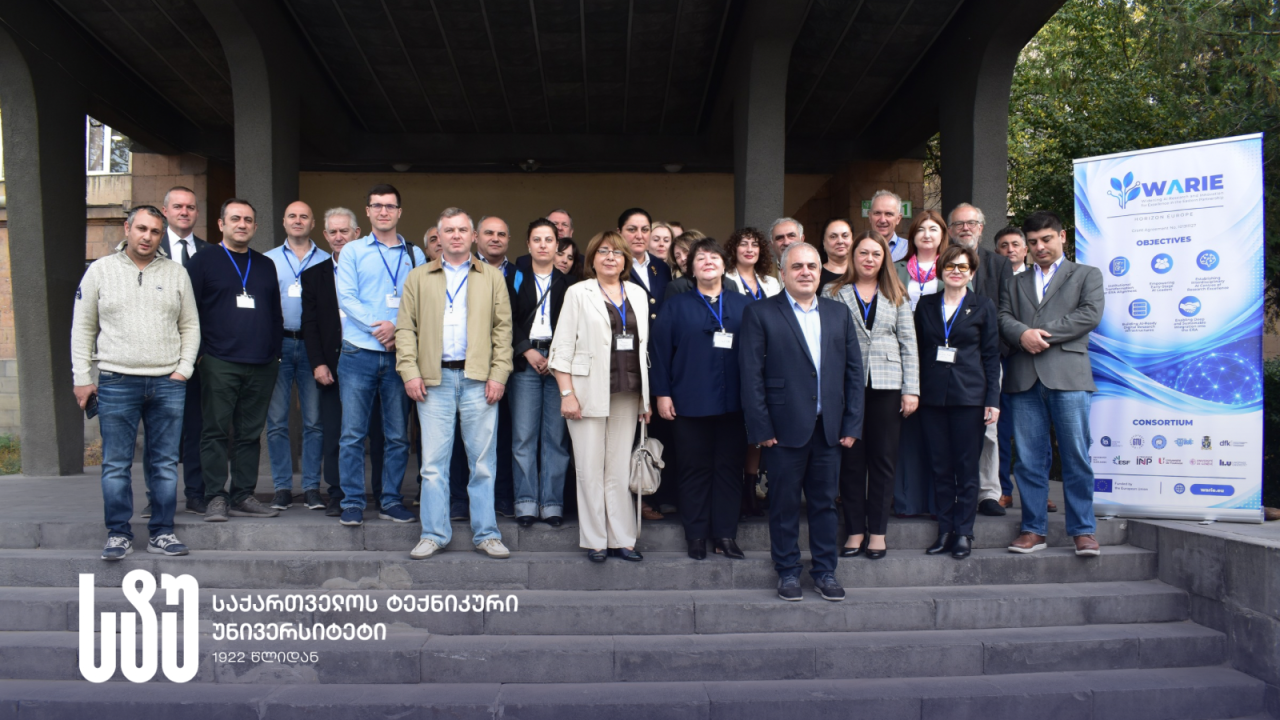
The Niko Muskhelishvili Institute of Computational Mathematics at the Georgian Technical University has won another international grant project under the “Horizon Europe” framework
“Participation in the WARIE project – funded through “Horizon Europe” – serves as further confirmation of our university’s scientific potential,...

News
Announcement of the Council of the Faculty of Law and International Relations on Calling the Election for the Position of Head of the Faculty Quality Assurance Office
In accordance with Article 25 of the Law of Georgia "On Higher Education"; Article 22 of the Charter of the...
News
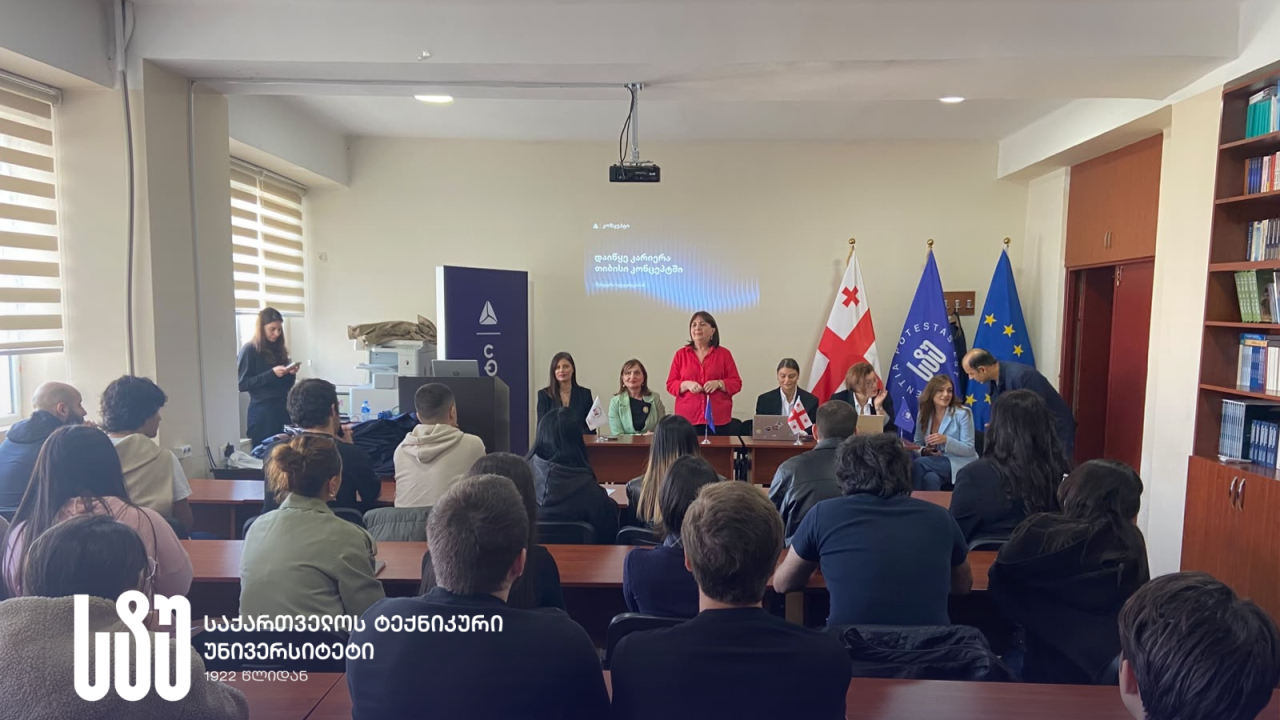
Students from the Faculty of Business Technologies at the GTU met with representatives from TBC Concept
Organized by the Career Development Service, the meeting between students from the GTU Faculty of Business Technologies and representatives of...
News
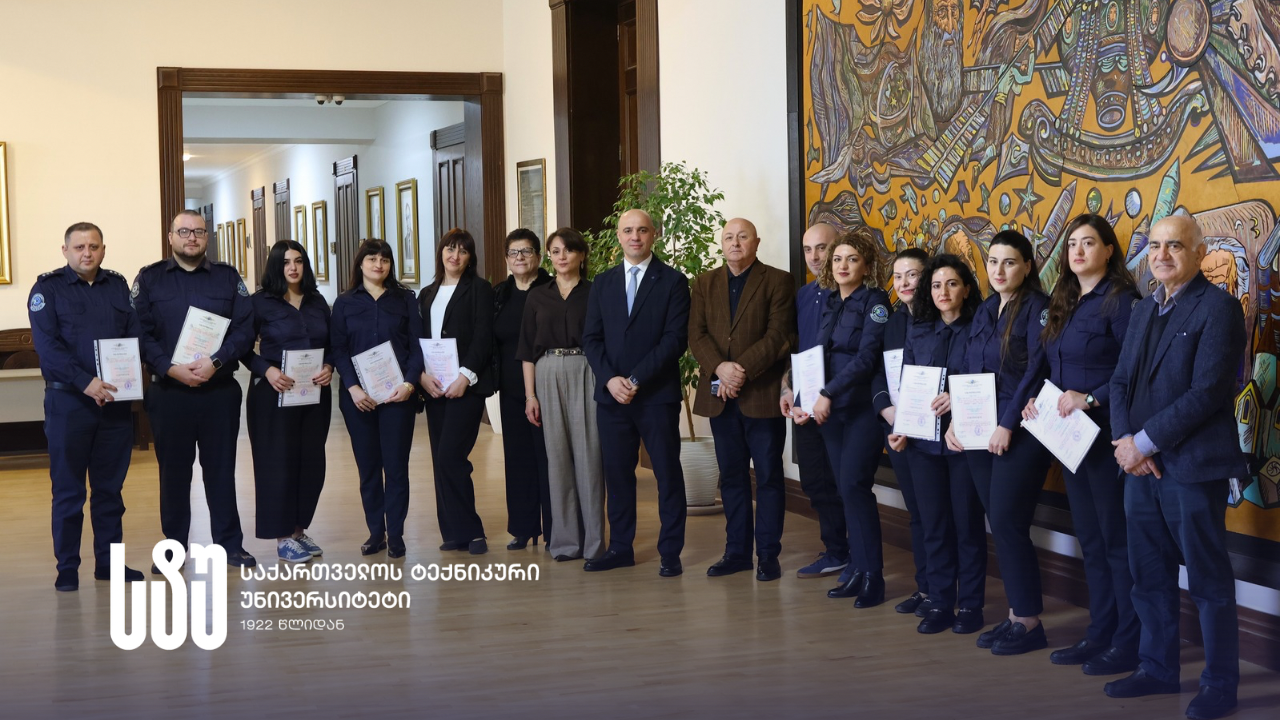
Certificates Awarded to 23 Customs Officers of the Revenue Service
The Georgian Technical University has awarded certificates to 23 customs officers from the Customs Department of the Revenue Service (under...