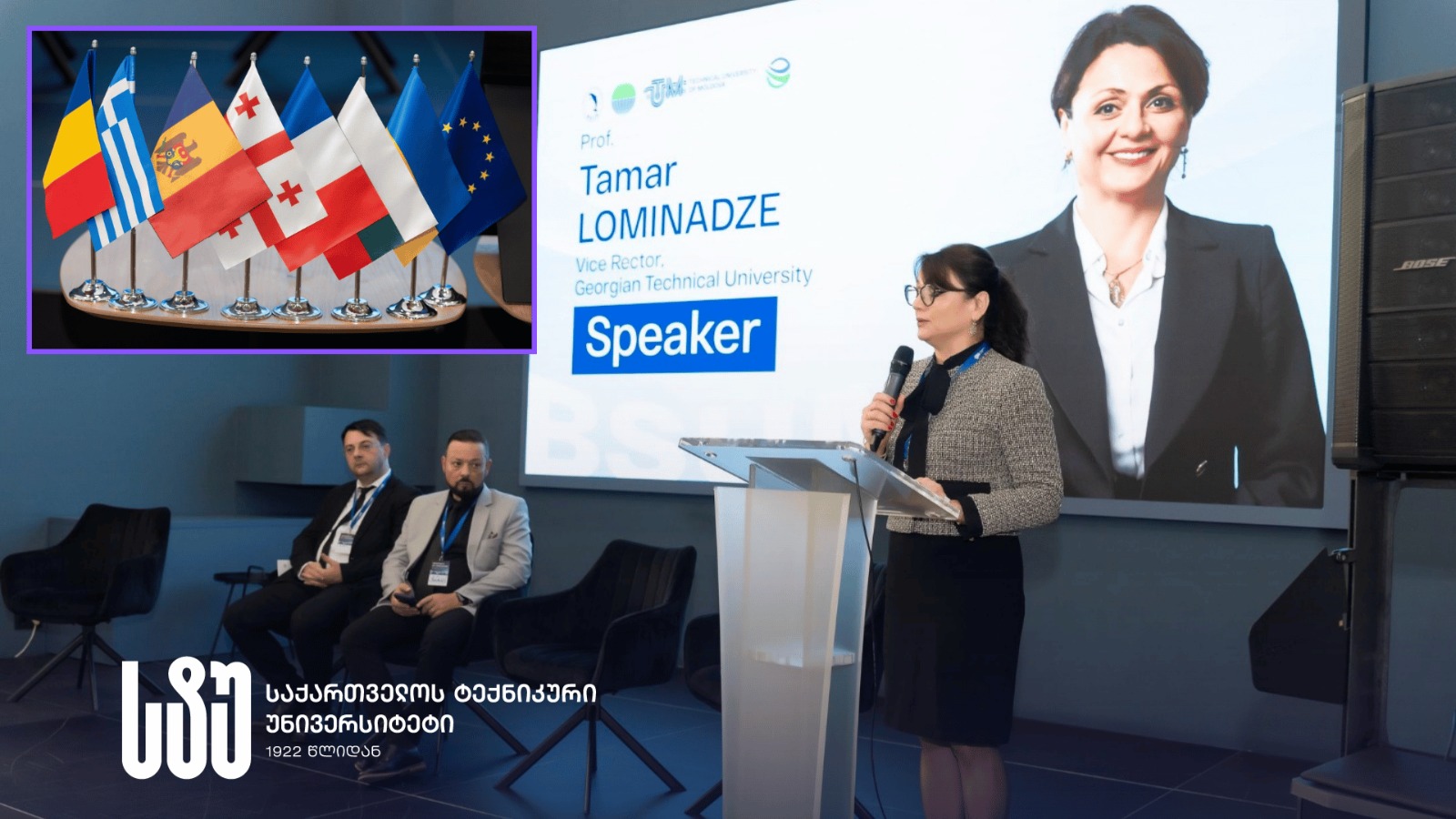
The Vice-Rector of the GTU addressed the participants of the International Congress of the Black Sea Universities Network (BSUN – 2026)
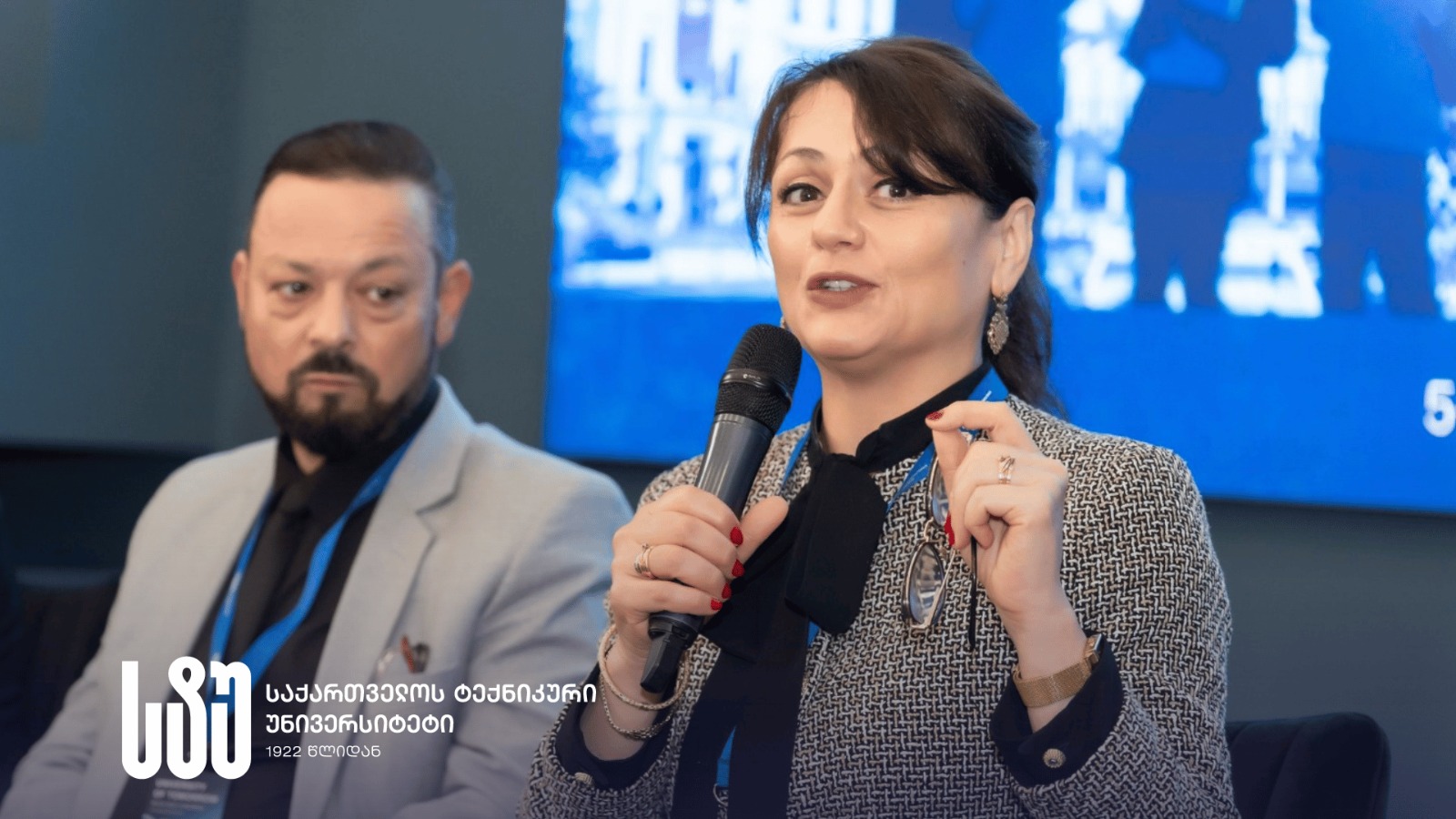
“We live in an era where humanity’s scientific and technological capabilities are reaching unprecedented heights; yet, issues of peace and coexistence remain among our greatest challenges. This is precisely why “university diplomacy” – the role of universities in contexts where the reach of traditional diplomacy is limited, political dialogue has ceased, and trust between societies has been shaken – takes on such critical importance. Allow me to share the experience of the Georgian Technical University: in 2022, during the very first months of the full-scale war in Ukraine – amidst an extremely dire and dangerous situation – the Rector of GTU, Academician David Gurgenidze, traveled to Ukraine alongside the President of the Student Self-Government. During their visits to universities in Kyiv, Odesa, and Lutsk, they met with the Minister of Education and Science of Ukraine, as well as university representatives, including leaders, professors, and students. This was not merely an official visit, but an expression of academic solidarity and human support, conveying the message: “You are not alone – the academic community stands with you.” During this same period, Ukrainian-language school textbooks for Ukrainian children who had found refuge in Georgia were printed free of charge at the Georgian Technical University printing house. This initiative went far beyond educational assistance; it supported the preservation of these children’s identity, dignity, and future. Another crucial aspect of university diplomacy is science’s international nature. If we forbid scientists from communicating and collaborating today, who will rebuild the broken bridges, and who will initiate a dialogue – when the need arises? We in Georgia – a country with parts of its territory still under occupation are particularly attuned to the significance of this issue. Despite the actual suspension of political dialogue, the Georgian Technical University strives to integrate our fellow citizens living beyond the occupation line into university life, as well as into educational and scientific activities, to the greatest extent possible. Maintaining academic ties and cooperation is the foundation for restoring trust and for the path toward peace,” stated Professor Tamar Lominadze, Vice-Rector of the Georgian Technical University, at an international congress.
Professor Tamar Lominadze, Vice-Rector of the Georgian Technical University, attended the Black Sea Universities Network (BSUN) congress. Within the framework of this event, an international conference titled “University of Tomorrow” was held on November 5–6 at the Technical University of Moldova in Chisinau, the capital of Moldova. The conference focused on pressing issues such as higher education development, university transformation, artificial intelligence, and international academic cooperation.

The international congress brings together representatives from higher education institutions in the Black Sea region and Europe, education experts, and delegates from international organizations. Participants from seven countries are taking part in the event. The congress aims to analyze contemporary trends in higher education, develop a concept for the university of the future, and identify new opportunities for regional and international academic cooperation.
Professor Tamar Lominadze participated in the first day’s plenary session, which focused on the role of universities in new regional and global contexts, and addressed attendees. On behalf of the university’s Rector, Academician David Gurgenidze, the Vice-Rector of the Georgian Technical University welcomed participants and wished them a successful, productive event.
“The congress will include meetings with representatives from international academic networks and European university alliances, including the European University Association (EUA), UNICA, and other international educational associations. On the second day, the BSUN General Assembly and the 17th Conference of Rectors of the Black Sea Region will also take place, where the network will discuss its future activities and priority areas for 2026–2028.
International speakers at the conference include Dr. Garry Jacobs, President of the World Academy of Art & Science; Dr. Alberto Zucconi, President of the World University Consortium; and Professor Mihnea Costoiu, Rector of the Polytechnic University of Bucharest.
For the Georgian Technical University, these issues take on particular significance. As a higher education institution focused on engineering, technology, and science, the University plays a vital role in developing modern technologies, digital innovations, and research-based education. In this context, participating in international academic dialogue provides an opportunity for the University to share international experience, showcase its own academic and scientific potential, and strengthen collaboration with international partners.”
– Professor Tamar Lominadze
The central theme of the conference was the so-called “University 4.0” – a model for the university of the future, which entails transforming higher education institutions into open, interconnected, and innovation-oriented entities that are actively engaged in societal processes. This concept preserves academic traditions while integrating modern technologies, digital tools, and artificial intelligence capabilities.
The congress agenda emphasizes the impact of artificial intelligence on education and scientific research, digital transformation, the development of new teaching and research models, international networking among universities, and the future of the Bologna Process and the European Higher Education Area (EHEA). The Ministry of Education and Research of Moldova supports the congress. It serves as a preparatory event for the EHEA Ministerial Conference and Global Policy Forum, scheduled for 2027 in Moldova and Romania. The Ministerial Conference will be held on May 26–27, 2027, in Chișinău and Iași, bringing together representatives from the 46 member countries of the European Higher Education Area. A key expected outcome of the congress is the development and adoption of a strategic position paper on “University 4.0”.
Related
International Visits
Annual Meeting of the VINIFERA EUROMASTER Consortium Partners at GTU
The Georgian Technical University hosted the annual meeting of partners from “Vinifera EuroMaster”, an international educational consortium focused on viticulture...
International Visits
Meeting of the GTU Rector with a Delegation of Scientists from the Saarland University of Applied Sciences and Technology
“We view the development of joint doctoral programs and the securing of international scientific grants as key prospects for deepening...
International Visits
Visit of Representatives from the Norwegian Geotechnical Institute to GTU
“International partnership is one of the cornerstones of our faculty's development. These connections are vital for giving students practical experience,...
International Visits
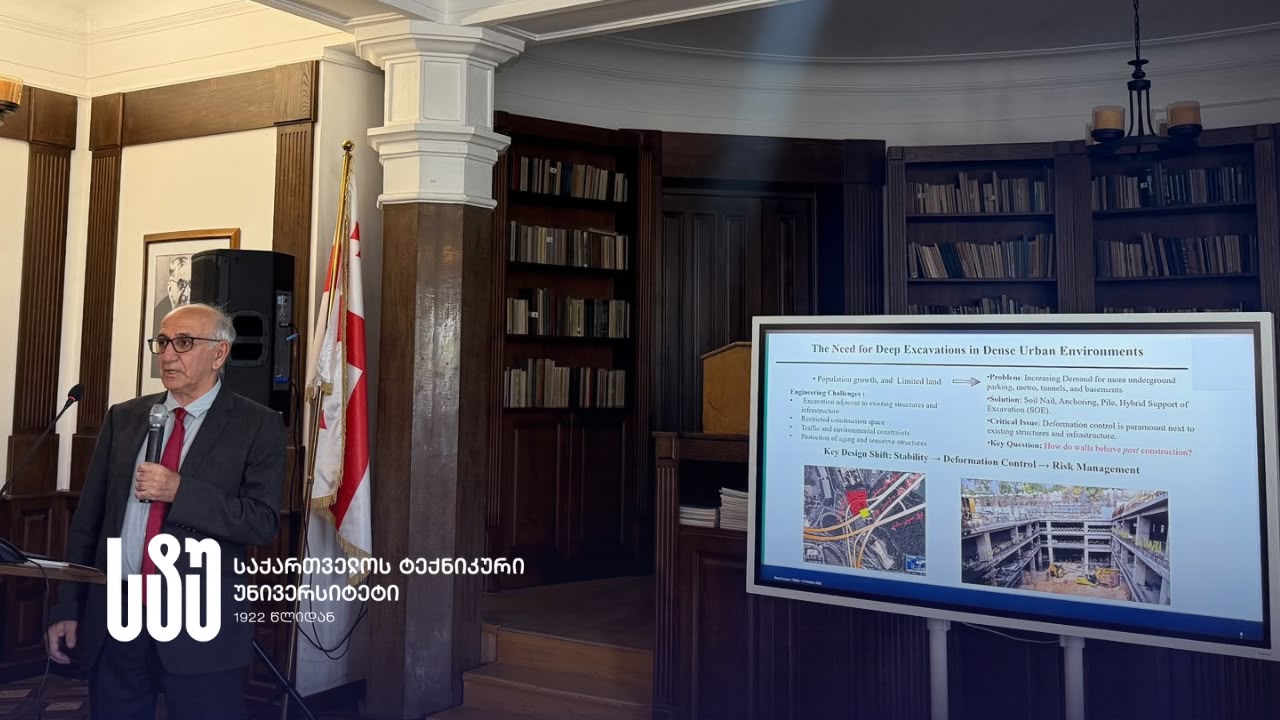
Public Lecture by Dr. Shahab Yasrobi, Geotechnical Engineering Expert and International Consultant at GTU
Georgian Technical University hosted a public lecture by Dr. Shahab Yasrobi, a professional geotechnical engineer, international consultant, tunneling specialist, and...
International Visits
Representatives of Japanese Companies and Organizations at GTU
Representatives of Japanese business companies and organizations paid a working visit to the Georgian Technical University. The delegation met with...
International Visits
GTU Rector’s Visit to CERN: A New Stage in Scientific Partnership Development, Supported by the Minister of Education, Science, and Youth
“The visit to the European Organization for Nuclear Research (CERN) represents a significant opportunity for the Georgian Technical University to...