
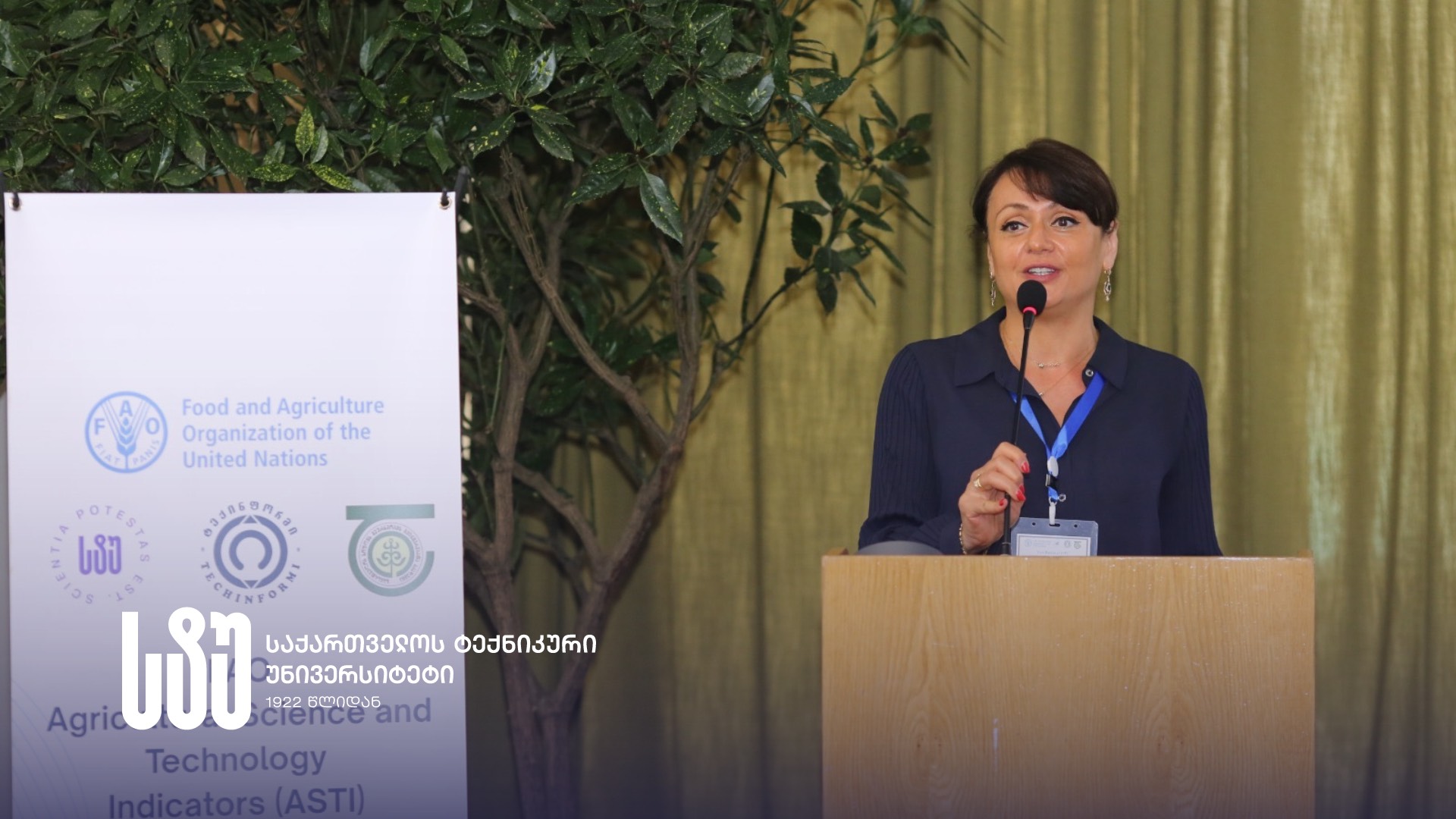
The First Regional Workshop of the Science and Technology Indicators Network was Held, Organized by the GTU Institute “Techinform” and FAO
The first regional workshop of the Agricultural Science and Technology Indicators Network (ASTI) was held in Georgia, organized by the Institute of Scientific and Technical Information of the Georgian Technical University (“Techinform”) and the Food and Agriculture Organization of the United Nations (FAO).
The two-day workshop, which was held with the support and funding of the Food and Agriculture Organization of Georgia (Rome, Italy), in partnership with the Academy of Agricultural Sciences and the National Statistical Service of Georgia, and coordinated by the GTU Institute “Techinform”, was attended by regional observers, heads of agricultural research institutes and scientists from the following countries of Central Asia and the Caucasus: Georgia, Armenia, Azerbaijan, Kazakhstan, Kyrgyzstan, Tajikistan, Uzbekistan and Moldova.

The workshop was attended by all institutions from across Georgia that have been involved in the research over the past year. The event was also attended by Iamze Mirazanashvili, a representative of the FAO National Office; Academician Aleksandre Didebulidze, a full member of the National Academy of Agriculture; and representatives of the Department of Agricultural Statistics and various other agencies.
The project, led by the Institute of Scientific and Technical Information at Georgian Technical University, is represented by its Deputy Director, Professor Mariam Razmadze. She participated in the FAO Science and Technology Indicators Network Workshop in 2024. According to Professor Tamar Lominadze, one of the project’s goals is to refine the model for collecting scientific data in agriculture over a three-year period. This model is based on the framework developed by the FAO and aims to integrate agricultural data collection into the national statistics system.
“In 2024, the FAO ASTI pilot project was conducted in nine countries around the world, including Georgia. Over a year, under the coordination of FAO, a methodology for identifying indicators in agriculture and ways of further institutionalization were developed. Special questionnaires were developed and sent to universities, institutes, and agencies engaged in agricultural research for completion. The collected data were processed and displayed as a pilot on the FAO portal for further processing and analysis. Quite interesting and debatable statistical and analytical results were drawn up. Against this background, a year later, “Techinform”, as the project coordinator, is holding a two-day working meeting in Georgia under the leadership of the FAO Headquarters of the Food and Agriculture Organization of the United Nations, together with the Department of Research and Development Statistics, to discuss the presentation and results. We discussed the developed statistical analysis and the practical value of the results obtained. Based on further data analysis and systematic analysis, it will be possible to make noteworthy recommendations and refine the action plan, which will be concrete steps towards data systematization, reporting, and policy support. This is one of the important projects with the participation of “Techinform”, for which I would like to thank the Director of the Institute “Techinform”, Neli Makhvihadze, Deputy Director Mariam Razmadze, all scientists involved in the project, and wish them success,” said Tamar Lominadze.
Summing up the significance of the event, the rector of the Georgian Technical University states that “Techinform”, under the leadership of Professor Neli Makhvihadze, is positioning itself as a key institute for coordination and data systematization in the field of agricultural research, which has been cooperating with FAO in various scientific areas since 2000.

According to Academician David Gurgenidze, the event strengthens Georgia’s position in the region as one of the leading countries in agricultural research. The participating countries are establishing a cooperation platform that will allow the Georgian Technical University and Georgian science to establish closer ties with neighboring countries in terms of research and knowledge sharing. According to the rector, “Techinform” has been carrying out state-of-the-art work for 67 years, which is the basis for the development of modern information technologies.
Academician David Gurgenidze thanks the head of the institute, Neli Makhvihadze, for the system of concepts and recommendations for scientific and technical development progressed by the institute, for the latest information on innovations and new technologies. As the rector notes, the database developed by the institute in recent years is an online registration system for scientific projects, which is actively being filled and developed.
“Techinform” is the only institution in the Georgian scientific space that collects research publications in the technical field and publishes a bilingual abstract journal based on them.
“For a university that has been serving the development of science and technology for more than a century, organizing and coordinating international events is especially important. Georgia is actively involved in the systematic analysis of data-based research in the agricultural sector. It is important that the analysis of data collected by the ASTI network serves to shape policy in the field. This workshop, however, contributed to the sharing of knowledge and experience across the region. The ASTI network serves to strengthen this approach. It combines the experience of different countries, promotes the structured collection, analysis, and use of data, which is especially important for areas such as funding for research and innovation, agricultural education, and strengthening the agricultural sector. I think that an integrated approach should ensure that the decisions made are based on real data and serve the sustainable development of the field,” says David Gurgenidze.
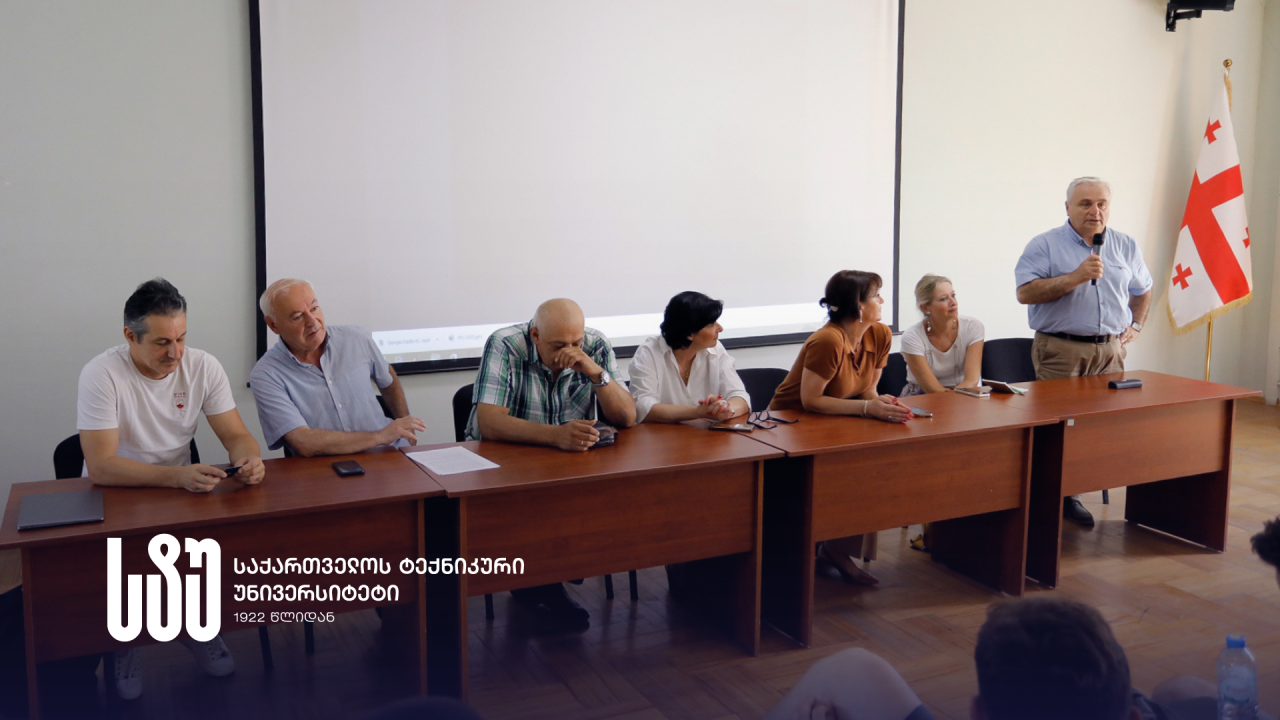
During the event, participants discussed how to institutionalize indicators for research. As Professor Mariam Razmadze, Deputy Director of “Techinform”, noted, Georgia is transitioning from ad hoc research to long-term, systematic data collection. This shift will necessitate an increase in staff, infrastructure, and resources. Such developments will create opportunities for the Georgian Technical University and other partner institutions to grow and strengthen their capabilities.
Related
News
GTU Responds to Articles Published in the Newspaper “Asaval-Dasavali”
The Georgian Technical University addresses a series of articles published in issue 86/87 of the newspaper “Asaval-Dasavali” (dated November 9,...

News
Rector of the GTU Expresses Condolences on the Passing of Professor Nino (Neli) Chichinadze
On behalf of the university community, the Rector of the Georgian Technical University, Academician David Gurgenidze, expresses his condolences to...
News
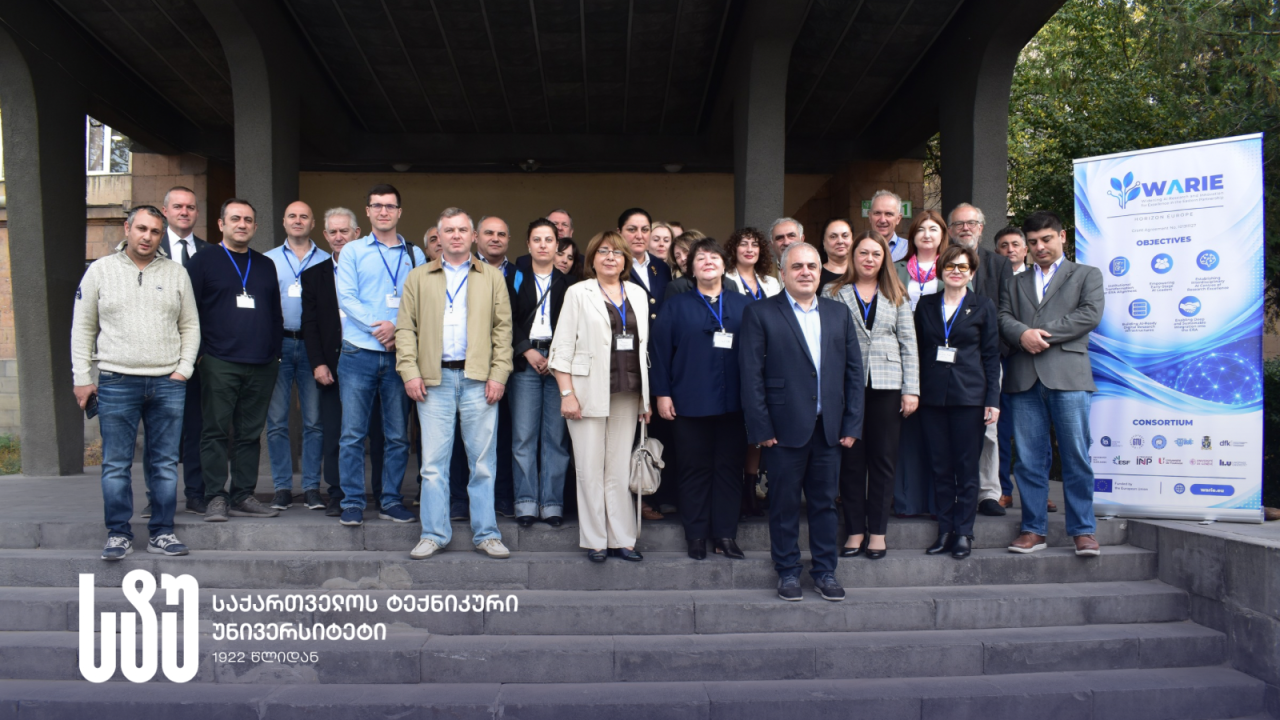
The Niko Muskhelishvili Institute of Computational Mathematics at the Georgian Technical University has won another international grant project under the “Horizon Europe” framework
“Participation in the WARIE project – funded through “Horizon Europe” – serves as further confirmation of our university’s scientific potential,...

News
Announcement of the Council of the Faculty of Law and International Relations on Calling the Election for the Position of Head of the Faculty Quality Assurance Office
In accordance with Article 25 of the Law of Georgia "On Higher Education"; Article 22 of the Charter of the...
News
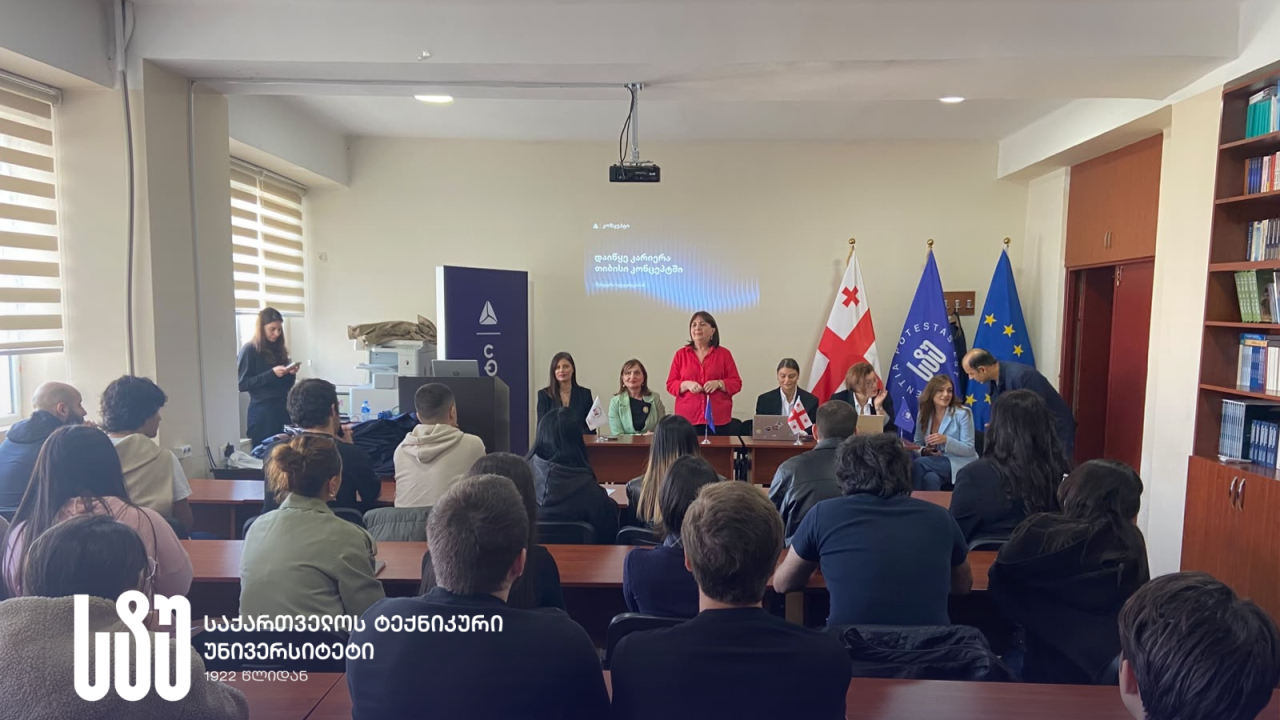
Students from the Faculty of Business Technologies at the GTU met with representatives from TBC Concept
Organized by the Career Development Service, the meeting between students from the GTU Faculty of Business Technologies and representatives of...
News
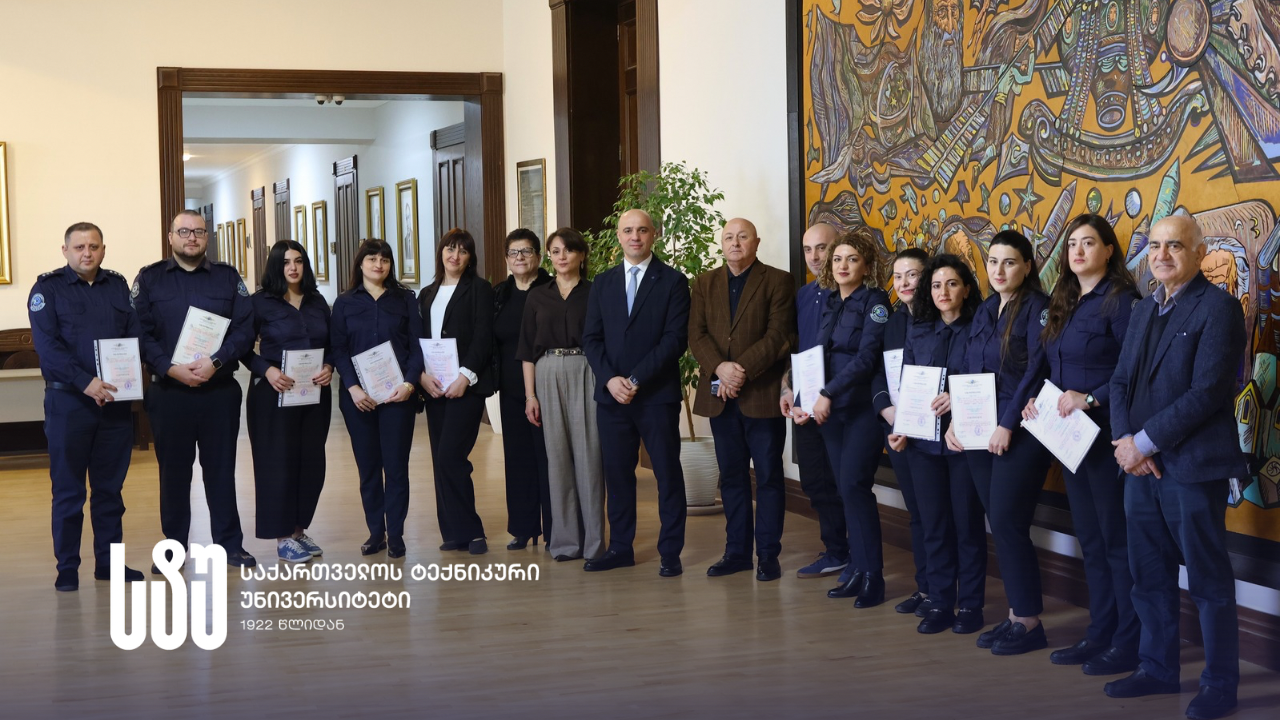
Certificates Awarded to 23 Customs Officers of the Revenue Service
The Georgian Technical University has awarded certificates to 23 customs officers from the Customs Department of the Revenue Service (under...