

GTU Scientists have Developed a Solar Concentrator Using Plasmonic Nanoparticle Light Scattering
“The use of the solar concentrator developed by us, based on light scattering by plasmonic nanoparticles, will reduce the share of traditional sources of electricity generation, which cause environmental pollution. This will be a significant step forward towards a more sustainable and affordable solar energy future. The operational life of the developed solar concentrator is 10-15 years, and the manufacturing technology is simple and inexpensive. Continuing research and development in this area is vital to reveal the full potential of these promising technologies and accelerate the transition to clean energy,” says Gia Petriashvili, Chief Scientist at the Vladimer Chavchanidze Institute of Cybernetics, of the Georgian Technical University.
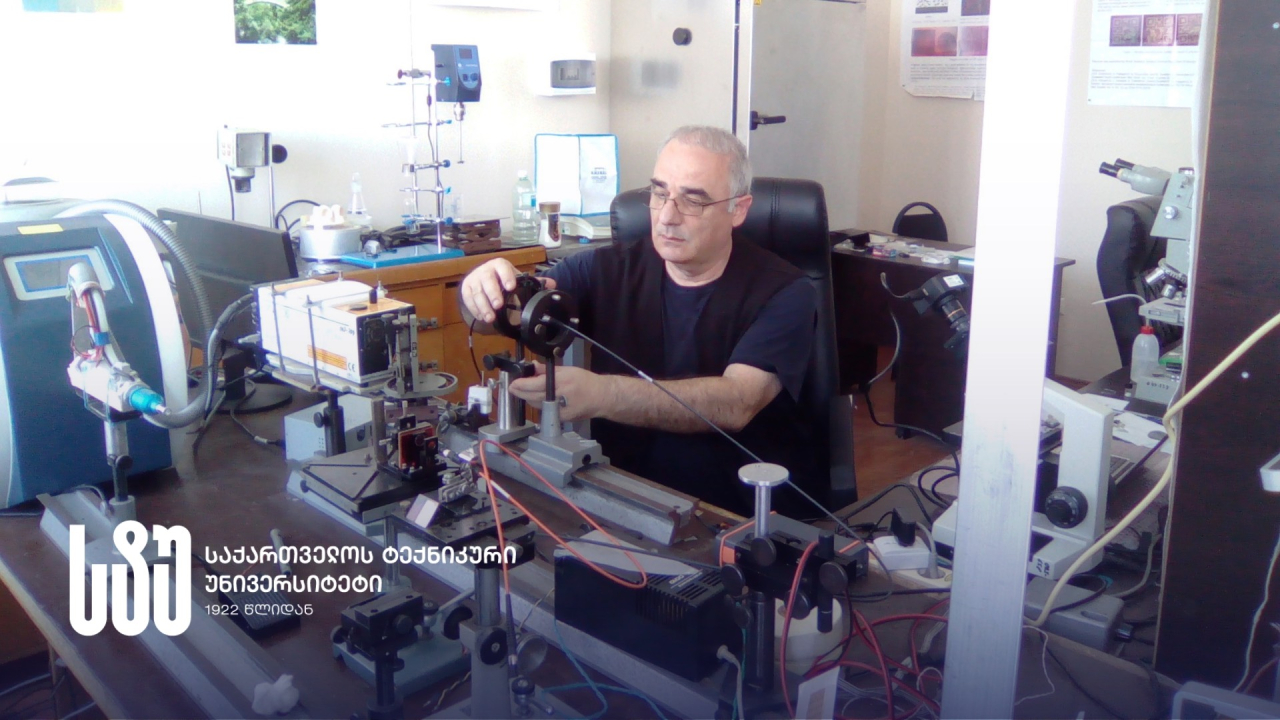
A group of scientists from the GTU Vladimer Chavchanidze Institute of Cybernetics, led by Gia Petriashvili, has made advances in solar energy research using plasmonic nanoparticles.
As Gia Petriashvili states, technologies based on plasmonic nanoparticles are used in the development of small energy sources, through which, by creating certain conditions, the directions of light intensities on glass surfaces are controlled.
“A solar concentrator is a nanocomposite evenly spread on a glass surface, consisting of plasmonic nanoparticles dispersed in a transparent polymer. The visible and near-infrared regions of the optical spectrum emitted by the sun are scattered by the plasmonic nanoparticles in such a way that a certain amount of light propagates into the glass, in the form of reflections from its upper and lower surfaces. The main essence of increasing the efficiency of the intensity emitted by the sun lies in directing the light energy falling on the surfaces of large areas to the perimeters of these areas, which is carried out by the principle of waveguide propagation of light. As a result, the light energy falling on a given surface is directed and concentrated along the perimeter of that surface, which sharply increases the light intensity in these areas. According to preliminary calculations, approximately 30–35 percent of the light falling on the glass surface is converted into electrical energy. If we attach solar cells to the perimeter of the glass, they convert incident light into electrical energy, which can be used to operate various electrical devices. Based on the proposed concept, it is possible to manufacture a solar radiation concentrator-window, which will have the following advantages compared to existing analogues: both visible and near-infrared regions of solar radiation will be used, the intensity of the converted light will not depend on the angle of incidence of the light, the efficiency of converting light into electrical energy will increase, due to the refraction of the incident light, the amount of heat entering the buildings will be reduced, solar elements will not overheat, the windows will be transparent without pronounced color,” says Gia Petriashvili.
According to Mikheil Janikashvili, Head of the GTU Department of Science and Innovation, the solar concentrator developed by the group of scientists uses environmentally friendly and safe materials. For example, the plasmonic nanoparticles we use are also used in the food industry.
“The solar concentrator developed by our scientists can be installed both in densely populated areas and in hard-to-reach locations. Wherever it is possible to use ordinary windows in buildings. Scientists are conducting experiments to optimize the concentration ratios of optical, thermal, electro-optical, and plasmonic nanoparticles, which are components of the solar concentrator. Working prototypes have already been created, and their physical parameters are being optimized to maximize the conversion of light intensities emitted by solar or artificial light sources into electricity. Georgia has great potential in the direction of renewable energy, including wind and thermal energy; however, solar energy can play a decisive role in the transition to a clean, renewable, and energy-independent world. I would like to note that the Georgian Technical University pays special attention to the development of green energy. It is a leader in Georgia in this regard, and considering its growing potential, it is possible in the near future to join the ranks of the world’s leading scientific centers working towards the development of green energy,” says Mikheil Janikashvili.
Related

News
GTU Responds to Articles Published in the Newspaper “Asaval-Dasavali”
The Georgian Technical University addresses a series of articles published in issue 86/87 of the newspaper “Asaval-Dasavali” (dated November 9,...

News
Rector of the GTU Expresses Condolences on the Passing of Professor Nino (Neli) Chichinadze
On behalf of the university community, the Rector of the Georgian Technical University, Academician David Gurgenidze, expresses his condolences to...
News
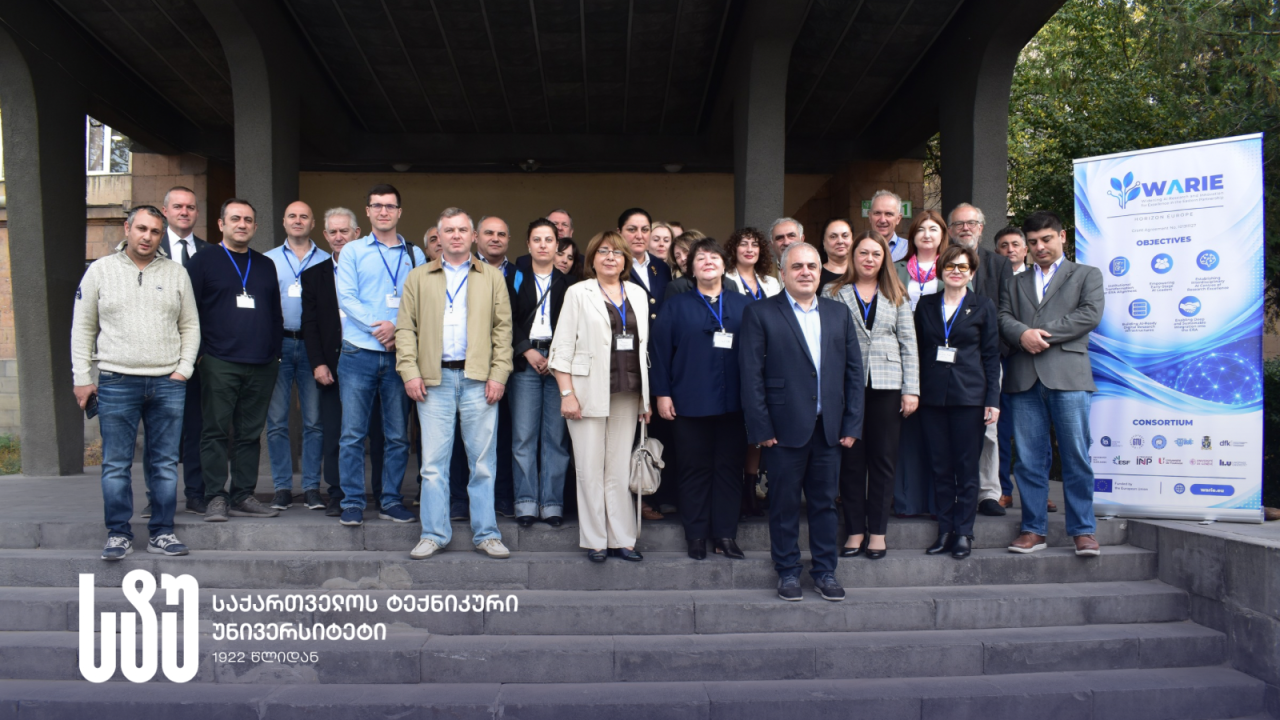
The Niko Muskhelishvili Institute of Computational Mathematics at the Georgian Technical University has won another international grant project under the “Horizon Europe” framework
“Participation in the WARIE project – funded through “Horizon Europe” – serves as further confirmation of our university’s scientific potential,...

News
Announcement of the Council of the Faculty of Law and International Relations on Calling the Election for the Position of Head of the Faculty Quality Assurance Office
In accordance with Article 25 of the Law of Georgia "On Higher Education"; Article 22 of the Charter of the...
News
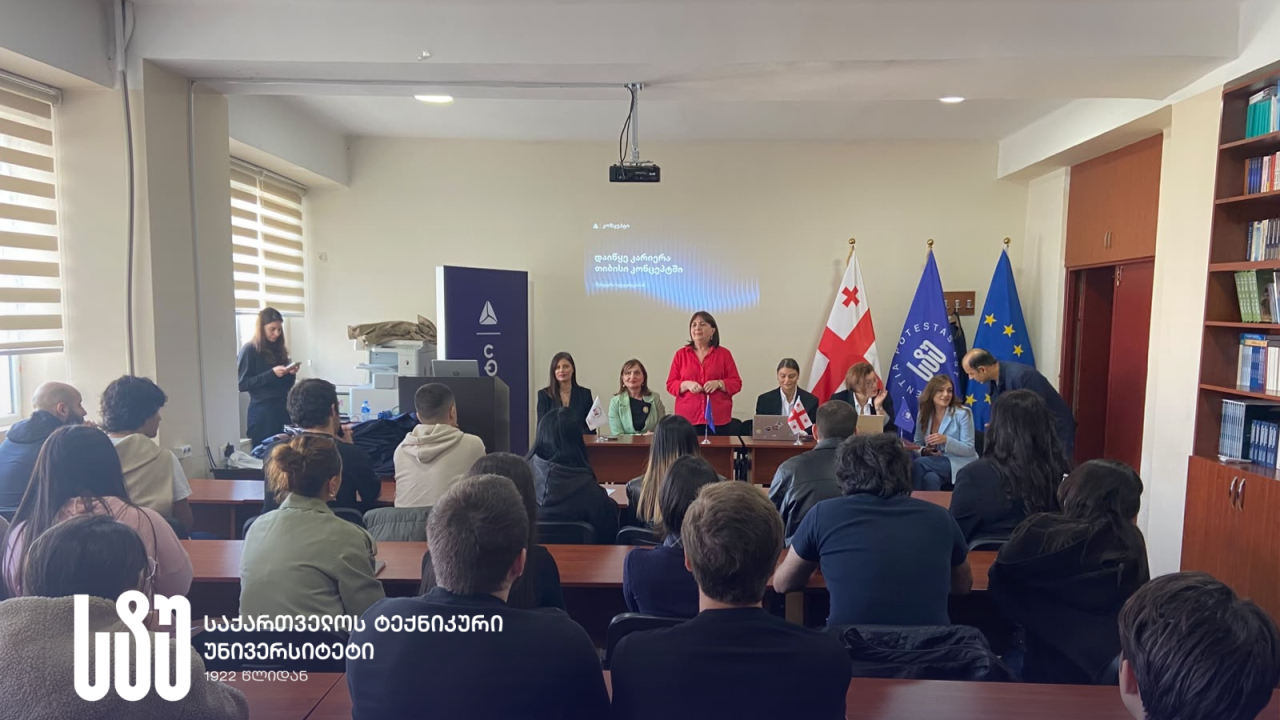
Students from the Faculty of Business Technologies at the GTU met with representatives from TBC Concept
Organized by the Career Development Service, the meeting between students from the GTU Faculty of Business Technologies and representatives of...
News
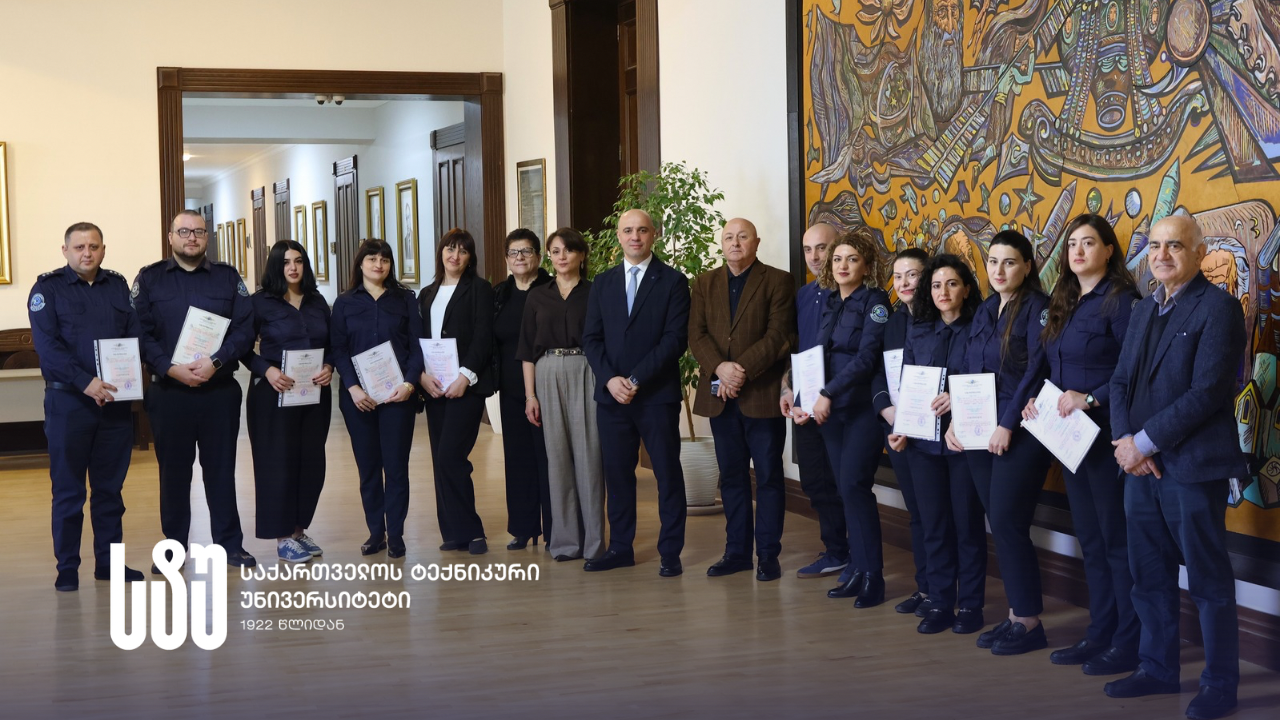
Certificates Awarded to 23 Customs Officers of the Revenue Service
The Georgian Technical University has awarded certificates to 23 customs officers from the Customs Department of the Revenue Service (under...