GTU Rector’s Visit to CERN: A New Stage in Scientific Partnership Development, Supported by the Minister of Education, Science, and Youth
“The visit to the European Organization for Nuclear Research (CERN) represents a significant opportunity for the Georgian Technical University to deepen international scientific cooperation further and expand the participation of Georgian scientists and engineers in global research projects. The renewed framework agreement on cooperation between Georgia and CERN reflects the new opportunities arising from the expanded partnership between the Georgian Technical University and CERN. The document establishes the legal and institutional foundation for developing new scientific fields and experiments. Notably, an event is planned in the near future at which the Minister of Education, Science, and Youth of Georgia, Mr. Givi Mikanadze, will sign the agreement. This decision confirms the state’s support for the development of fundamental science, modern engineering research, and international scientific cooperation. This support is of special importance for the Georgian Technical University, because the partnership with CERN allows our scientists, engineers, and students to participate in projects of the highest technological and engineering complexity and to connect their own knowledge and professional competence with international scientific experience,” says the rector of the Georgian Technical University, academician David Gurgenidze, who is on a working visit to CERN.
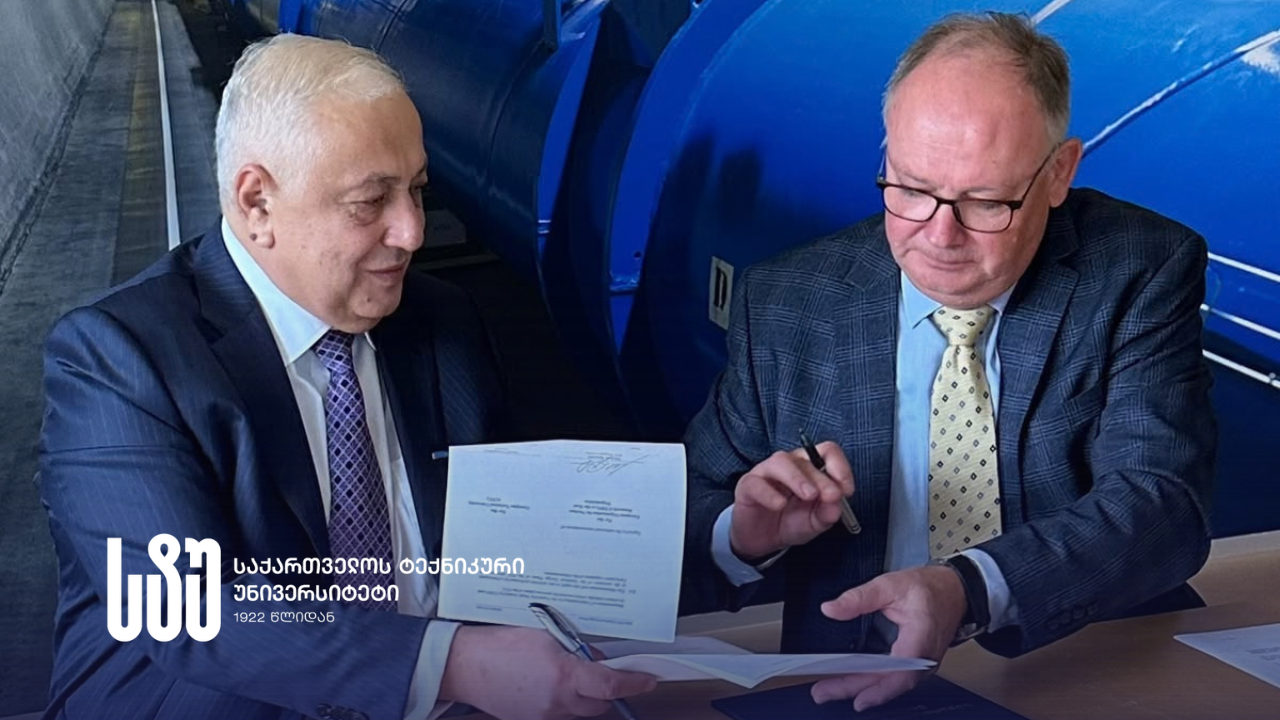
During his working visit to CERN, Academician David Gurgenidze met with Dr. Michael Benedikt, leader of the Future Circular Collider (FCC) project. The parties discussed implementation plans and opportunities for involvement by scientists and engineering teams from the Georgian Technical University. A key outcome of the meeting was the signing of an expanded Memorandum of Understanding between CERN and the GTU, which envisages a partnership to implement the FCC project. The parties also emphasized the prospects of preparing Georgia for associate membership in CERN. Deepening cooperation in this area represents a significant milestone for Georgia’s scientific and technological integration into the European Research Area.
„CERN’s Future Circular Collider (FCC) project is one of the largest and most ambitious initiatives in modern fundamental science, aiming to study elementary particles and the universe’s fundamental laws in far greater depth. The project entails building a new underground tunnel with a 91-kilometer circumference, designed to house next-generation accelerators. This infrastructure will enable scientists to study the properties and interactions of elementary particles—and the physical processes involved – with exceptional precision, potentially providing new answers to long-standing, unresolved questions in modern physics.
Leading up to 2048 – when the first physical experiments within the FCC framework are scheduled – the project requires extensive engineering and infrastructure work. This process involves engineers from various disciplines, geologists, construction specialists, IT experts, architects, and energy specialists. A meeting with Michael Benedikt highlighted the prospect of participation for highly qualified specialists – particularly young scientists – from relevant departments at the Georgian Technical University in the CERN project; this offers them a significant opportunity to gain professional experience and develop their competencies in an international scientific and technological environment. This is another unique opportunity for the university and the next generation of scientists to participate in implementing a global scientific-technological project, gain international experience, and contribute to the development of modern science and engineering.“
– Academician David Gurgenidze
During his working visit, Academician David Gurgenidze met with Dr. Salvatore Mele, Principal Coordinator for Relations with Associate and Non-Member States at CERN, and Dr. Matteo Castaldi, Resource Coordinator and Board Chair of the ALICE Collaboration – one of CERN’s major experiments. During the meeting, the parties assessed the current state of cooperation between Georgia and CERN and discussed prospects for its further development. CERN representatives confirmed that work to update the protocol is underway and expressed readiness to conclude the process by signing a new agreement. In line with the planned agreement, the updated document will incorporate proposals submitted by the Georgian Technical University and expand the existing framework of cooperation.
The signing of the memorandum on the FCC project, ongoing work to renew the cooperation protocol, and meetings with CERN leadership lay the groundwork for Georgian Technical University to build its capabilities in global scientific projects and expand its participation in international research activities. The renewed framework agreement, to be signed by Givi Mikanadze, Georgia’s Minister of Education, Science and Youth, will create new opportunities for institutional development, implementation coordination, and the sustainability of the scientific fields and experiments defined within the cooperation framework with CERN.
Related
International Visits
Georgian Technical University Hosts International Scientific Delegation
To expand cooperation, an international scientific delegation from leading universities and scientific institutes across Europe visited Georgian Technical University. Academician...
International Visits
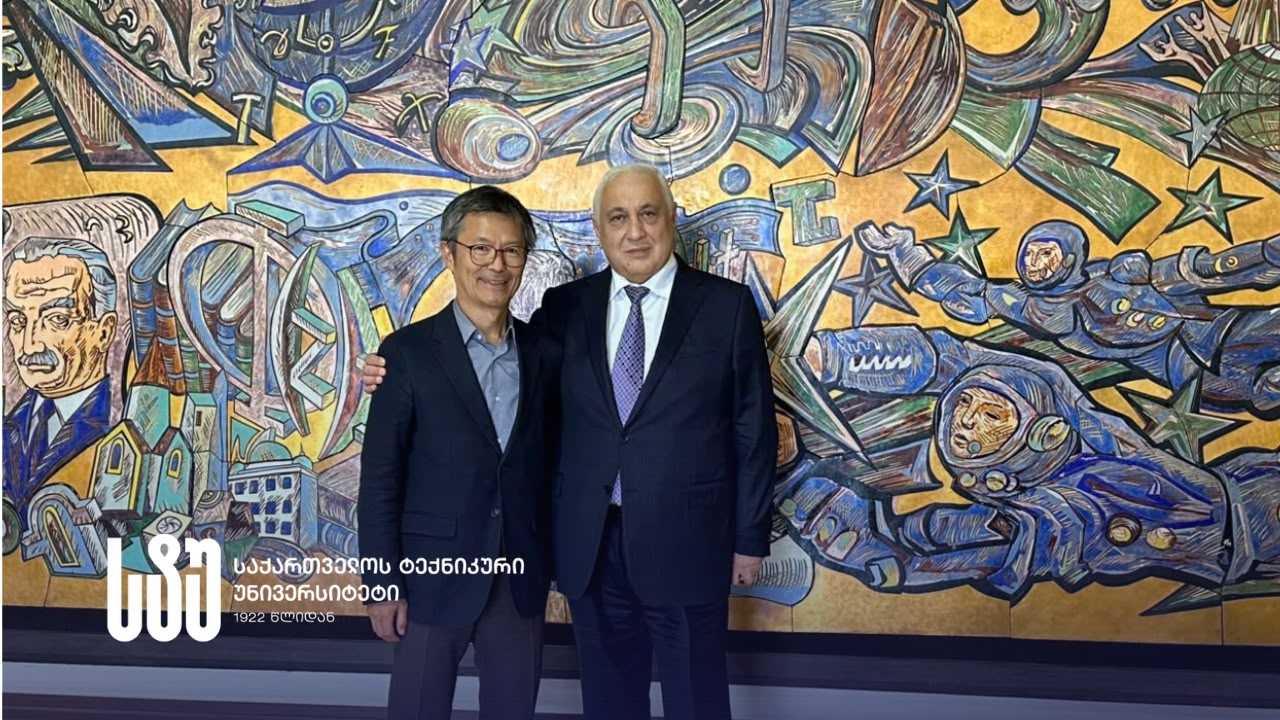
GTU Rector, Academician David Gurgenidze, Met with COMET Experiment Leader Professor Satoshi Mihara
The Rector of the Georgian Technical University, Academician David Gurgenidze, met with Professor Satoshi Mihara – a scientist at KEK’s...
International Visits
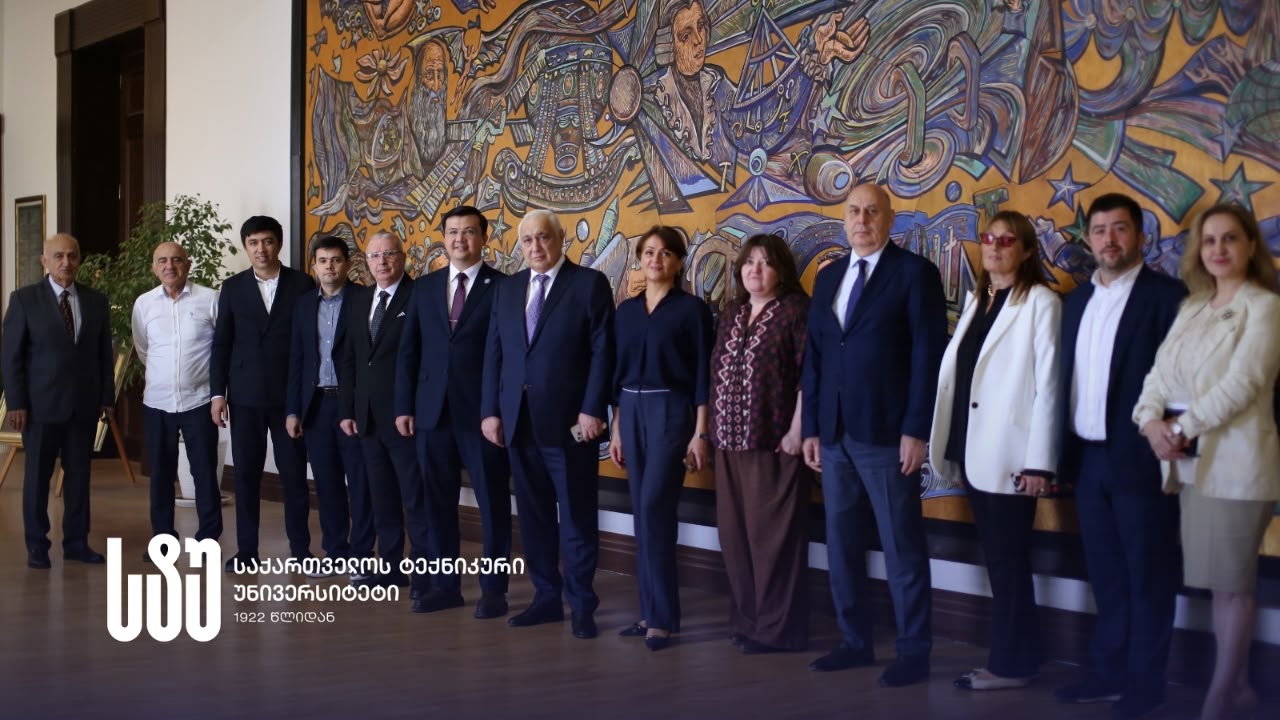
GTU Rector, Academician David Gurgenidze, met with Professor Akmal Alakuliev, Rector of Tashkent Kimyo International University
Academician David Gurgenidze, Rector of the Georgian Technical University, hosted Professor Akmal Alakuliev, Rector of Tashkent Kimyo International University (KIUT),...
International Visits
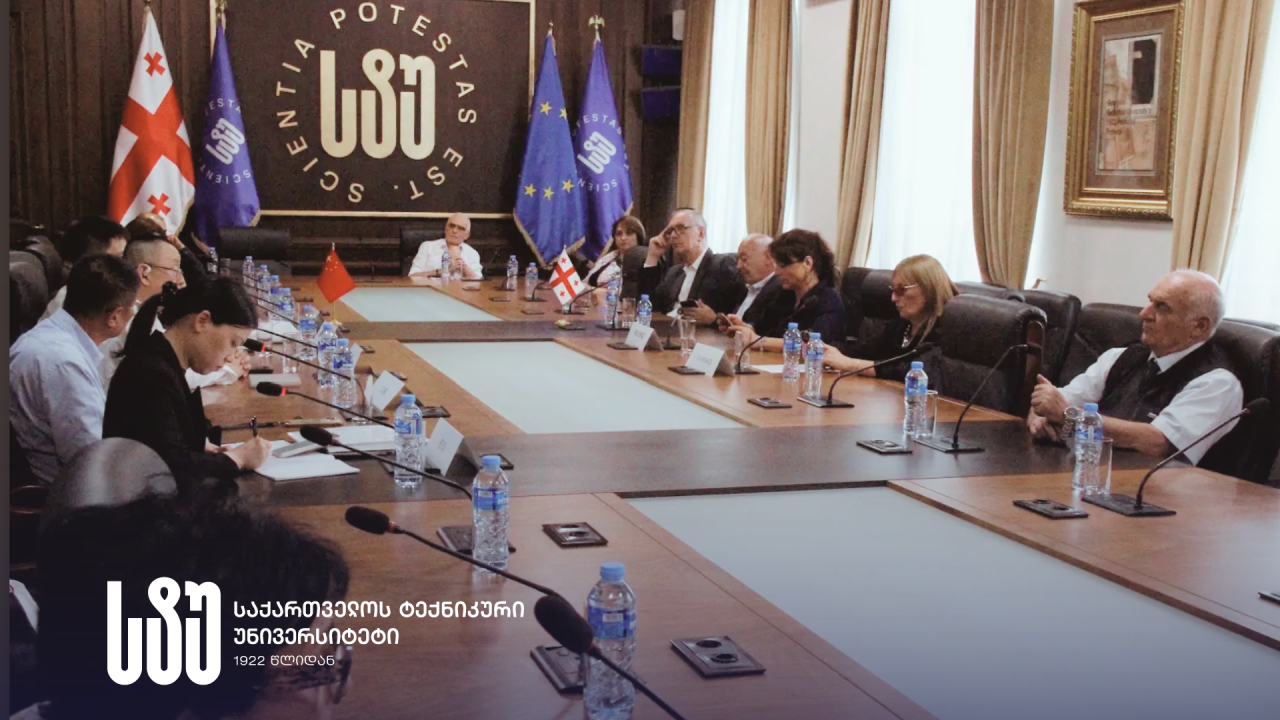
Meeting Held at GTU with a Delegation from China’s International CORE Academy
The Georgian Technical University (GTU) hosted a delegation from China’s International CORE Academy of Sciences and Humanities. During the working...
International Visits
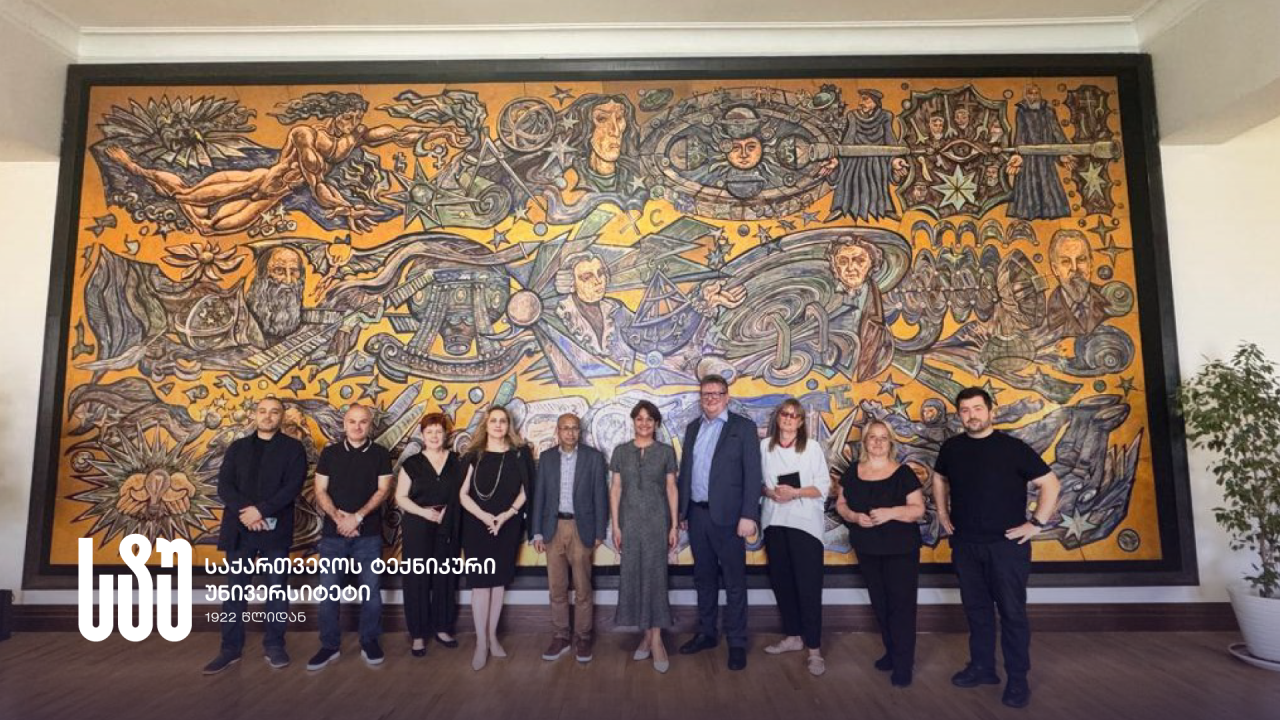
Visit of Professors from Keele University to GTU
Professors Colin Rigby and Gulam Sorvari from Keele University are visiting Georgian Technical University (GTU) as part of the project...
News
Visit of the President of the Asian Academy of Sciences to GTU
Vice-Rector of the Georgian Technical University, Professor Tamar Lominadze met with the President of the Asian Academy of Sciences (AASc,...