Public Lectures by Georgian and International Young Researchers at GTU
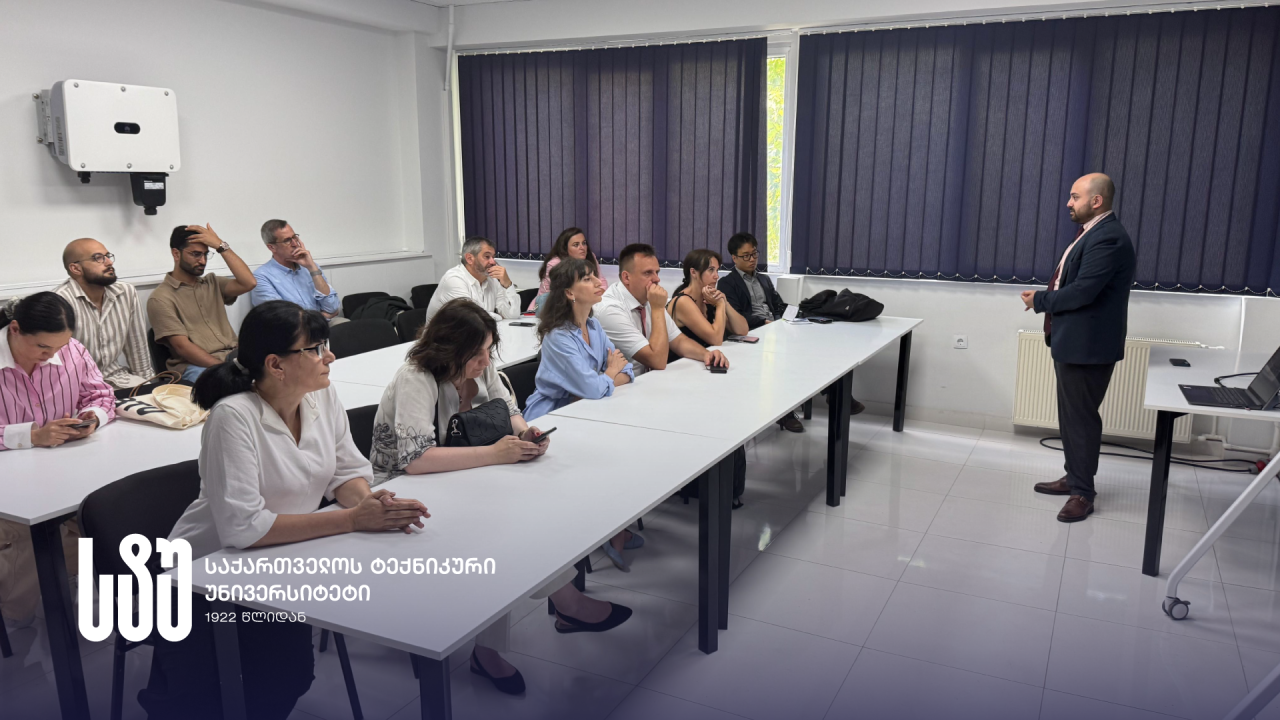
Young researchers – Georgian and international doctoral candidates – delivered public lectures to students at the Georgian Technical University, organized by the Department of Biomedical Engineering within the Faculty of Informatics and Control Systems.
At the invitation of the university’s Department of Biomedical Engineering, Raul Simpetru, a researcher and doctoral candidate at the N-Squared Lab (FAU Erlangen-Nürnberg, Germany), and Salome Pirosmanishvili, a researcher and doctoral student in the Biomedical Engineering program at the Georgian Technical University, delivered the lectures.
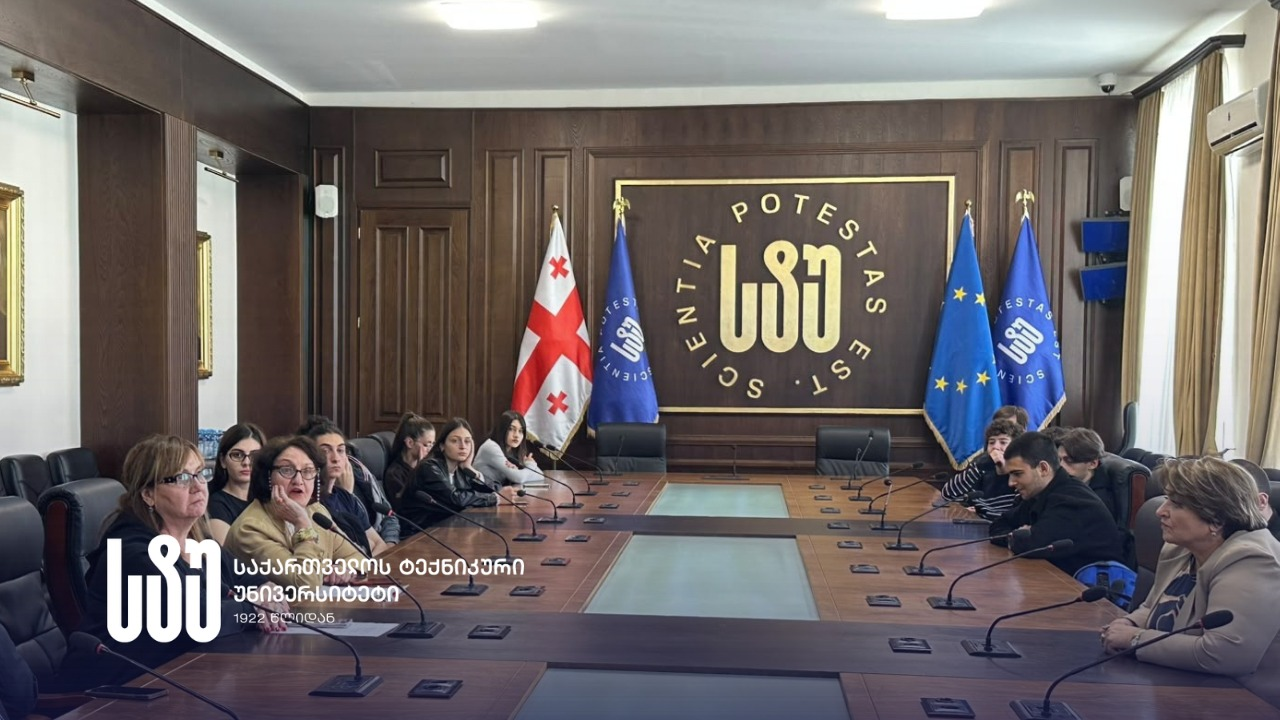
Along with students from the Biomedical Engineering educational program, the public lectures were attended by Professor Taliko Zhvania, Dean of the Faculty of Informatics and Control Systems; Professor Lili Petriashvili, Deputy Dean; Professor Irine Gotsiridze, Head of the English-language Biomedical Engineering program and Director of the University Center for International Accreditation; and faculty members.
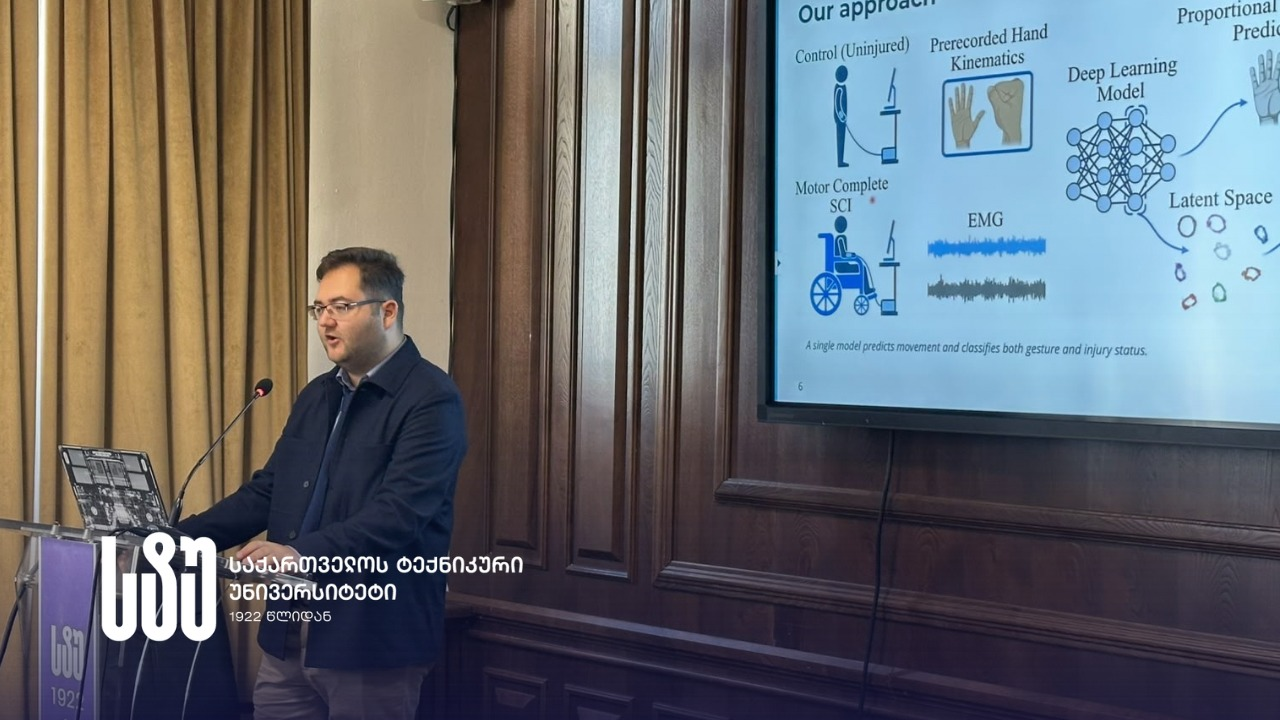
Speaking on the topic “Muscles, Machines, and Movement: The Role of EMG in Simulation and Rehabilitation,” Raul Simpetru discussed modern EMG technologies and their capabilities regarding human movement research, robotics, and rehabilitation. The speaker provided a detailed overview of his research interests, which encompass neural interfaces, electromyography (EMG), and human motor control. He emphasized that his work focuses on restoring and improving hand function for individuals with neuromuscular disorders. Raul Simpetru also explained how machine learning supports effective management of neurorehabilitation processes and the creation of biomechanical simulations.
Salome Pirosmanishvili’s topic – “From Neuronal Activity to Electrical Signals and Vice Versa” –addressed mathematical and engineering models for processing neuronal impulses (spikes) and converting them into electrophysiological signals. She discussed methods for decoding biosignals from the nervous system, digital filtering algorithms, and the challenges of acquiring and interpreting high-precision data in biomedical research.
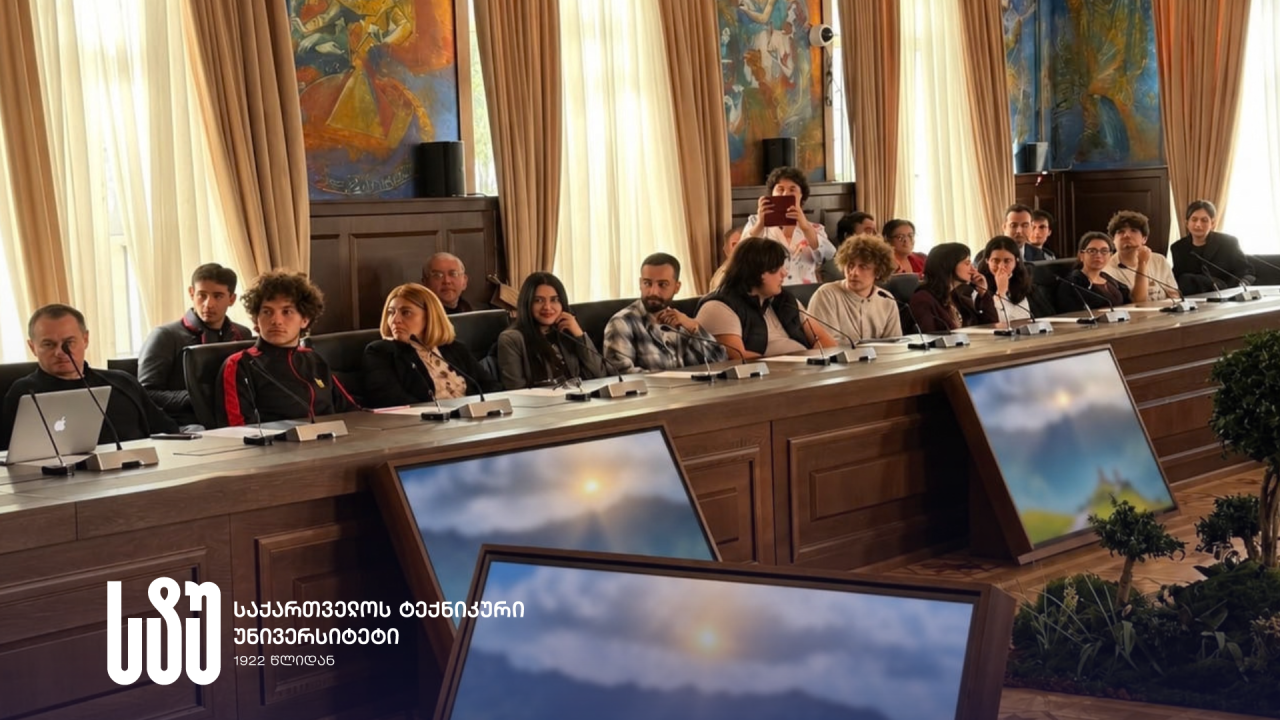
Using practical examples, both researchers introduced the audience to the specific modern devices and cutting-edge data acquisition technologies they employ in their research – a presentation that sparked particular interest among the students.
According to Professor Irine Gotsiridze, public lectures like this are essential to developing the educational and scientific process in line with modern standards.
“When young scientists share information about their research with students and faculty, it creates a vibrant academic platform for the exchange of experience. This process is particularly engaging for students because, alongside theoretical material, they gain a clear understanding of the practical and applied aspects of science, which boosts their motivation. For educators, it offers an excellent opportunity to keep pace with international scientific trends and incorporate the latest advancements into teaching. Such meetings lay the groundwork for deepening international scientific cooperation and initiating joint projects”.
– Professor Irine Gotsiridze
According to Professor Taliko Zhvania, the Faculty of Informatics and Control Systems is consistently committed to offering students high-quality education grounded in practice and research. The Dean emphasized that the faculty will continue to organize such public lectures frequently; this initiative ensures that GTU students remain integrated into the global scientific community, stay up to date on technological innovations, and develop into competitive professionals ready to meet the challenges of the modern labor market and the demands of both local and international industries.
Related
Scientific
UNI4VERSE FINEDU – Innovative Competition for Students Has Begun
For Students of Georgian Technical University At the initiative of the Georgia’s Innovation and Technology Agency (GITA), the university competition...
Scientific
Modern Scientific Center for Materials Research at GTU
“Creating a modern research infrastructure is one of the key priorities of the Georgian Technical University. The Materials Research Center...
Scientific
July 23 is the day of the first Georgian space object
27 years ago, on July 23, 1999, for the first time in the history of independent Georgia, the Georgian scientific...
News
GTU Doctoral Student Roman Tsertsvadze to Deliver a Lecture Course at a Leading Engineering University in France
Roman Tsertsvadze, a doctoral student at the Faculty of Informatics and Control Systems of the Georgian Technical University, will deliver...
News
New Renewable Energy Laboratory Opens at GTU
A Renewable Energy Training Laboratory has been opened at the Faculty of Power Engineering of the Georgian Technical University within...
Scientific
GTU Hosts Public Lecture by Dante Alighieri Society Secretary General Professor Alessandro Masi
Georgian Technical University hosted a public lecture by Professor Alessandro Masi, Secretary General of the Dante Alighieri Society, as part...