Georgian Technical University hosted the international scientific conference “Modern Problems of Black Sea Security in the Context of Climate Change” in Batumi
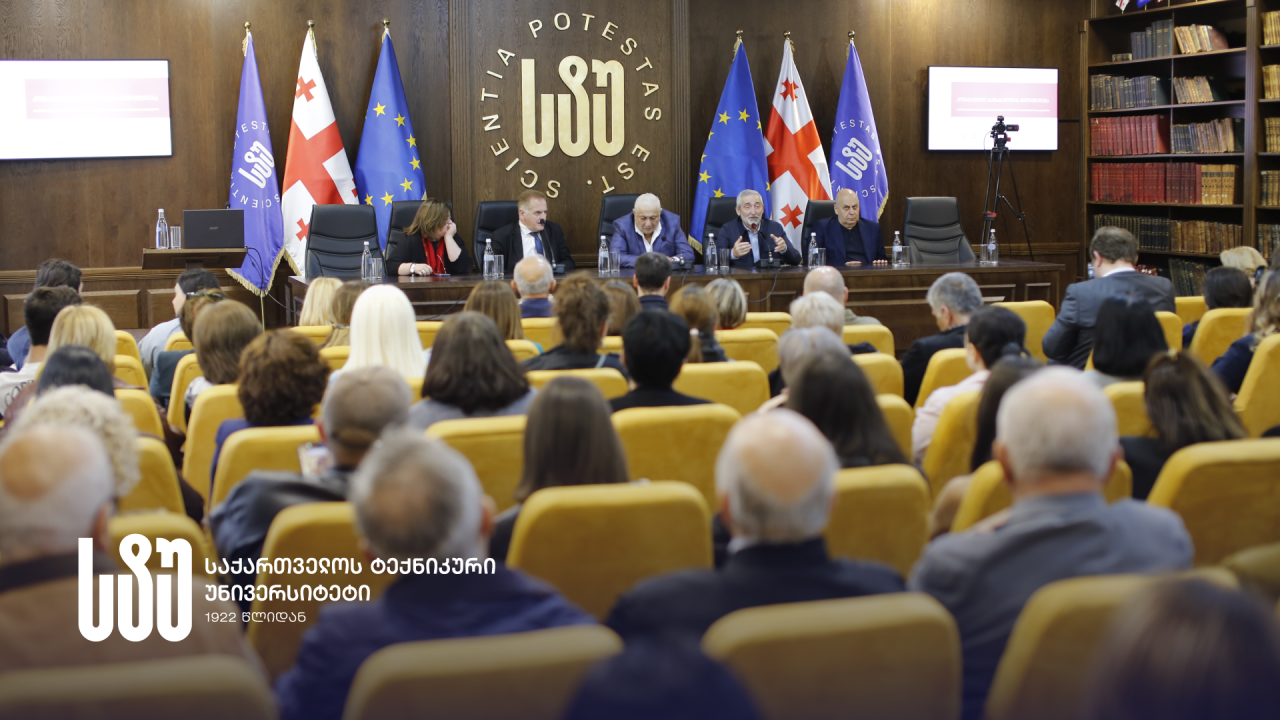
“Georgian Technical University consistently supports the advancement of scientific research in the fields of climate change, environmental protection, green technologies, energy transition, and sustainable development. Integration into the international academic community, active participation in European scientific programs, and support for young scientists are among our key priorities,” said Professor Zurab Gudavadze, Chairman (President) of the Supervisory Board of Georgian Technical University, during the conference.
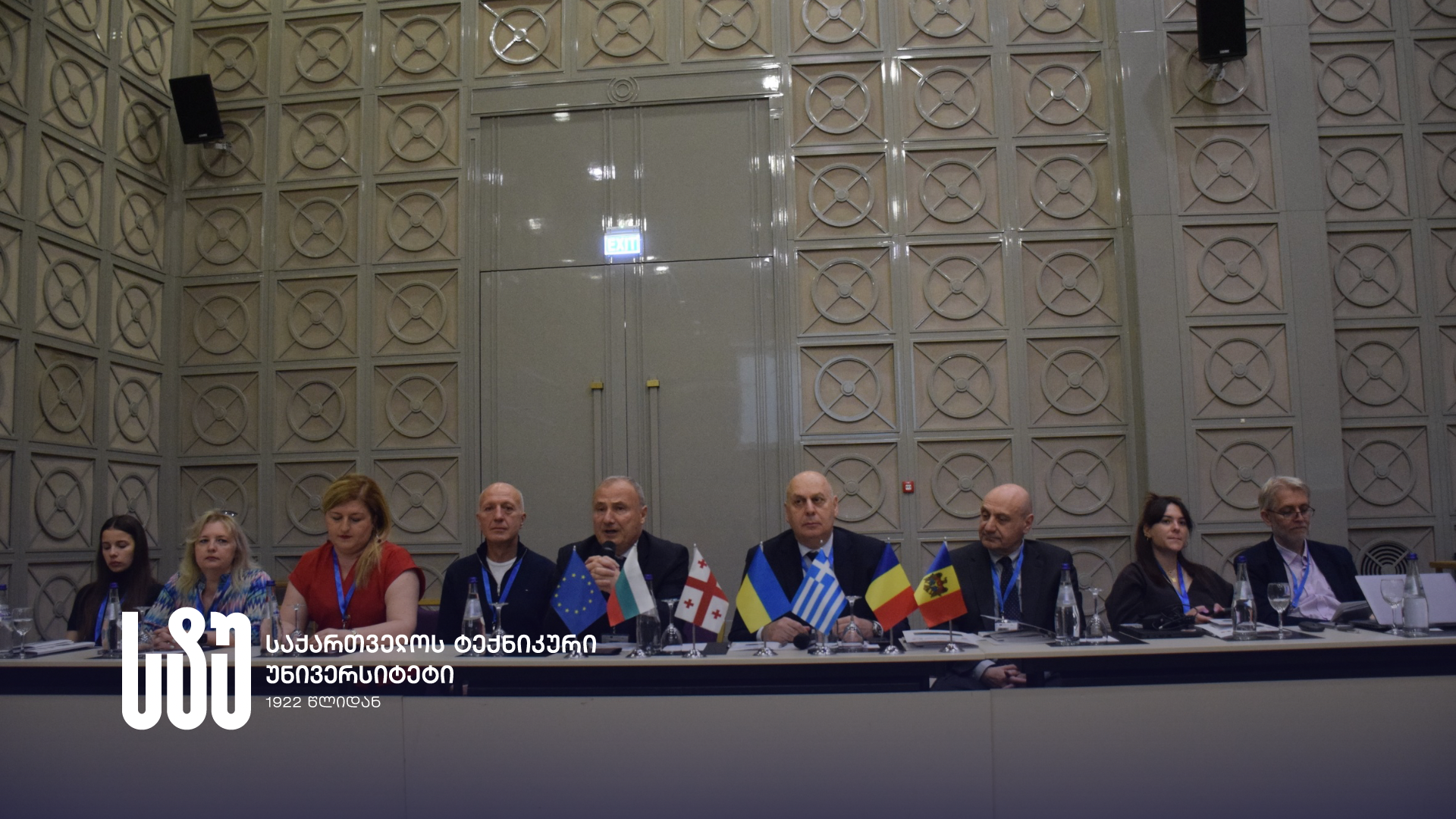
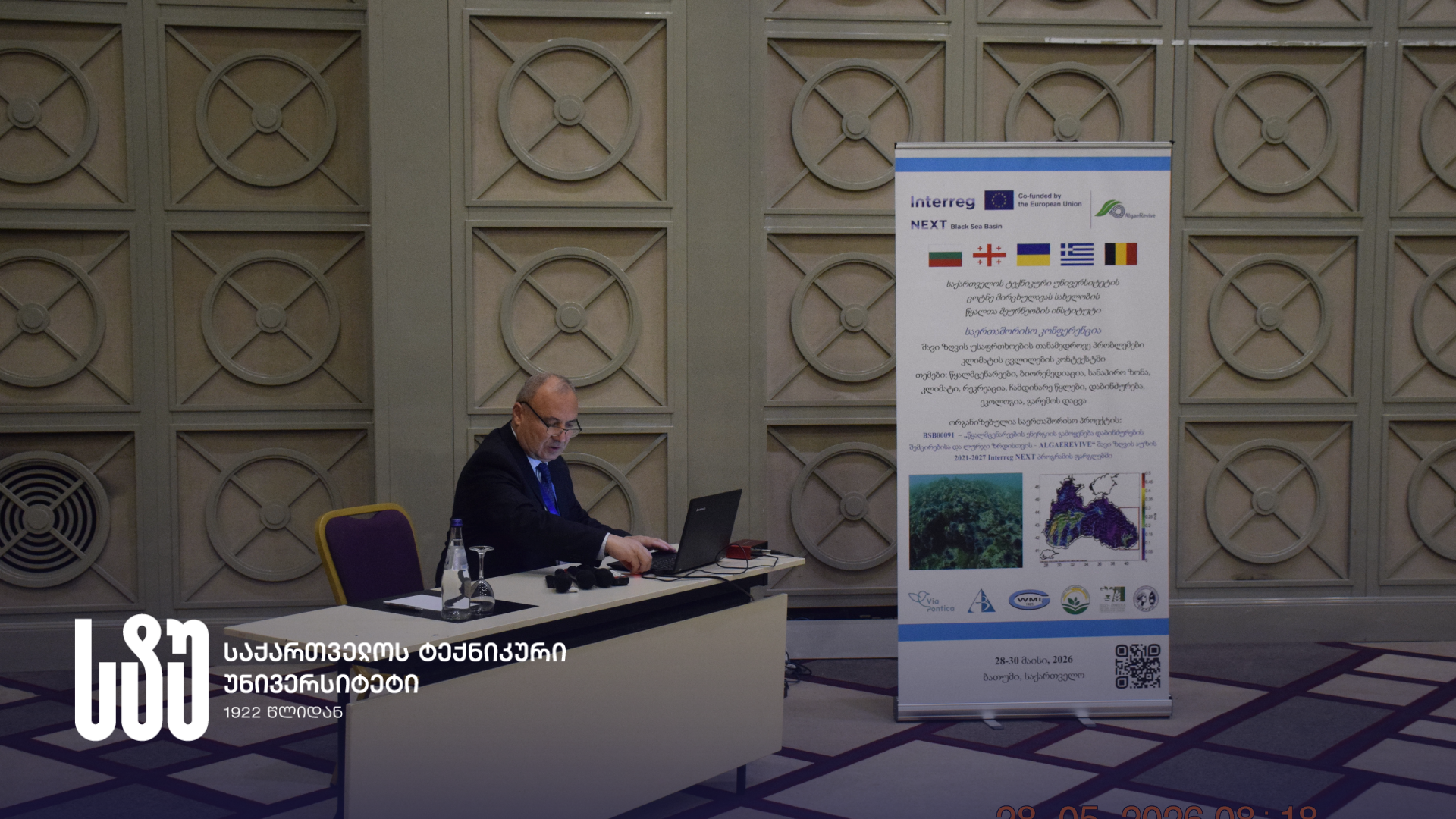
The international scientific and practical conference was organized under the auspices of the international grant project “Using the Potential of Algae for Pollution Reduction and Blue Growth – ALGAEREVIVE,” funded through the European Union’s Interreg NEXT Black Sea Basin Programme (2021–2027). The event was opened by Professor Givi Gavardashvili, Director of the Tsotne Mirtskhulava Institute of Water Management at Georgian Technical University, Academician of the Georgian National Academy of Sciences, and Project Coordinator from Georgia.
“The conference is of particular importance because it is dedicated not only to assessing the ecological condition of the Black Sea region but also to understanding the fundamental challenges facing modern civilization. Climate change is one of the most significant global challenges of the 21st century, and its consequences are already evident in the natural environment, as well as in economic, social, and political processes. The Black Sea is a unique natural system whose sustainability is crucial to the region’s ecological security, economic development, and public well-being. In recent decades, climate change, anthropogenic pressures, and rising environmental risks have posed new challenges for marine ecosystems. That is why the role of science, technology, and international cooperation is more important today than ever before.”
– Professor Givi Gavardashvili
In his address, Professor Zurab Gudavadze, The Chairman of the GTU Supervisory Board, highlighted the strengthening of the university’s international academic partnerships in the environmental sector. He emphasized that effective management of modern challenges is impossible without international cooperation. Climate change knows no borders; therefore, efforts to combat it cannot remain local. Only through joint action, the integration of scientific knowledge, and a shared sense of responsibility we can preserve the Black Sea ecosystem for future generations.
“This conference is being held under the auspices of the international project “Using the Potential of Algae for Pollution Reduction and Blue Growth – ALGAEREVIVE”, supported by the EU Interreg NEXT Black Sea Basin Programme. The project clearly reflects one of the core principles of modern European scientific policy: addressing environmental challenges through innovation, research, and nature-based solutions. The study of algae as both an ecological and economic resource is particularly important. Modern scientific research recognizes algae not only as a vital component of biodiversity but also as an effective tool for restoring aquatic ecosystems, sequestering carbon, producing bio-based products, and promoting the sustainable blue economy.
Such interdisciplinary approaches provide the foundation for the transformative changes needed to achieve sustainable development in the face of climate change. As an important country within the Black Sea Basin, Georgia bears a special responsibility for strengthening ecological security, sustainable development, and international cooperation in the region. Our country’s scientific and educational institution – Georgian Technical University is actively engaged in these efforts and makes a significant contribution to achieving our shared goals. I am confident that the presentations, discussions, and scientific findings presented during the conference will contribute significantly to a deeper understanding of the Black Sea region’s security, ecological sustainability, and economic development challenges in the context of climate change, while also supporting the development of practical solutions.”
– Professor Zurab Gudavadze
The forum brought together 40 leading delegates. The international scientific community was represented by prominent institutions from Ukraine, Bulgaria, Romania, Greece, and the Republic of Moldova. The conference was also attended by researchers from Akaki Tsereteli State University, Batumi Black Sea Academy, and other higher education institutions, as well as experts from the National Environmental Agency (NEA) of the Ministry of Environmental Protection and Agriculture of Georgia.
Related

Conferences and Seminars
DUGEOR’s final international conference was held in Tbilisi
On September 2, the final international conference of the Erasmus+ CBHE project DUGEOR was held at the Georgian Technical University....
Conferences and Seminars
The 13th International Scientific and Technical Conference of the Institute of Water Management Held at the GTU
Institute of Water Management, titled “Modern Problems of Water Management, Environmental Protection, Architecture and Construction,” was held at the Georgian...
News
Closing Ceremony of the 90th Open International Scientific Conference of Students Held at GTU
The closing ceremony of the 90th Open International Scientific Conference of Students and the award ceremony for the winners were...
Conferences and Seminars
“Georgian Religious Architecture and Contemporary Problems of Urban Planning” – International Conference at GTU
The Faculty of Architecture, Urbanism and Design of the Georgian Technical University, within the framework of the events dedicated to...
Conferences and Seminars
“Georgian Creativity” – Public Lecture-Seminar at GTU
On May 29th, a public lecture-seminar – “Georgian Creativity” was held at Georgian Technical University, led by the founder of...
Conferences and Seminars
An international conference on state languages, artificial intelligence, and the digital economy opened at GTU
“The Georgian language united the Georgian nation in the most difficult historical situation, preserved its state consciousness and cultural continuity....