International Scientific Seminar on Environmental Engineering Opens at GTU
The 5th International Scientific-Practical Seminar, “Environmental Engineering and Modern Eco-Urbanism,” has opened at the Georgian Technical University, bringing together approximately 100 scientists and young researchers from Europe and the South Caucasus.
The three-day international seminar is organized by Georgian Technical University in partnership with Bialystok University of Technology (Poland), the University of Life Sciences in Lublin (ULSL, Poland), the National University of Architecture and Construction of Armenia, the Turkish Economic and Social Research Institute, and Rzeszów University of Technology (RUT, Poland). Representatives from 25 countries are participating in the event, including groups of scientists from leading universities in Turkey, Monaco, Brazil, Armenia, Azerbaijan, Ukraine, and other countries.
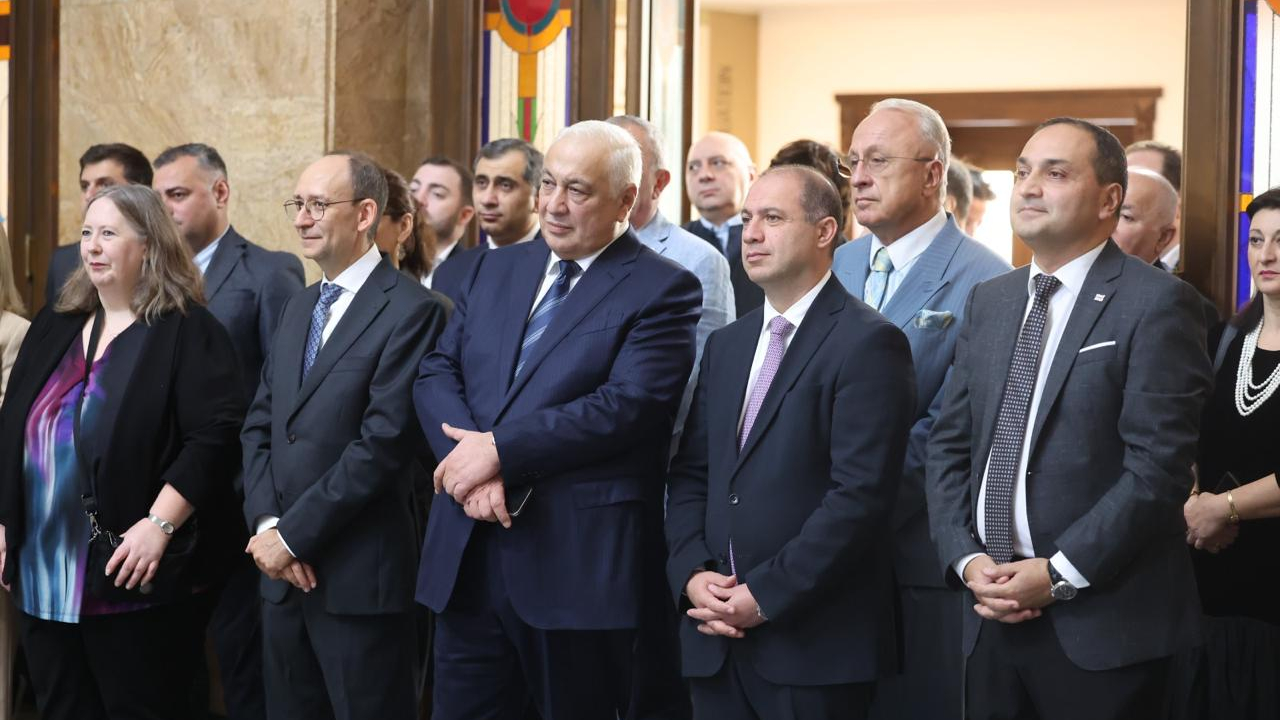
The seminar was attended by representatives of the Georgian Technical University administration, professors and lecturers from the faculties of construction and other engineering disciplines, as well as students.
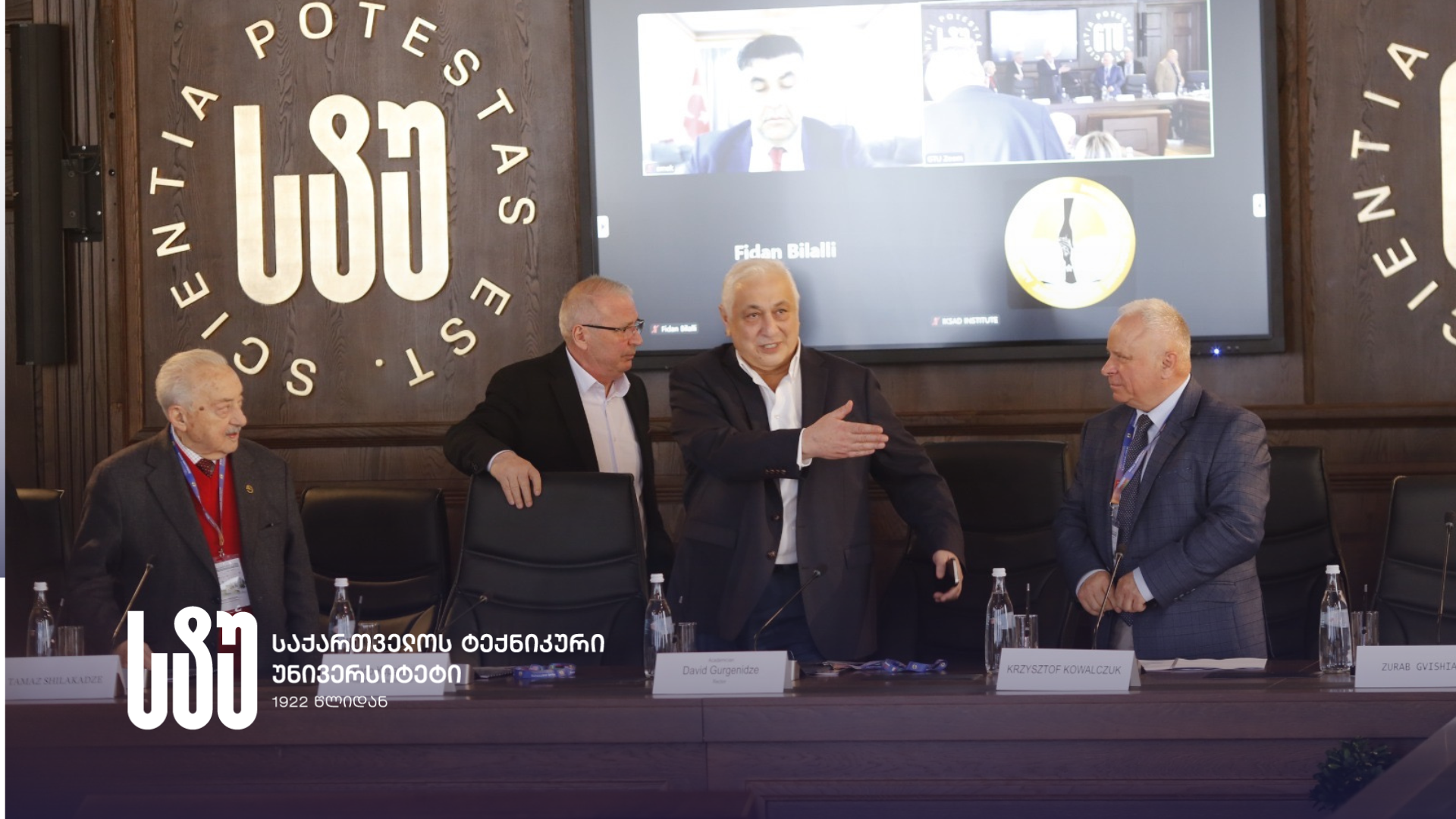
The event was officially opened by GTU Rector, Academician David Gurgenidze, who welcomed the participants and emphasized the growing importance of international scientific cooperation, knowledge sharing, and innovative approaches in addressing global environmental and urban challenges.
“This scientific event, which has become a tradition and is being held for the fifth time, is of particular importance. It brings together leading scientists from America, Europe, and the South Caucasus to share knowledge, exchange best practices, and collaborate on the complex challenges facing the modern world. International scientific cooperation, the exchange of experience, and the development of innovative approaches are especially significant today. The joint efforts of scientists, researchers, and practitioners create opportunities to develop effective solutions based on modern technologies that will support the transition to sustainable models of environmental protection and urban development.
I wish the participants every success and am pleased to announce that a monograph based on the research articles of scientists from Georgia, Poland, Israel, Armenia, Turkey, and other participating countries, on the implementation of innovative technologies in construction and environmental engineering, and the results of research conducted by them will be published. The publication will focus on the latest research findings in these fields. Structured according to functional principles, the monograph will serve as a valuable resource for specialists, researchers, and students of technical higher education institutions.”
– Academician David Gurgenidze
The seminar participants were also welcomed by Mustafa Latif Emek, President of the Turkish Institute of Economic Development and Social Research; Professor Lech Dzienis, former Rector of Białystok University of Technology and member of the GTU Supervisory Board; Krzysztof Kowalczuk, Rector of the University of Life Sciences in Lublin; Academician Hovhannes Tokmanjian, Professor at the Egyazarov Institute of Water Problems and Hydraulic Engineering; Academician Givi Gavardashvili, Director of the Tsotne Mirtskhulava Scientific Research Institute of Water Management at GTU and member of the Georgian National Academy of Sciences; and Professor Zurab Gvishiani, Dean of the Faculty of Construction at GTU.
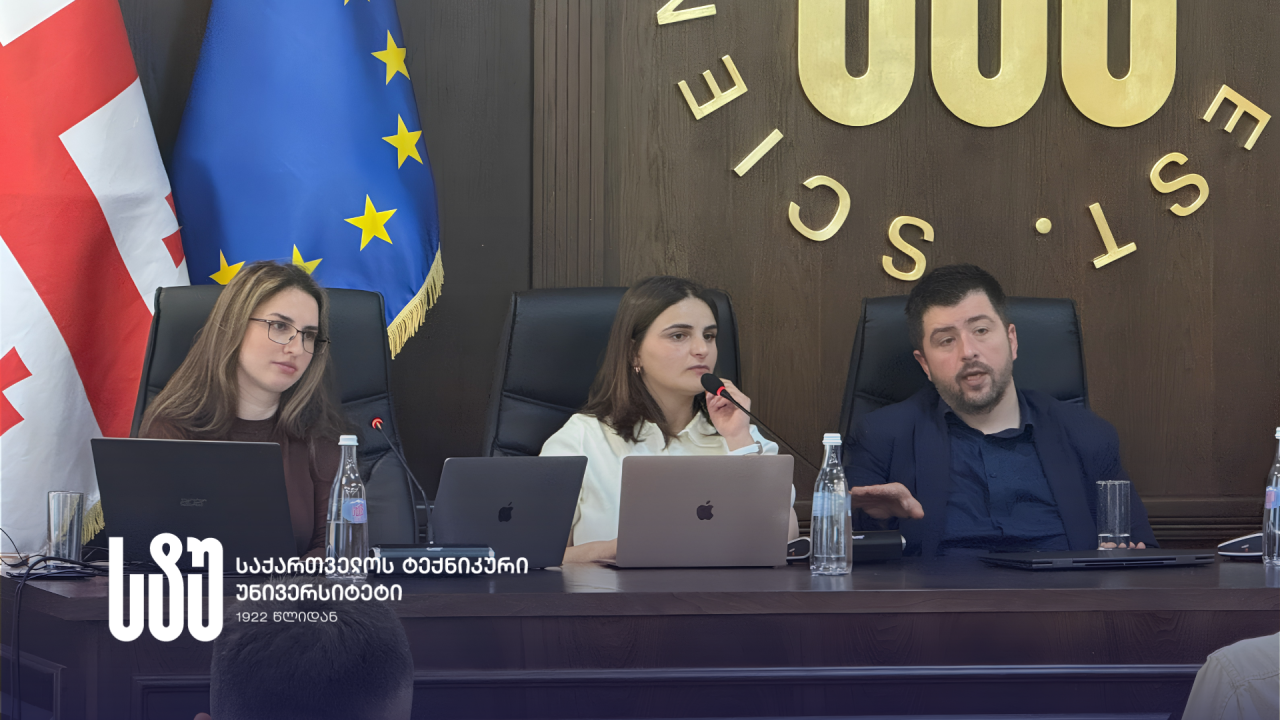
The Dean of the GTU Faculty of Construction, Professor Zurab Gvishiani, noted that the role and professional responsibilities of environmental engineers have become increasingly multifaceted and complex. He emphasized that universities are now actively involved in addressing key issues related to human health, ecological safety, and sustainable development. According to him, environmental engineering today extends far beyond the protection of natural resources, integrating science, technology, urbanism, energy, and bioengineering to create safe, sustainable, and adapted to modern requirements.
“Special attention is being paid to minimizing sources of environmental pollution and chemical contamination, introducing modern mechanisms for the protection of air, water, and soil, and preventing ecological risks. The development of green production and green chemistry plays a crucial role in this process through the implementation of technologies and production models that reduce environmental impact and promote the sustainable use of resources. Modern environmental engineering is closely connected with chemistry and microbiology, as the integration of these fields enables the development of innovative biotechnological systems, advanced water purification mechanisms, and environmentally safe production processes. Sustainable urban design and modern civil infrastructure are also becoming increasingly important.
Amid rapid urbanization and the escalating impacts of climate change, it is imperative to design urban environments that maximize energy efficiency, seamlessly incorporate green spaces, provide safe and accessible transportation systems, and prioritize architectural solutions centered on human well-being and community needs. Environmental engineers are also actively engaged in hydrology, water resource management, climate risk assessment, and systems design. Their work encompasses both the protection of natural ecosystems and the development of modern technological systems that contribute to the long-term and effective resolution of environmental challenges.”
– Professor Zurab Gvishiani
The international seminar will be conducted in four thematic sections: environmental engineering, water resources, construction, and eco-urbanism. The scientific event will conclude on May 21st.
Related
Conferences and Seminars
The Minister of Education, Science and Youth, as well as the President and Secretary General of the European University Association, attended the Permanent Conference of Rectors at GTU
“Today, Georgia’s higher education system is undergoing a crucial stage of development. In terms of both its scope and substance,...

Conferences and Seminars
DUGEOR’s final international conference was held in Tbilisi
On September 2, the final international conference of the Erasmus+ CBHE project DUGEOR was held at the Georgian Technical University....
Conferences and Seminars
The 13th International Scientific and Technical Conference of the Institute of Water Management Held at the GTU
Institute of Water Management, titled “Modern Problems of Water Management, Environmental Protection, Architecture and Construction,” was held at the Georgian...
News
Closing Ceremony of the 90th Open International Scientific Conference of Students Held at GTU
The closing ceremony of the 90th Open International Scientific Conference of Students and the award ceremony for the winners were...
Conferences and Seminars
“Georgian Religious Architecture and Contemporary Problems of Urban Planning” – International Conference at GTU
The Faculty of Architecture, Urbanism and Design of the Georgian Technical University, within the framework of the events dedicated to...
Conferences and Seminars
Georgian Technical University hosted the international scientific conference “Modern Problems of Black Sea Security in the Context of Climate Change” in Batumi
“Georgian Technical University consistently supports the advancement of scientific research in the fields of climate change, environmental protection, green technologies,...