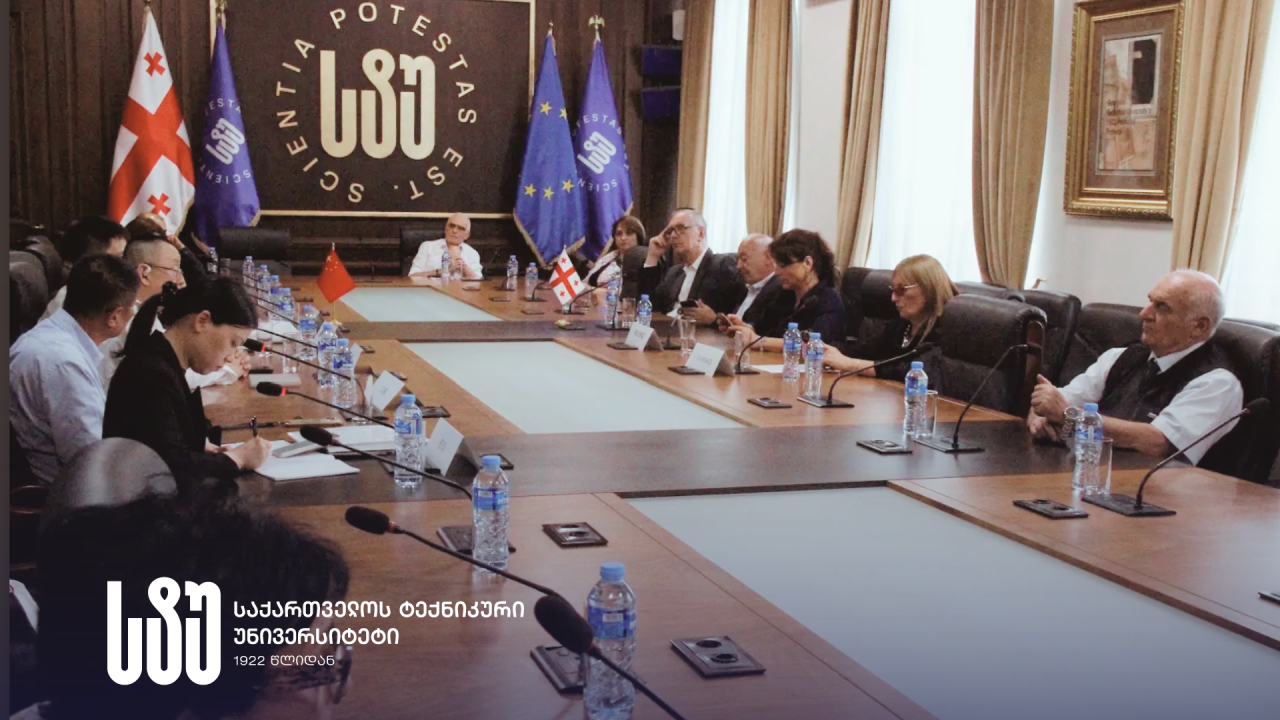
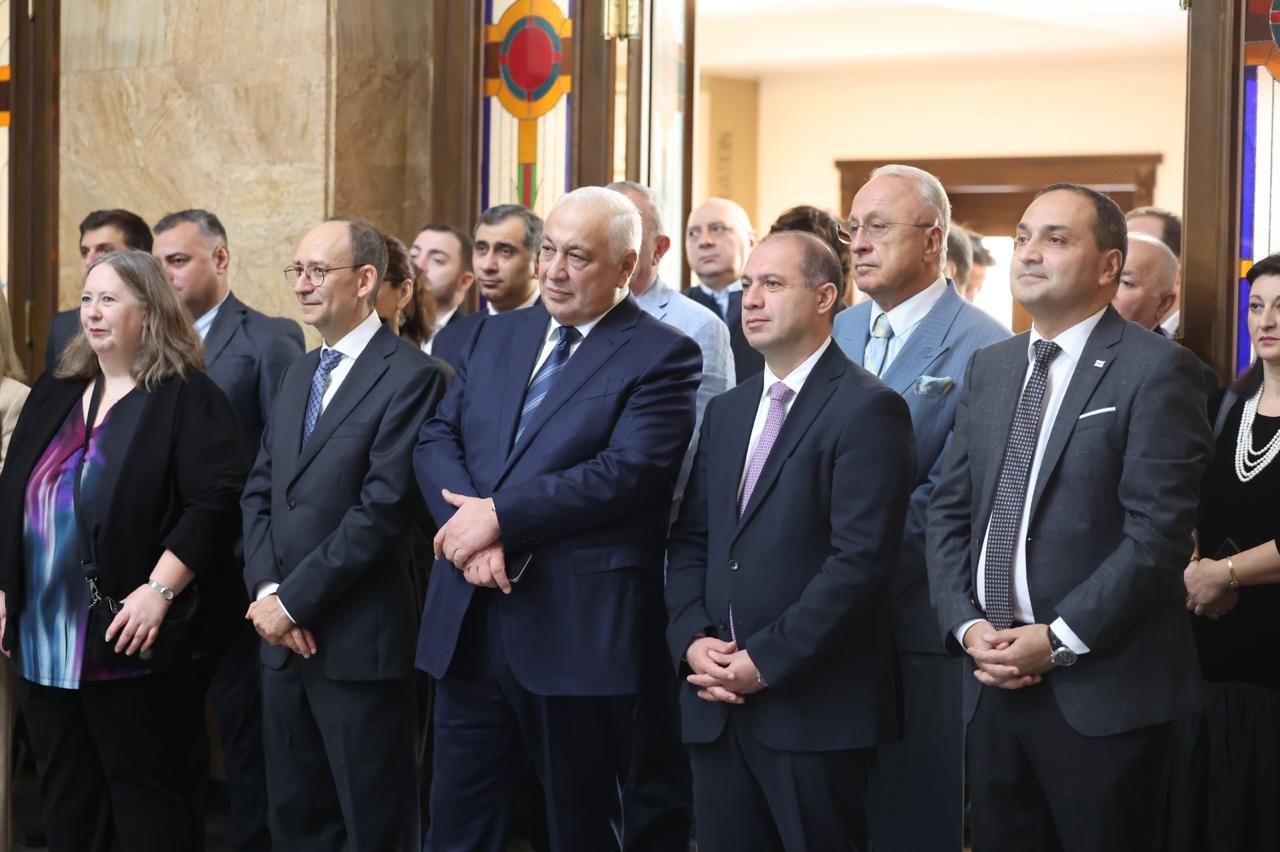
The Minister of Education, Science and Youth, as well as the President and Secretary General of the European University Association, attended the Permanent Conference of Rectors at GTU
“Today, Georgia’s higher education system is undergoing a crucial stage of development. In terms of both its scope and substance, the ongoing reform addresses fundamental issues that will determine what Georgian universities should look like in the future, what role they should play in the country’s development, and how they should respond to the rapidly changing demands of modern science, technology, and the labour market. It is important that the discussion of the reform not be limited solely to an assessment of the new regulations. A university is a living academic institution whose development is intrinsically linked to people – professors, researchers, students, and administrative staff. Accordingly, the ultimate measure of any systemic change should be the extent to which it creates better conditions for the transfer of knowledge, scientific research, the professional development of young people, and the advancement of the country’s intellectual potential,” said Academician David Gurgenidze, Rector of Georgian Technical University and Chairman of the Permanent Conference of Rectors of Georgian Higher Education Institutions, at the Permanent Conference of Rectors.
The Permanent Conference of Rectors of Georgian Higher Education Institutions was held at Georgian Technical University. The main focus of the conference was the current stage of higher education reform in Georgia, its key priorities, existing challenges, and future development prospects.
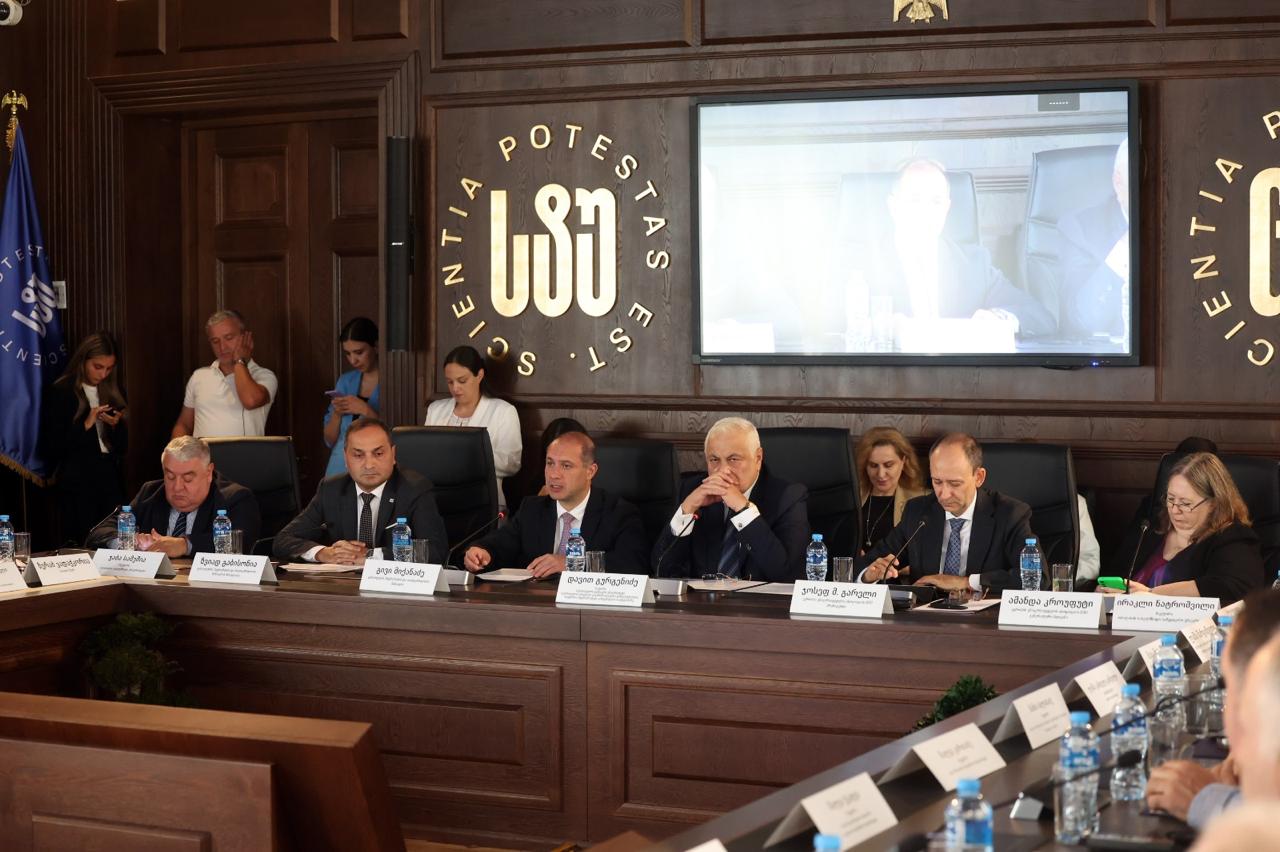
The conference was attended by the rectors of higher education institutions accredited in Georgia; Givi Mikanadze, Minister of Education, Science and Youth of Georgia; Zviad Gabisonia, Deputy Minister; as well as, at the special invitation of the Permanent Conference of Rectors of Georgian Higher Education Institutions and its Chairman, Academician David Gurgenidze, Josep M. Garrell, President of the European University Association (EUA), and Amanda Crowfoot, Secretary General of the Association.
As Rector of Georgian Technical University and Chairman of the Permanent Conference of Rectors of Georgian Higher Education Institutions, Academician David Gurgenidze stated at the opening of the meeting that the success of higher education reform depends on the extent to which universities are able to implement the changes effectively and consistently. He also emphasized the importance of ensuring that education, science, and innovation are organically interconnected throughout the reform process. In today’s world, the competitiveness of a university is no longer determined solely by the number of students or the scope of its educational programmes. Increasingly, a university’s success depends on its research potential, engagement in international scientific networks, contribution to technological development, and capacity to commercialize knowledge and transform it into innovative products.
“I am pleased that, within the framework of the Permanent Conference of Rectors of Georgian Higher Education Institutions, we have the opportunity to welcome Mr Givi Mikanadze, Minister of Education, Science and Youth of Georgia; Mr Zviad Gabisonia, Deputy Minister; and Josep M. Garrell, President of the European University Association, together with Amanda Crowfoot, Secretary General of the Association. I would like to thank our international partners and colleagues for their support and fruitful cooperation, which creates an important opportunity to share international experience and European academic practices in the development of higher education in Georgia. I believe that the planned and ongoing changes in the higher education system are timely and important, and that the Government of Georgia, Prime Minister Irakli Kobakhidze, and the Minister of Education, Science and Youth, Givi Mikanadze, have adopted an appropriate and consistent course in this direction, aimed at further strengthening the quality, competitiveness, and compliance with international standards of Georgian higher education.
One of the key priorities of the ongoing reform should be the further enhancement of the quality of higher education. Quality is not limited to accreditation procedures or compliance with specific indicators. Quality is the everyday culture of a university – the quality of teaching, the level of research, the professional development of academic staff, a student-centred environment, modern infrastructure, international cooperation, and, most importantly, the capacity to generate new knowledge and facilitate its transfer.
In this regard, strengthening international cooperation is particularly important. The participation of representatives of the European University Association in today’s conference highlights precisely this opportunity. Sharing the experience of European universities, institutional cooperation, academic and student mobility, joint research, and international educational projects are among the areas that will significantly contribute to the further enhancement of the quality of Georgian higher education.
If state institutions, universities, and the academic community work together, we will be able to build a higher education system that provides Georgia’s young people with opportunities to acquire modern knowledge, conduct research, and pursue professional development, while providing the country with well-trained young specialists and researchers. We must discuss not only what is changing today, but also what we want Georgian universities to become tomorrow and what we need to do to turn this vision into reality.”
– Academician David Gurgenidze
Givi Mikanadze, Minister of Education, Science and Youth of Georgia, also addressed the audience, focusing on the current stage of higher education reform, its main directions, and the significant changes aimed at further developing the higher education system and improving its quality.
The Permanent Conference of Rectors of Georgian Higher Education Institutions was also addressed by Josep M. Garrell, President of the European University Association (EUA), and Amanda Crowfoot, Secretary General of the Association, who expressed their support for the reform of higher education in Georgia and reaffirmed their readiness to cooperate in the process.
As Josep M. Garrell noted, the European University Association attaches particular importance to the development of Georgia’s higher education system and to strengthening cooperation with the European academic community. According to him, the contemporary challenges facing universities require the sharing of experience, deeper international cooperation, and the active engagement of the academic community. The EUA President highlighted the importance of issues related to university autonomy, quality assurance, the development of research and teaching, as well as the strengthening of internationalisation and international partnerships. He noted that the Association is ready to share its experience and international opportunities with Georgian universities in the process of further developing higher education.
Zviad Gabisonia, Deputy Minister of Education, Science and Youth, provided an extensive overview of the progress of higher education reform over the past year, its priorities, existing challenges, and future development prospects.
Following the Deputy Minister’s address, the discussion continued in a format focused on the current stage of higher education reform and issues related to its key directions. The rectors of the universities participating in the conference took an active part in the discussion and presented their views and perspectives.
Related

Conferences and Seminars
DUGEOR’s final international conference was held in Tbilisi
On September 2, the final international conference of the Erasmus+ CBHE project DUGEOR was held at the Georgian Technical University....
Conferences and Seminars
The 13th International Scientific and Technical Conference of the Institute of Water Management Held at the GTU
Institute of Water Management, titled “Modern Problems of Water Management, Environmental Protection, Architecture and Construction,” was held at the Georgian...
News
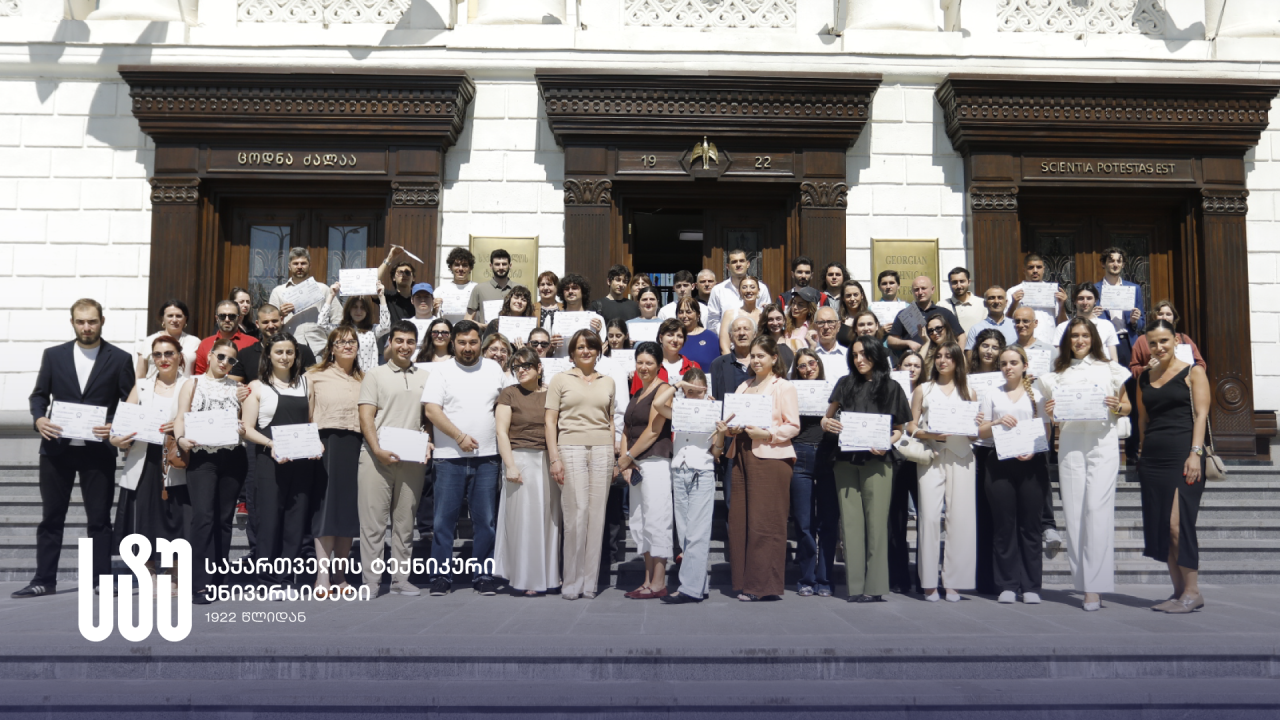
Closing Ceremony of the 90th Open International Scientific Conference of Students Held at GTU
The closing ceremony of the 90th Open International Scientific Conference of Students and the award ceremony for the winners were...
Conferences and Seminars
“Georgian Religious Architecture and Contemporary Problems of Urban Planning” – International Conference at GTU
The Faculty of Architecture, Urbanism and Design of the Georgian Technical University, within the framework of the events dedicated to...
Conferences and Seminars
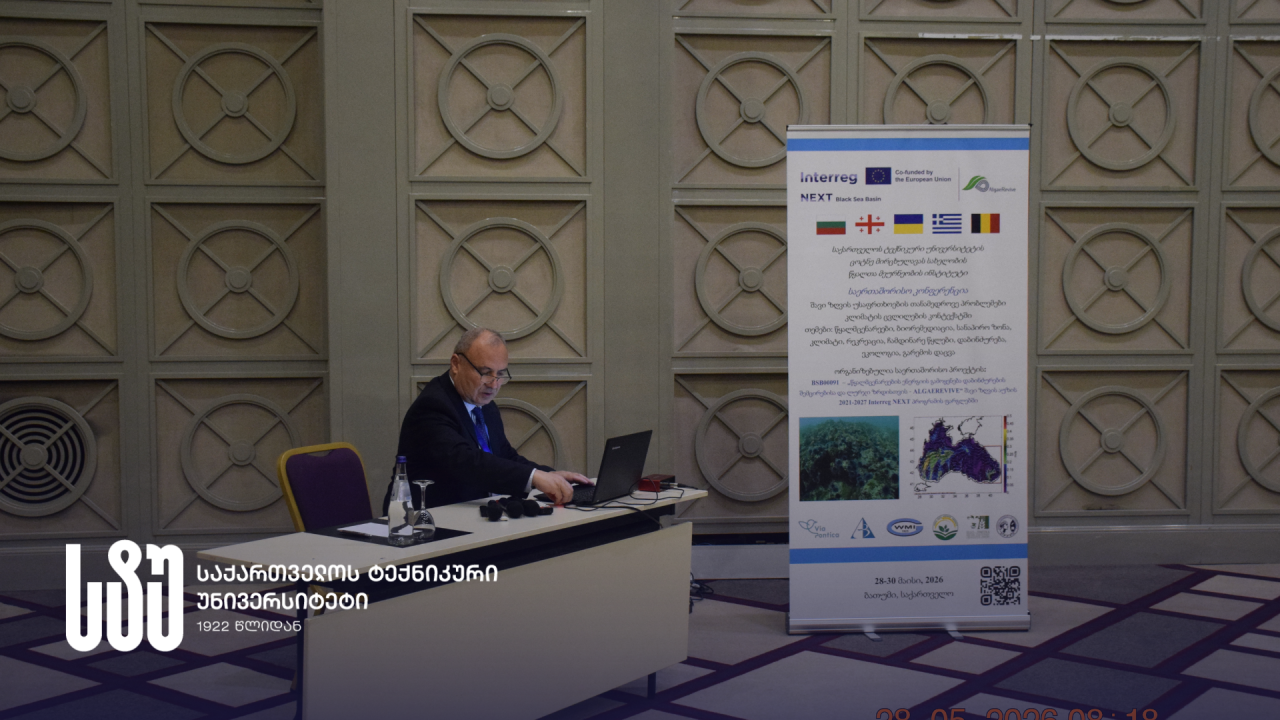
Georgian Technical University hosted the international scientific conference “Modern Problems of Black Sea Security in the Context of Climate Change” in Batumi
“Georgian Technical University consistently supports the advancement of scientific research in the fields of climate change, environmental protection, green technologies,...
Conferences and Seminars
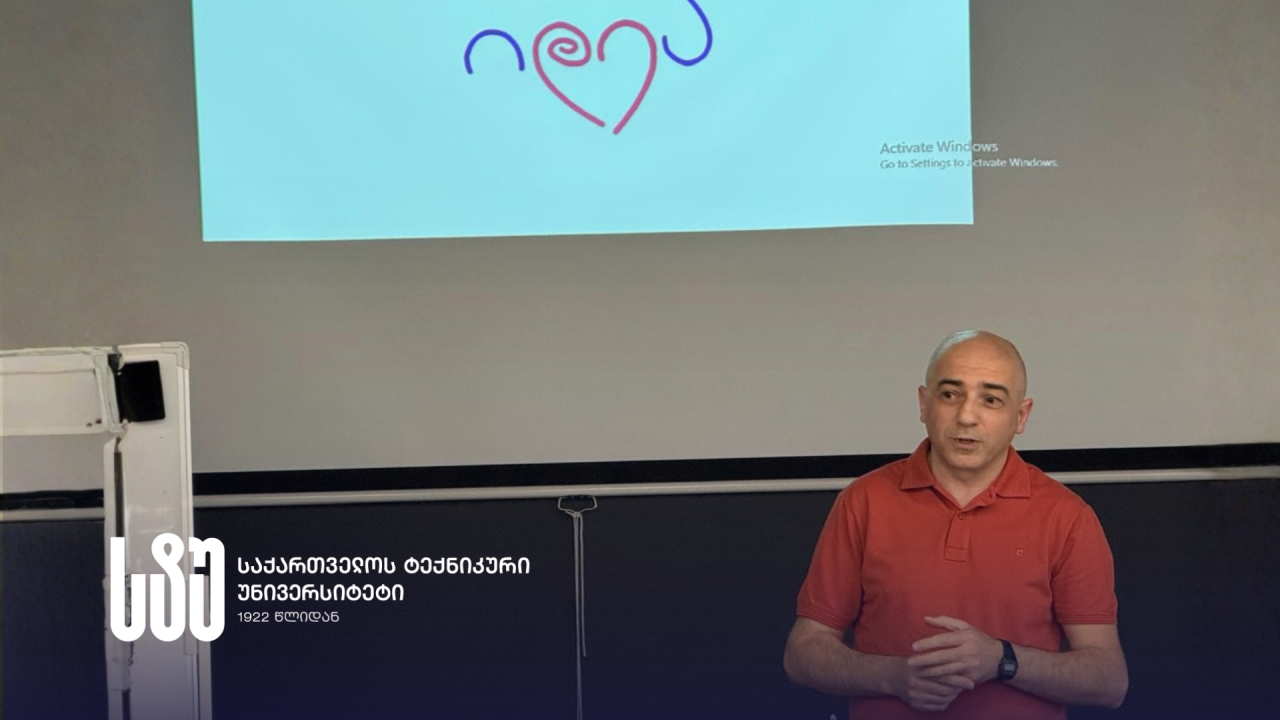
“Georgian Creativity” – Public Lecture-Seminar at GTU
On May 29th, a public lecture-seminar – “Georgian Creativity” was held at Georgian Technical University, led by the founder of...